How to Calculate the Right Packaging Dimensions for Your Product

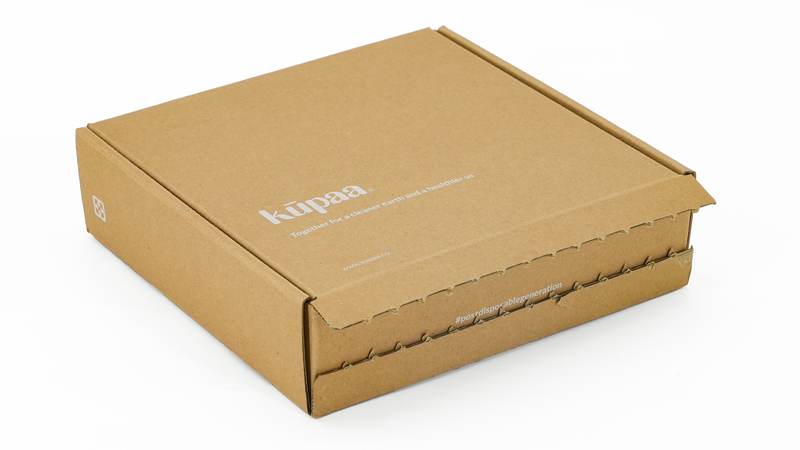
Right-size packaging means using the smallest package that still protects the product, closes reliably, and works through the intended shipping channel. To calculate it, start with the fully packed product—not the bare item—then add only the clearance your protection system and packing process actually need.
That sounds obvious, but it is where many box briefs go sideways. A product can fit on paper and still fail once its sleeve, insert, manual, wrap, or closure is involved. This guide turns product measurements into usable packaging dimensions, then shows when custom box dimensions genuinely earn their place.
Quick answer: calculate the packed product first
- Measure the shipping-ready product: include retail pack, accessories, wrapping, and the planned orientation.
- Set internal dimensions from the protection plan: add space for inserts, cushioning, packing tolerance, and closure.
- Use external dimensions for freight decisions: board thickness and outer features affect warehouse, pallet, and carrier measurements.
- Test before bulk ordering: the right size is proven by a packed sample, not a spreadsheet alone.
Start with a right-size packaging audit, not a bare-product measurement
If you need the basic L × W × H convention, start with our box dimensions guide. This article answers the next, more operational question: which packed order should go into which box, with how much protection, and at what freight and packing cost?
Run the audit on the shipping-ready unit, then record these five fields before asking for a quotation:
| Audit field | What to record | Why it matters |
|---|---|---|
| Packed unit | Retail pack, accessories, wrap, and maximum points | Prevents a box that fits only the bare product |
| Protection system | Insert, divider, paper, bubble, or foam and its thickness | Sets the real usable cavity |
| Loading orientation | Flat, upright, nested, or stacked | Changes the opening, footprint, and pack speed |
| Outer constraint | Carrier, shelf, pallet, or master-carton limit | Keeps logistics requirements visible |
| SKU frequency | High-volume, fragile, and awkward orders | Shows where a custom size can pay back |
In short: internal dimensions control fit; external dimensions are what the warehouse and carrier see. They are related, but they are not interchangeable. Board thickness, folds, lids, handles, and protective components all create a gap between them.
Turn the packout into a usable size brief
Choose three representative orders: a high-volume order, the most fragile order, and the most awkward order. Pack each one the way a normal operator would, rather than the way a patient engineer would on a perfect day. That is the honest starting point for right-size packaging.
- Pick, protect, and close. Include every accessory, wrap, and closure component.
- Record the maximum packed envelope. Include pumps, handles, lid overhangs, and corners that stand proud.
- Note the orientation and unit. “12 × 8 × 6” without mm or inches—and without a sketch—is an invitation to rework.
- Capture pack time and friction. A box that fits but needs forcing, re-opening, or extra tape is not truly right-sized.
For irregular products, use the minimum bounding-box method: imagine the smallest rectangular space that contains the packed item at its widest points, then compare a few orientations. The smallest theoretical footprint is not automatically the best choice if it stresses a closure or slows the line.
Use volume as a screening signal, not a safety promise
For a simple single-item pack, turn the audit into this working model:
Internal length = packed-product length + left/right protection and handling allowance
Internal width = packed-product width + side protection and handling allowance
Internal height = packed-product height + top/bottom protection and closure allowance
The phrase “handling allowance” matters. Packaging has to be assembled by real people, with normal material variation. A box that can only close when every item is placed perfectly is not a robust packaging system.
A quick void-space check
For comparable orders, estimate empty-room share as 1 − (packed-unit volume ÷ usable internal-box volume). It is a useful way to spot a carton family with obviously too much air, not a universal target. A fragile product may need more protective volume; a soft item may tolerate less.
Use the result to compare packouts, then test the better option. The output is a proposed internal size, not a promise that every material and structure will create the same external size. A corrugated mailer, folding carton, and rigid box can all produce different outside dimensions from a similar usable cavity.
How much extra space should you leave?
There is no universal clearance number. Low-fragility, flexible products may need very little extra room when movement is controlled. Fragile products need a protection system that absorbs handling risk without letting the item wander around. More empty space is not automatically safer; loose void fill can compress or shift in transit.
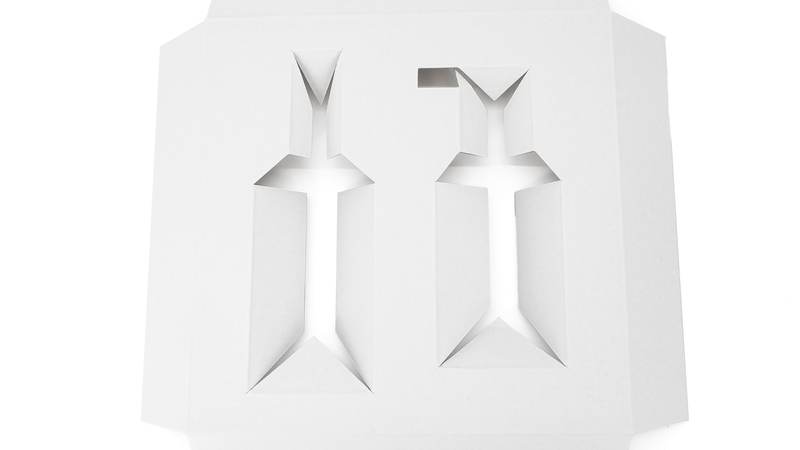
- For fitted inserts: design around the product and insert as one unit. Slot geometry, insert thickness, and removal access all matter.
- For bubble, paper, or loose cushioning: plan the cushion on every exposed side, then check how it behaves after the pack is closed and handled.
- For multi-item packs: measure the assembled set, including dividers and the worst-case arrangement—not each SKU in isolation.
- For soft or irregular products: use their natural maximum dimensions; do not depend on compression that a different packer may not reproduce.
Boxes and mailers do not size the same way
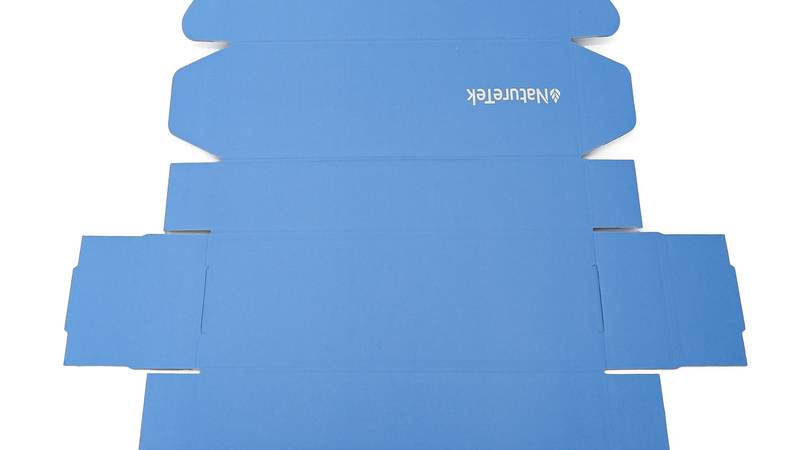
Corrugated boxes are usually the easier route for rigid, fragile, heavy, or multi-item shipments because their cavity and protective components can be controlled. A flexible mailer can be efficient for apparel or low-fragility goods, but its flat dimensions do not equal its usable internal space once product thickness is added. When a mailer becomes too tight, closure strain, compression, seal failure, and slow packing follow. It is a small problem until it repeats thousands of times.
How right-size packaging affects cost and shipping
Right-size packaging can reduce board, void fill, storage volume, and packing time. It can also improve the product experience: nobody enjoys opening a giant carton to find a tiny item rattling around inside. But do not sell the project internally on carton price alone. Look at the total cost per packed order: packaging, labor, filler, warehouse space, shipping exposure, and damage or return risk.
For parcel shipping, external size is especially important because carriers can price by dimensional weight when a package is large relative to its actual weight. UPS explains its dimensional-weight calculation as L × W × H divided by a rate-specific divisor, and notes that the applicable divisor can vary. Treat any carrier formula as current-route guidance, not a permanent universal number.
Standard sizes or custom box dimensions?
Stock sizes are sensible when volumes are low, the product line changes often, or several SKUs can share a practical box family. A custom size deserves a closer look when one or two oversized boxes are used repeatedly, dimensional-weight exposure is material, damage is linked to poor fit, or a consistent branded presentation needs an insert and clean reveal.
| Choose standard sizes when… | Consider custom dimensions when… |
|---|---|
| Volume is low or product sizes change frequently. | Order volume and packed-product dimensions are stable. |
| One size family can protect several SKUs. | Consistent empty space, filler use, or damage signals a fit problem. |
| Fast availability matters more than presentation. | Structure, inserts, branding, or freight efficiency require tighter control. |
For multiple SKUs, do not jump straight to a unique carton for every product. Start by grouping orders by packed dimensions and protection needs, then build a small approved size family. This is often the sweet spot: less wasted space without creating a warehouse full of one-off cartons.
For structure options, compare relevant custom packaging products with the shipping and retail channel. A household and office packaging brief, for example, may need product protection, clear retail information, and repeatable packing at the same time. For the basic dimension convention itself, see our related box dimensions guide.
Validate your packaging dimensions before production
- Confirm product, packed-product, internal, and external dimensions are separately labeled.
- Include all protection, inserts, accessories, and closure components in the sample.
- Check fit, product movement, opening force, and closure pressure after assembly.
- Review storage, master-carton, pallet, and carrier implications using the finished outer size.
- Document orientation and a simple packing instruction so the result is repeatable.
- Approve bulk production only after the intended sample has passed the relevant handling review.
When transit risk is meaningful, a sample needs more than a desk check. The International Safe Transit Association provides test-procedure resources for packaged products; choose the relevant test plan with your logistics and quality requirements rather than treating one generic drop test as proof for every route.
FAQs
How do you calculate packaging dimensions?
Measure the fully prepared product, then add the space required for inserts, cushioning, normal packing variation, and closure. That gives the target internal dimensions; then confirm the resulting external dimensions for storage and shipping.
Are box dimensions measured internally or externally?
Both may be needed. Internal dimensions control product fit and insert design. External dimensions are used for carrier, warehouse, master-carton, and pallet planning. Always label which one you are providing.
How much empty space should be inside a box?
Only enough for the chosen protection system, safe assembly, and closure. The correct allowance depends on fragility, weight, orientation, cushioning, insert design, and transport conditions, so there is no universal number.
When are custom box dimensions worth it?
Custom dimensions are most useful when stable-volume orders repeatedly use oversized stock cartons, pay meaningful dimensional-weight costs, require controlled inserts, or suffer damage from poor fit. Test samples first.
What should I send for a custom packaging quote?
Send product and packed-product dimensions, weight, a photo or sketch, required protection, preferred structure, quantity, artwork status, destination, and deadline. Include any sample, insert, or master-carton requirements that affect the finished pack.
The right packaging size is a tested decision
Good packaging dimensions begin with the true packed product, use internal dimensions for fit and external dimensions for logistics, and add only the protection the product and route require. That is right-size packaging in practice: not “make it tiny,” but “make it work without carrying unnecessary air.”
Need a packaging-dimension review?
Forests Packaging Group can review product size, packing orientation, protection method, structure, quantity, material, sample requirements, and export route as one working brief. The goal is a package that fits the product and the operation—not just a neat number on a drawing.
Send your product dimensions and weight, a packed sample photo or sketch, quantity, target market, material preference, and deadline. Our Intelligent Factory workflow connects the early brief to structure review, sampling, production, inspection, and delivery coordination. Request a project-specific packaging review.
How this guide was prepared
Prepared by Forests Packaging Group · Updated August 4, 2026. This guide combines packaging-design considerations, an anonymized internal fit review, and linked carrier and transit-testing resources. Material, carrier, and compliance requirements should be confirmed for the specific project and destination.
Send Your Packaging Brief to Our Team
Share your product type, format, size, quantity, material, destination, and required date. Our team can support artwork review, sampling, production, inspection, and export coordination.
Contact us for a project-specific recommendation.
Ready to build packaging with a factory team?
Send your product size, material, artwork, quantity, destination, and deadline so our team can focus the first review on quotation and sampling.