Folding Carton Packaging Guide: Materials, Box Styles, Costs, and Custom Options

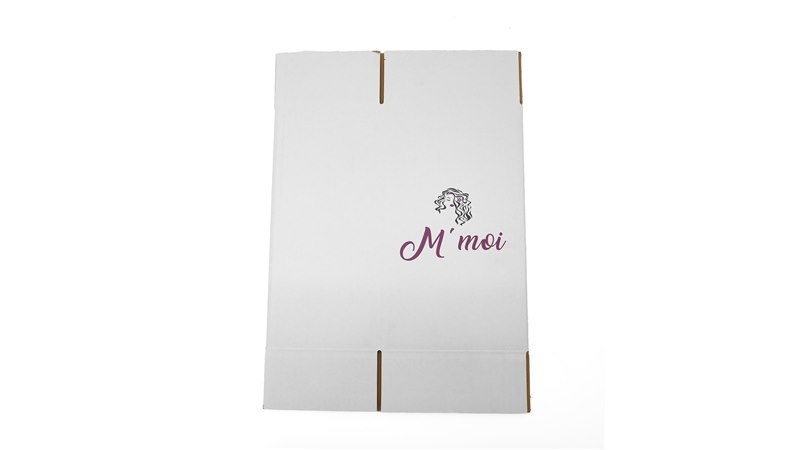
Folding carton packaging is the paperboard box you see on retail shelves: light enough to ship flat, polished enough to sell a product, and flexible enough to become far more than “just a box.” The right choice comes down to board, structure, print, protection, and how the carton will be packed in real life.

What is folding carton packaging?
A folding carton is a paperboard package that is printed, cut, creased, folded, and usually glued before delivery. It arrives flat, then opens into a three-dimensional box for filling. That flat-shipping advantage is a big reason folding carton boxes work so well for retail programs.
The usual route is simple in theory: choose the board, approve the dieline and artwork, print the sheets, add finishes, die-cut, fold and glue, then inspect the finished cartons. In practice, the small decisions matter. Grain direction can affect a clean fold; a weak bottom can undo a handsome design; and a beautiful foil treatment is wasted if the barcode will not scan.
Folding cartons are common for beauty, food, supplements, electronics, candles, gifts, and shelf-ready consumer goods. For a structure-first overview, see our custom folding cartons page.
Choose materials by the job, not the board name
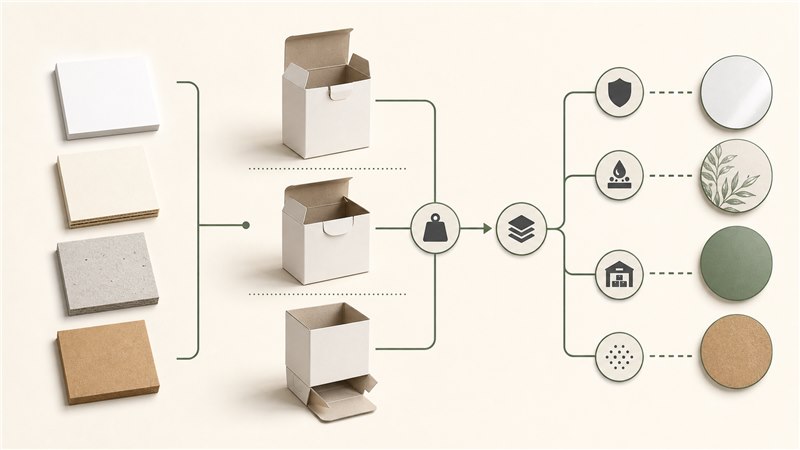
Material names are useful shorthand, but they do not replace a physical sample. Compare equal-size samples with the intended product inside. A carton should look right, fold cleanly, survive handling, and still make financial sense. That is the whole job.
| Paperboard | Where it helps | Watch-out |
|---|---|---|
| SBS | Bright white surface, crisp fine graphics, premium beauty, health, food, and retail presentation. | For food-contact or regulated use, confirm the required grade and project documentation against the relevant FDA food-contact guidance. |
| FBB | A useful stiffness-to-weight balance for many printed retail cartons. | Check actual caliper, score performance, and the final pack weight. |
| Coated recycled paperboard | Projects prioritizing recycled fiber and cost-conscious shelf packaging. | Surface consistency, edge appearance, and moisture behavior need sample review. |
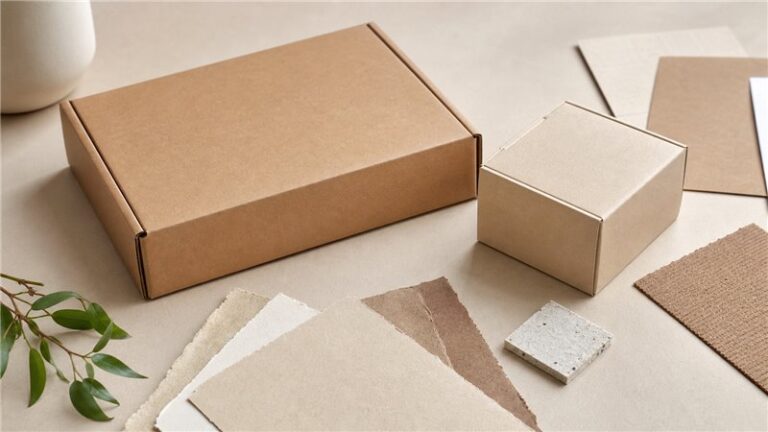
| Kraft paperboard | Natural visual direction, restrained graphics, and a tactile paper look. | It will not reproduce every bright color or metallic effect like a white coated board. |
The practical rule: choose the lightest board that safely meets the product, packing, print, and handling requirement. Going heavier “just in case” can add material and freight without fixing the real risk. If the product moves, add fit or an insert. If the bottom fails, change the structure. A thicker sheet is not magic.
Common folding carton styles
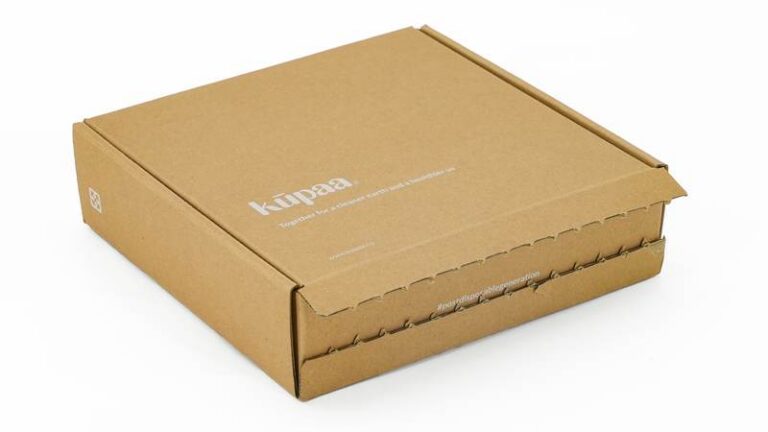
Straight tuck end cartons put both tuck closures on the same side, giving a neat front and back. Reverse tuck end cartons use opposite tuck directions and are often a practical choice for light-to-medium products. Auto-lock bottom cartons cost more in material and converting but assemble faster and give a more supportive base. Snap-lock bottoms add strength when manual assembly is acceptable. Sleeves are a lean way to add branding around a tray, bottle, or inner pack.
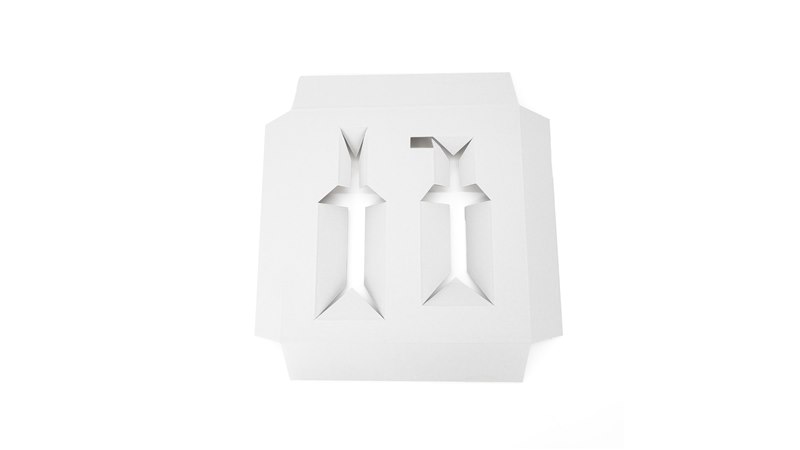
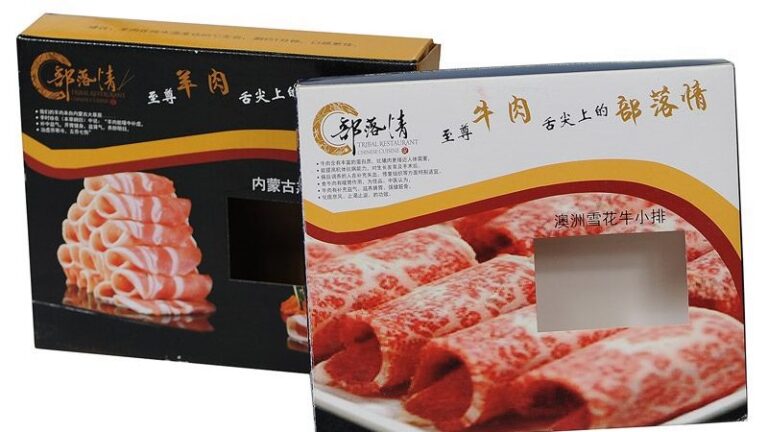
Windows can show the product, and inserts can control movement, but both add a question: what happens on the packing line, and what happens after the customer is done with the pack? That is why a working prototype beats a nice-looking render every time.
Folding carton vs rigid box: which one earns its place?
| Decision point | Folding carton | Rigid box |
|---|---|---|
| Storage and inbound freight | Ships flat; efficient before assembly. | Ships set up; uses more cube. |
| Shelf graphics | Excellent print area and broad finish options. | Premium wrapped presentation and tactile detail. |
| Protection | Best for light to moderately heavy products with the right board, bottom, and insert. | More structural presence for high-value or presentation-led products. |
| Best fit | Retail scale, clear information panels, and efficient pack-out. | Luxury gifting, high perceived value, and a lasting unboxing moment. |
In short: choose a folding carton when efficient storage, strong shelf communication, and lower material use are leading the brief. Choose a custom rigid box when the object needs a heavier presentation, more durable structure, or a designed reveal. Neither is automatically “better”; one just fits the job with less compromise.
Custom printing and finishes: spend where shoppers look
Offset printing is a familiar choice for detailed, repeatable retail artwork. Digital printing can suit shorter or changing programs. CMYK, Pantone colors, matte or gloss coating, foil, embossing, debossing, and spot UV can all be useful. But use them with intent: a finish should clarify the hierarchy, encourage touch, or protect the surface—not simply prove that the budget existed.
For cosmetics and personal-care products, the carton has to carry claims, directions, INCI or ingredient information, and still look calm on shelf. Our beauty and skincare packaging guide shows why panel planning, small text, and product fit should be reviewed together.
What drives custom folding carton cost?
A carton price is not only board plus printing. Size, board grade and caliper, printing coverage, color count, die tooling, window material, inserts, finishing, quantity, hand assembly, packing method, storage, and destination all influence the quote. Quantity usually changes the unit cost because setup is spread across more cartons, but very high volumes can create inventory risk. Cheap per piece is not cheap if obsolete packaging fills a warehouse.
Use a fuller comparison: total packaging cost per shipped product = carton + labor + outer-pack impact + storage + damage risk. This keeps procurement focused on the pack that works at scale rather than the line item that looks smallest.
Prototype checks that catch the expensive mistakes
Before a full run, put the actual product into a full-size sample. Check fit and removal, then close the carton repeatedly. Test the bottom under realistic weight, look for scuffing, read small text at normal shelf distance, scan the barcode using GS1 barcode-quality guidance, and time the assembly. It sounds basic because it is basic—yet these checks prevent a surprising number of avoidable revisions.
- Confirm internal product clearance, not only outer dimensions.
- Test the closure and bottom after repeated handling.
- Review folds, panel alignment, barcodes, and critical small type.
- Photograph the carton in normal retail lighting and in its shipping pack.
- Record the approved board, finish, packing method, and inspection points.
That workflow—brief, structure review, sample, production, inspection, and export-ready packing—is easier to manage when the same team can coordinate the handoffs. See how the Intelligent Factory workflow connects those production stages.
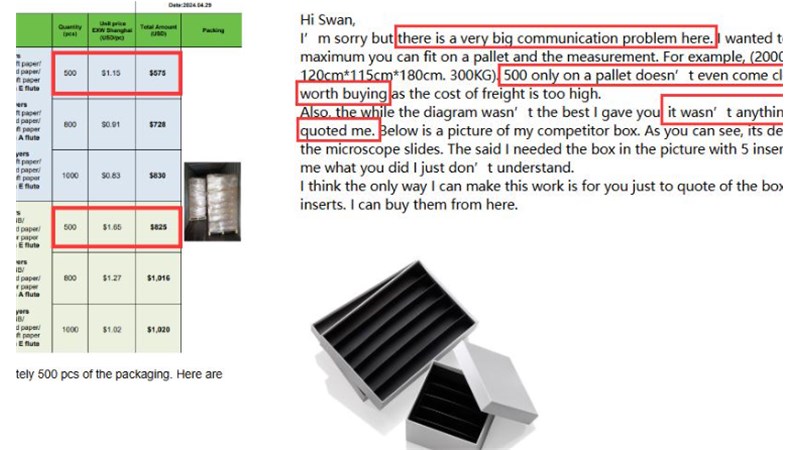
One lab-packaging brief, two very different box jobs
This laboratory-packaging project compared a lid-and-base box with a tuck-end carton. That is a useful folding-carton lesson: do not choose a structure only because it looks premium. First decide how the product should be packed, opened, displayed, and replenished.
Internal sales-case summary. Timeline and structures are taken from the case record; customer identity and commercial terms are not disclosed.
From dieline to delivery: where delays usually start
The production route normally moves from structural brief to dieline, artwork preparation, prototype, printing, finishing, die-cutting, folding and gluing, quality control, packing, and delivery. The carton itself may be simple; the handoffs are where schedules get slippery. A late product-size change can restart the dieline. A new foil area can change the production sequence. A barcode added after approval can force a panel redesign.
Keep the brief specific from the start. State whether dimensions are internal or external, show the intended upright orientation, identify the fill or packing method, and call out any non-negotiable panel content. If a window, insert, perforation, or hanging feature is planned, it belongs in the first structural discussion—not as a footnote after the artwork is finished.
Three common mistakes—and the practical fix
Choosing by appearance alone: a white board that prints beautifully may still be the wrong answer if the product scuffs it, compresses the bottom, or needs more moisture resistance. Fix it with a packed sample and handling test.
Over-finishing the carton: piling on foil, spot UV, lamination, embossing, and a window can make a pack busy, expensive, and awkward to recycle. Pick one or two treatments that make the brand hierarchy clearer.
Testing only an empty carton: an empty sample almost always feels stronger than a filled one. Test closure, stacking, product removal, and pack-out with the real item and the intended insert. That is when the honest problems show up.
Sustainability: ask the awkward questions early
Paperboard alone does not make every carton sustainable. Right-sizing and flat shipping can reduce unnecessary material and warehouse volume; recycled or certified-fiber options may be relevant by project. But laminations, windows, metallic effects, product contamination, local collection rules, and the final pack design can change what is practical.
Ask for the relevant material and sourcing documentation, including how FSC chain of custody is verified when it applies, then evaluate the finished pack for its target market. It is less glamorous than a green badge, but it is a far more useful procurement habit.
Folding carton selection checklist
Before requesting a quote, prepare product dimensions and weight, required internal fit, carton style, board preference, artwork status, print and finish requirements, insert or window needs, quantity, packing method, target market, destination, and deadline. Include a reference sample or photo if opening direction or product orientation matters.
FAQs
What materials are folding cartons made from?
Common folding carton materials include SBS, FBB, coated recycled paperboard, and kraft paperboard. Choose using product weight, print needs, finish, shelf appearance, and any project-specific documentation requirements.
Are folding cartons cheaper than rigid boxes?
They are often more economical for retail programs because they use lighter paperboard and ship flat. Final cost still depends on size, board, printing, finishes, quantity, assembly, packing, and freight.
Can folding cartons hold heavy products?
They can support moderately heavy products with an appropriate board, bottom structure, and insert. Very heavy, fragile, or transit-sensitive products may need a rigid box, corrugated outer pack, or another protective system.
What is the difference between a straight tuck and reverse tuck carton?
A straight tuck has top and bottom tuck closures on the same side. A reverse tuck has closures on opposite sides. Both suit many light-to-medium retail products; the best choice depends on layout, assembly, and display needs.
What should I send for a custom folding carton quote?
Send product dimensions and weight, carton size or dieline, material preference, quantity, artwork status, required printing and finish, inserts or windows, destination market, shipping destination, and deadline.
Conclusion: make the structure do its share
Good folding carton packaging combines clear shelf communication with a structure that can actually be filled, closed, packed, and delivered. Match the board to the product, the bottom to the load, and the finish to the message. Then validate the whole system with a physical sample before committing to the full run.
Ready to specify a custom folding carton?
Share your product size and weight, target carton style, board preference, quantity, artwork status, finish, destination, and required date. Our team can review the structure, material options, dieline route, sampling needs, production checks, and export packing as one practical workflow.
Have a reference box but no dieline? Send photos and the product dimensions. We will help turn the brief into a quote-ready carton specification.
Send Your Packaging Brief to Our Team
Share your product type, format, size, quantity, material, destination, and required date. Our team can support artwork review, sampling, production, inspection, and export coordination.
Contact us for a project-specific recommendation.
Ready to build packaging with a factory team?
Send your product size, material, artwork, quantity, destination, and deadline so our team can focus the first review on quotation and sampling.