Flexography vs Offset Printing for Packaging: When Flexo, Litho, or Digital Makes Sense


Quick answer: Flexography is often the practical choice for direct-print corrugated boxes, kraft packaging, labels, and repeat orders with stable artwork. Offset printing is usually the stronger option for folding cartons, rigid-box wraps, detailed illustrations, and brand-sensitive color work. Digital printing is useful when artwork changes often, quantities are limited, or several versions need to be tested before a larger run.
The wrong choice can create trouble long before the boxes leave the factory. A fine white line may fill in on an absorbent kraft surface. A premium carton may look flat if a photograph is printed through a process that does not suit the paperboard. A short-run launch can carry unnecessary plate costs if the artwork is likely to change in a few weeks.
The useful question is not “Which printing method is best?” It is: which method fits this packaging structure, this artwork, this paper, and this order pattern?

Flexography vs Offset Printing at a Glance
Flexography, offset lithography, and digital printing produce an image in different ways. The Flexographic Technical Association’s overview of flexo fundamentals{target=”_blank” rel=”noopener”} is useful background, but a buyer still needs to connect the process to the finished pack.
| Decision point | Flexography | Offset / Litho | Digital |
|---|---|---|---|
| Image transfer | Flexible relief plate prints directly onto the substrate | Plate transfers ink through a rubber blanket | File prints without traditional plates |
| Common packaging | Corrugated boxes, kraft paper, labels, pouches, paper bags | Folding cartons, rigid-box wraps, sleeves, paperboard packs | Short-run cartons, launch kits, test versions |
| Artwork strength | Simple graphics, bold type, stable repeat designs | Fine type, gradients, photos, detailed artwork | Fast artwork changes and multiple versions |
| Setup | Plates and press setup required | Plates and press setup required | Minimal traditional setup |
| Revision effect | New or revised plate work may be needed | New or revised plate work may be needed | Artwork can be revised in the file |
| Substrate behavior | Strong option for direct printing on many packaging surfaces | Often printed on paperboard or wrap paper before conversion | Depends heavily on the press and approved substrate |
| Brand-color control | Can use spot colors, subject to substrate and process control | Strong option for complex color-critical paperboard work | May simulate spot colors; physical approval still matters |
| Typical buyer fit | Repeat transit packaging or functional packaging | Retail-facing, premium, image-led packaging | New products, regional versions, limited campaigns |
A table can make the choice look simple. Production rarely is. For example, two cartons may use the same logo and CMYK artwork, but one is printed on coated white paperboard while the other is direct-printed on recycled corrugated board. Their ink absorption, dot gain, color density, and small-text legibility can be very different.
How Do Flexo, Offset, and Digital Printing Work on Packaging?
Flexographic printing
Flexography uses a flexible raised plate. Ink is metered through an anilox roller, transferred to the plate, then printed directly onto the material. This direct approach is one reason flexo is widely used for corrugated cartons, kraft paper, labels, films, and other packaging substrates.
For a shipping carton, direct printing can be a sensible route. The artwork may include a logo, handling marks, product identification, simple brand graphics, or a one- or two-color pattern. Those marks need to survive a functional board surface; they do not always need the photographic detail expected from a cosmetics carton.
Offset lithographic printing
Offset printing uses plates, but the image does not transfer directly from the plate to the paper. It moves through a blanket cylinder before reaching the sheet. The process is commonly used for paperboard packaging where image detail matters: folding cartons, sleeves, rigid-box wrap paper, retail presentation packs, and litho-laminated corrugated formats.
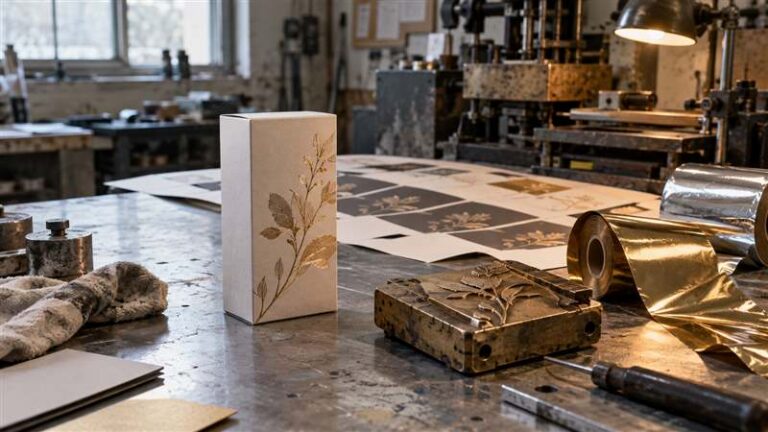
Offset earns its place when the artwork includes fine typography, skin-tone photography, close gradients, complex illustrations, or demanding brand graphics. It is also often easier to coordinate with later converting steps such as lamination, foil stamping, embossing, debossing, and die cutting—provided those steps are included in the sample review.
Digital printing
Digital printing creates the image from the approved file instead of relying on conventional printing plates. That does not make it a shortcut for every job. It makes it useful when the job itself is uncertain: a new launch, several regional versions, a subscription-box test, an event kit, or a short campaign with multiple SKUs.
Digital can also reduce the friction of artwork changes. If a product claim, language version, barcode, or seasonal message changes, the file can be updated without remaking conventional plates. The buyer still needs to check the actual substrate, solid-color coverage, finish, and color expectation before treating a digital sample as equivalent to a later offset or flexo run.
When Is Flexography the Better Packaging Choice?
Flexo is often the better fit when the package has a practical job after printing. Think direct-print shipping cartons, kraft mailers, produce cartons, corrugated retail trays, paper bags, labels, and flexible packaging with a stable design.
It is especially worth evaluating when the artwork uses bold graphics, limited colors, repeated logos, handling symbols, or a pattern that needs to run consistently across repeat orders. A direct-print carton also removes the separate step of printing a wrap sheet and laminating it to corrugated board.
For brands developing custom corrugated shipping boxes, the print decision should sit beside the board, flute, packed weight, closure, and delivery route. The print surface is part of the shipment, not a design layer added after the box specification is fixed.
Flexo needs more care when the design contains hairline reverses, tiny light text, subtle tonal transitions, or fine photographic detail. Recycled and uncoated boards can absorb ink differently from coated papers. A brand that approves a screen mock-up without seeing the real board may find that its pale logo loses contrast or its small type fills in during production.
When Is Offset Printing Worth the Setup?
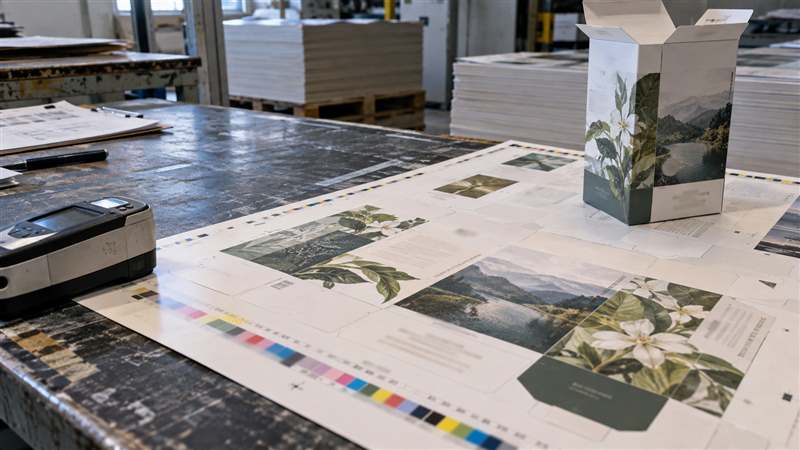
Offset is usually worth considering when the printed surface carries much of the package’s selling job. Folding cartons for beauty, fragrance, supplements, food, electronics, wine, and retail gift sets often need sharper graphics than a transit carton. The same applies to rigid-box wrap paper, presentation sleeves, and printed inserts.
Offset is a strong candidate when the design includes:
- Fine serif or reversed type;
- Dense illustration work;
- Photography and tonal gradients;
- Multiple brand colors;
- Close visual consistency across a product range;
- Premium finishes that need precise registration.
That does not mean offset automatically creates a premium package. A weak paper choice, a poor dieline, a badly placed fold, or a finish that cracks on the score can still make a good print job look cheap. The print method must follow the structure, not compete with it.
For example, a carton with a dark full-coverage background needs its fold positions reviewed before production. If the board cracks at a score line, the exposed paper fiber can become obvious. The answer may involve board choice, grain direction, scoring, coating, artwork placement, or a different finish—not merely “print it better.”
Where Does Digital Printing Fit—and Where Does It Not?
Digital printing is useful when flexibility has more value than long-run unit economics. It suits a business testing four box designs, launching a limited holiday pack, changing product information across several countries, or producing short runs before demand is proven.
It can also make sense where several SKU designs share one packaging structure. A brand may have one folding-carton dieline but six product variants. With digital, the artwork can change more easily while the structure remains fixed.
That flexibility does not remove the need for a production decision. Once the order becomes a stable repeat programme, conventional flexo or offset may give a better fit depending on the substrate, artwork, and expected order pattern. The right point to switch is not a universal quantity threshold. It depends on the number of colors, designs, repeat frequency, finishing requirements, material yield, and whether the artwork is actually settled.
For more procurement-focused comparisons beyond print, browse the Forests Packaging Insights blogfor material, insert, shipping, and packaging-structure guidance.
A Danish fragrance brand needed a lighter way to keep pale colour consistent
Its E-flute mailer needed a full pale-grey base, a fine-line logo and frequent copy updates. The old offset route looked good—but it was too rigid for the way this brand launched products.
The brief was not “make it cheaper”
The customer sold candles and reed-diffuser sets in a Nordic, restrained visual style. It wanted recyclable packaging, less exposure to obsolete stock, and a pale background that would not look patchy on 80% recycled E-flute board.
Offset litho
Colour was stable, but the laminated construction and higher setup burden worked against frequent text changes.
- Film and press setup for each revision
- 3–5 day change cycle
- Matte film complicated recyclability
Digital print
The quickest route for new artwork, yet the full pale field showed grain and could scuff in parcel handling.
- No plates and rapid artwork updates
- Pale fill showed mottling
- Unit cost climbed at volume
HD flexography
Direct water-based printing kept the box unlaminated and provided the practical middle ground between appearance and repeatability.
- 4C CMYK + one Pantone pale grey
- Water-based ink, no film laminate
- Artwork update in 4–8 hours
What changed after the switch
Flexo reduced the former offset waste rate from 2.1% to 0.6%. Artwork revisions went from 3–5 days to 4–8 hours, while revision cost fell by 75%. The unlaminated mailer also lowered total box cost by 12%.
Why the customer approved it
The box still felt deliberate and premium, but the brand could run smaller launches without building old stock. Its recyclable material direction and faster update cycle finally matched the way it worked.
Production note: pale coverage needs its own colour
On recycled corrugated board, do not build a pale full-coverage background by stacking CMYK. This project used a dedicated Pantone pale-grey base with a 300 lpi anilox roller to lay down a thin, even ink film—avoiding the cloudy, uneven look that four-colour overprint can create on rough paper.
Source note: Internal project record, Denmark, January 2024. Customer identity withheld. Results reflect the stated box, artwork, board and handling conditions; they are not a universal performance guarantee.
Do Not Choose by Quantity Alone: Four Questions That Change the Answer
What surface will carry the print?
Coated white paperboard, uncoated kraft, recycled board, direct corrugated, metallized paper, and flexible film do not receive ink in the same way. The surface changes perceived color, sharpness, dot shape, and rub resistance.
A flexo design that works on a white coated label may not read the same on a brown corrugated carton. An offset design built for coated art paper may need adjustment before it goes onto an uncoated wrap sheet. Ask the supplier to print or simulate the artwork on the intended material rather than showing a generic proof.
How demanding is the artwork?
Separate the parts of the artwork that must be perfect from the parts that can be flexible. Is the critical element a small white logo? A skin-tone photograph? A large dark background? A Pantone brand color? A legal text block? A barcode?
This makes the conversation more useful than simply saying, “We need premium quality.” A supplier can test a 4-point reverse line or a dense black panel. “Premium” cannot be tested unless the buyer explains what visual failure would be unacceptable.
How many versions will the project need?
A single artwork repeated for months creates a different cost structure from ten language versions that may change every quarter. Plate-based methods can be a sound choice for stable programmes; frequent version changes require the buyer to account for revised plates, proofing, approvals, and obsolete inventory.
How will color be approved?
A Pantone number is useful, but it is not a substitute for an approved physical reference. Paper, ink, coating, lighting, and viewing conditions all influence the result. The International Color Consortium’s profile resources explain why print workflows use profiles and characterized printing conditions rather than relying on the appearance of a screen alone.
What Should You Approve Before Mass Production?
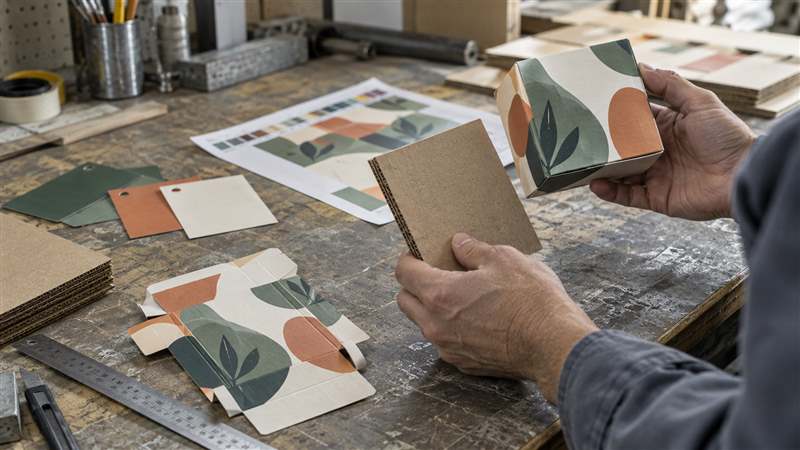
The sample stage is where printing method and package construction meet. Approving only a flat sheet can leave important questions unanswered. A packaging proof should reflect the real board, print process, structure, and, where practical, relevant finishing.
Use this checklist before approving a mass-production run:
- Confirm the final artwork version and each SKU;
- Confirm whether colors are CMYK, spot colors, or a combination;
- Check the print on the actual paperboard, corrugated board, or kraft substrate;
- Inspect small text, reverse text, barcodes, gradients, and large solid-color areas;
- Check folds, scores, glue areas, windows, embossing, foil, and other locations that may affect the image;
- Review the completed pack under normal viewing conditions, not only under a press-room light;
- Retain an approved reference sample for the next repeat order.
Pantone itself notes that an on-screen simulation may not match a physical color standard. Use a physical Pantone reference or another agreed physical standard when color is commercially important.
What Should You Include in an RFQ for Flexo, Offset, or Digital Packaging?
A good RFQ lets a supplier identify the likely printing route before pricing an unsuitable process. It also exposes questions that can otherwise appear after the artwork has already been approved.
Include the following:
- Packaging type and final structure: carton, corrugated shipper, mailer, sleeve, rigid box, pouch, label, or bag.
- Finished dimensions and whether they are internal or external.
- Intended material and any recycled-content, coating, or texture requirement.
- Dieline or rough structural drawing, if available.
- Artwork files, number of designs, number of SKUs, and language versions.
- Print requirement: CMYK, Pantone references, number of printed sides, white ink, metallic effect, or special finish.
- Quantity per SKU and estimated reorder pattern.
- Product weight, packing method, and destination if the package also needs a shipping role.
- Sample requirement, deadline, and the visual or functional points that need approval.
If you have those details ready, send them through the Forests packaging inquiry page. It gives the production team a usable starting point instead of forcing the quotation to rely on a generic “custom box” description.
FAQ
Is flexographic printing cheaper than offset printing?
It can be, particularly for stable direct-print packaging and repeat work, but the answer depends on plate count, artwork complexity, material, quantity by SKU, and press setup. Compare total project cost, not only the quoted unit price.
Is flexo or offset better for corrugated boxes?
Flexo is commonly used for direct-print corrugated packaging. Offset can be a stronger option when the corrugated box needs a high-detail printed wrap sheet or litho-laminated presentation. The choice depends on whether transit function or shelf presentation drives the pack.
Can flexographic printing match Pantone colors?
Flexo can use spot colors, but the final result depends on ink, substrate, plate, press condition, and the approved color reference. Confirm the color on the actual production material.
Is digital printing suitable for retail packaging?
Yes, particularly for short runs, market tests, regional versions, and changing artwork. For stable, high-volume retail programmes with demanding graphics, offset may still be the more suitable route.
Do I need a physical proof before printing custom packaging?
A physical proof is strongly recommended when color, material surface, fine detail, folds, special finishes, or product fit matter. It is the clearest way to check how the design behaves as a finished package rather than as a screen file.
How Forests Matches the Print Method to the Package
A print choice should be checked against the whole pack: the product, structure, board, artwork, finish, assembly sequence, and delivery route. A direct-print corrugated carton may need flexo and a board-first review. A retail folding carton may need offset, a color proof, and a score-line check. A short campaign may need digital printing because the artwork is still changing.
Forests begins that conversation from the packaging brief rather than naming one process as the default. The project review can cover the product, structural drawing, material surface, artwork risk, sample requirements, conversion steps, and repeat-order expectation. Learn more about Forests Packaging Groupbefore sending the first artwork file.
The useful outcome is an approved package that can be repeated with fewer surprises—not a process selected only because it was familiar or appeared cheaper at the first quotation stage.
Send Your Packaging Brief to Our Team
Share your product type, format, size, quantity, material, destination, and required date. Our team can support artwork review, sampling, production, inspection, and export coordination.
Contact us for a project-specific recommendation.

Ready to build packaging with a factory team?
Send your product size, material, artwork, quantity, destination, and deadline so our team can focus the first review on quotation and sampling.