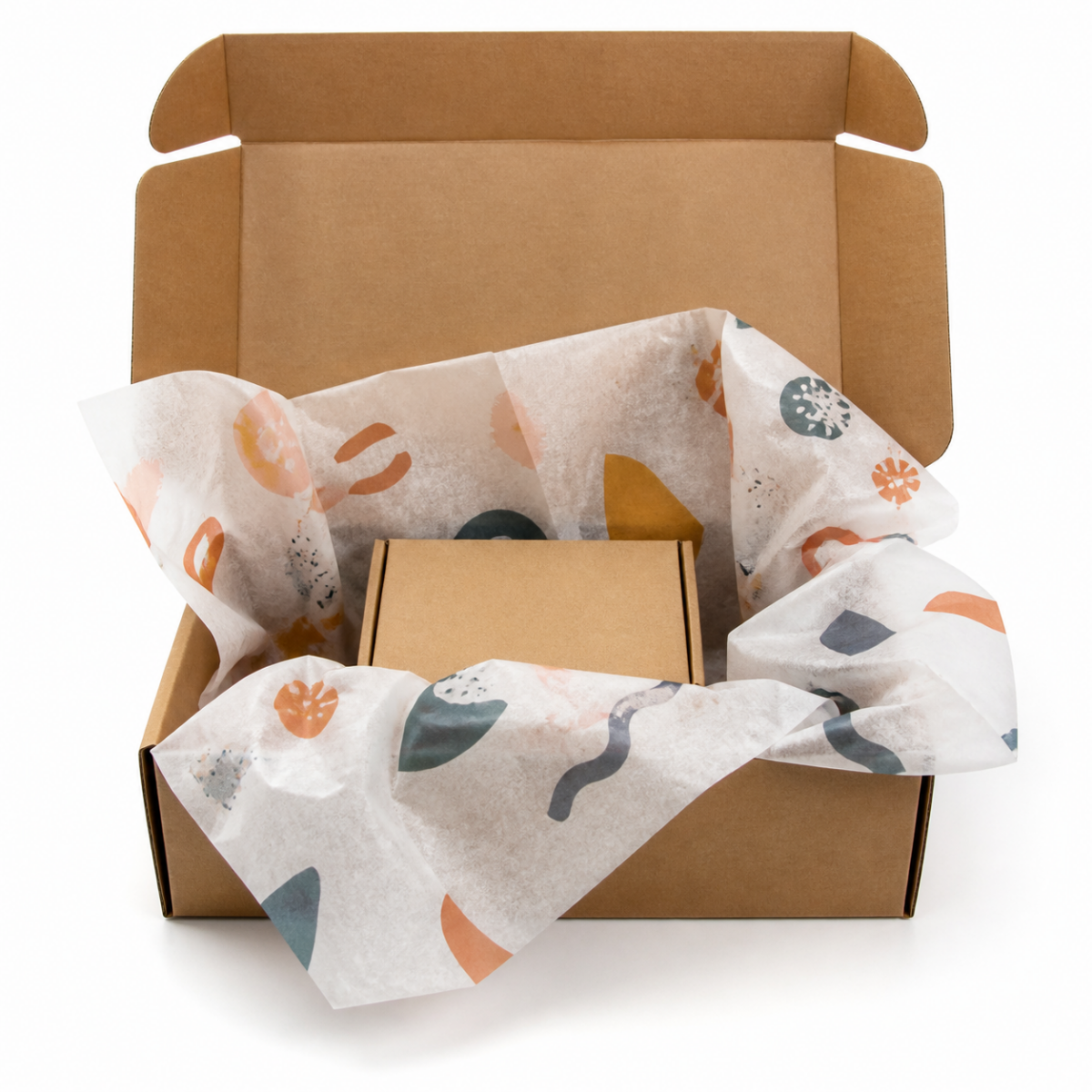
Custom printed tissue paper
Custom Printed Tissue Paper for Clothing, Gifts, and Retail Packaging
Custom tissue paper does more than fill a box. It wraps the product, keeps the branding visible, and shapes the opening sequence. The right specification depends on the product, fold, paper feel, print coverage, and packing method.
Forests helps brands compare those details before production, so the tissue fits the rest of the pack instead of being chosen by colour or GSM alone.
Selling the solution
Choose the tissue around the product and the opening
A tissue sheet can look right on a screen and still cause problems at the packing bench. It may tear around a corner, show too much of the product, lose a print detail in the fold, or be larger than the box needs. These problems usually appear when the paper is specified separately from the pack-out.
The tissue is checked as it will be used: wrapped around the product, placed in the box or bag, folded by the team, and opened by the customer.
Choose the weight for the product
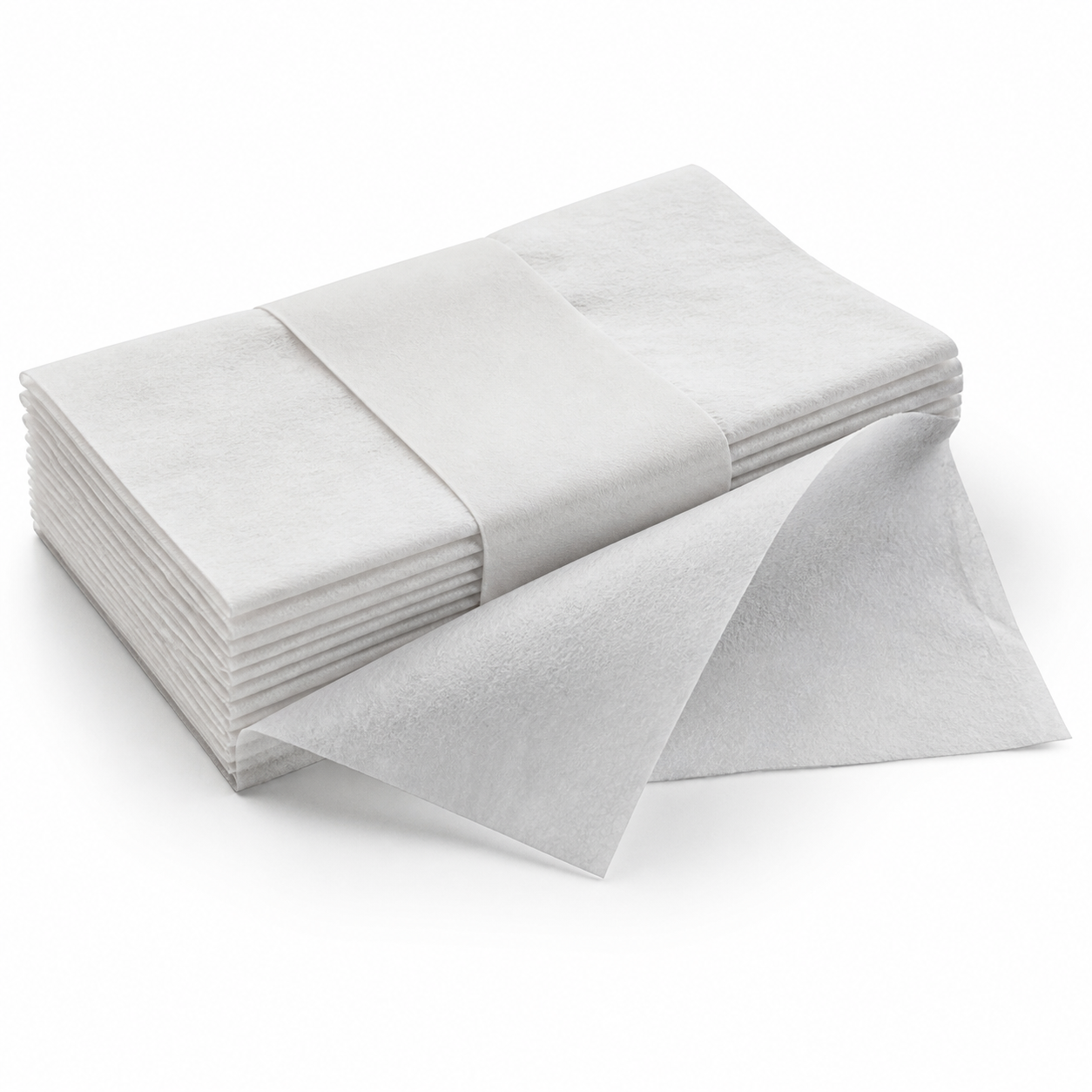
Around 17 GSM gives a lighter, softer and more translucent wrap. Around 28 GSM gives more body and usually less show-through. Compare the feel and opacity against the product, not just the number.
Check the print after folding
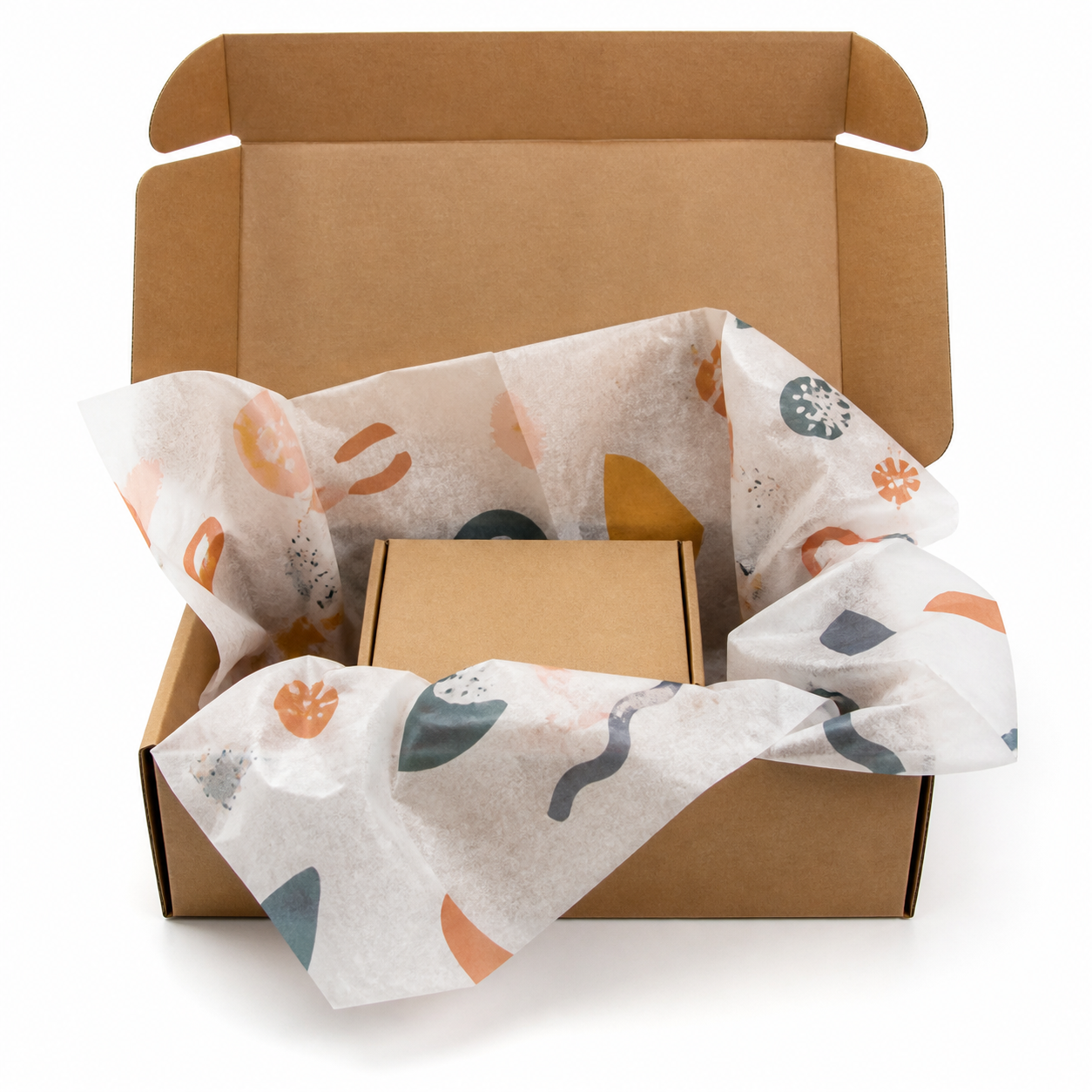
A repeating logo or one-colour pattern is often easier to control than a dark solid or fine reversed type. Paper colour, absorbency, ink coverage and fold position affect the result, so check artwork on a printed sample.
Size the sheet for the packing bench
An oversized sheet creates waste and extra folds. A sheet that is too small leaves corners exposed or slows packing. Set the size from the product, box or bag, overlap and opening sequence.
Know what tissue can and cannot do
Tissue is useful for wrapping, separating, concealing and presenting products. It is not a substitute for corrugated protection, molded pulp or cushioning where the shipment needs structural support.
Tissue paper details
Choose the details that affect the finished pack
The right specification is the one your product, artwork and packing routine can repeat.
Light wrapping and soft drape
Choose a lighter tissue when easy folding and a delicate layered look matter. It can suit apparel, accessories and products that do not need the tissue to provide protection.
More body and less show-through
A heavier tissue can make the wrap feel more substantial. Compare it with the actual product because density, colour and finish also change the result.
Logos and repeat patterns
Use branded tissue paper to carry a logo, pattern or campaign detail into the unboxing experience. Keep the print plan realistic for the paper surface, artwork scale, coverage and folds.
Sheets for the real pack-out
Set the sheet size and fold around the box, bag or product. A short packing trial can reveal speed, coverage, tearing, show-through and opening issues.
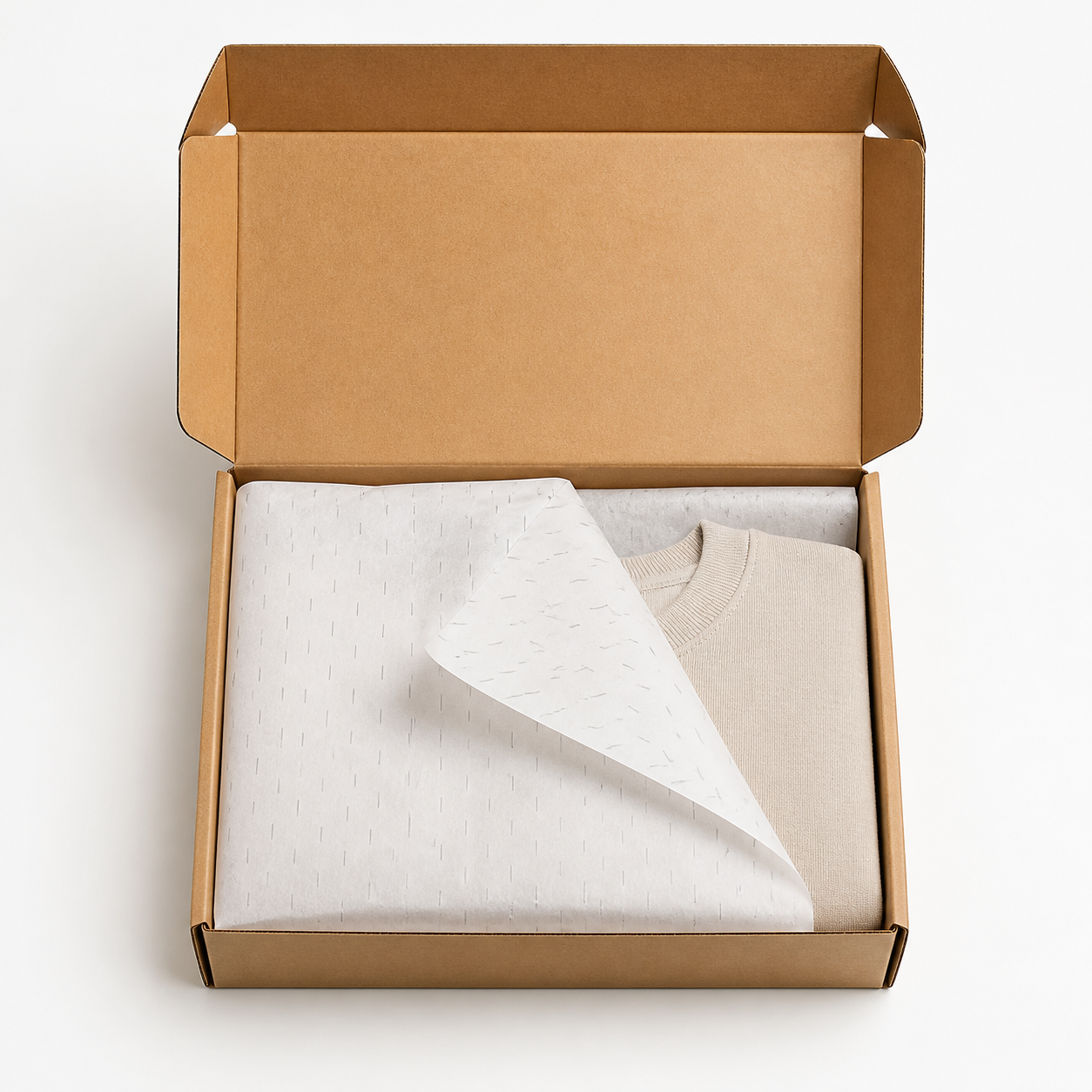
Why choose Forests
Specify tissue that works with the rest of the packaging
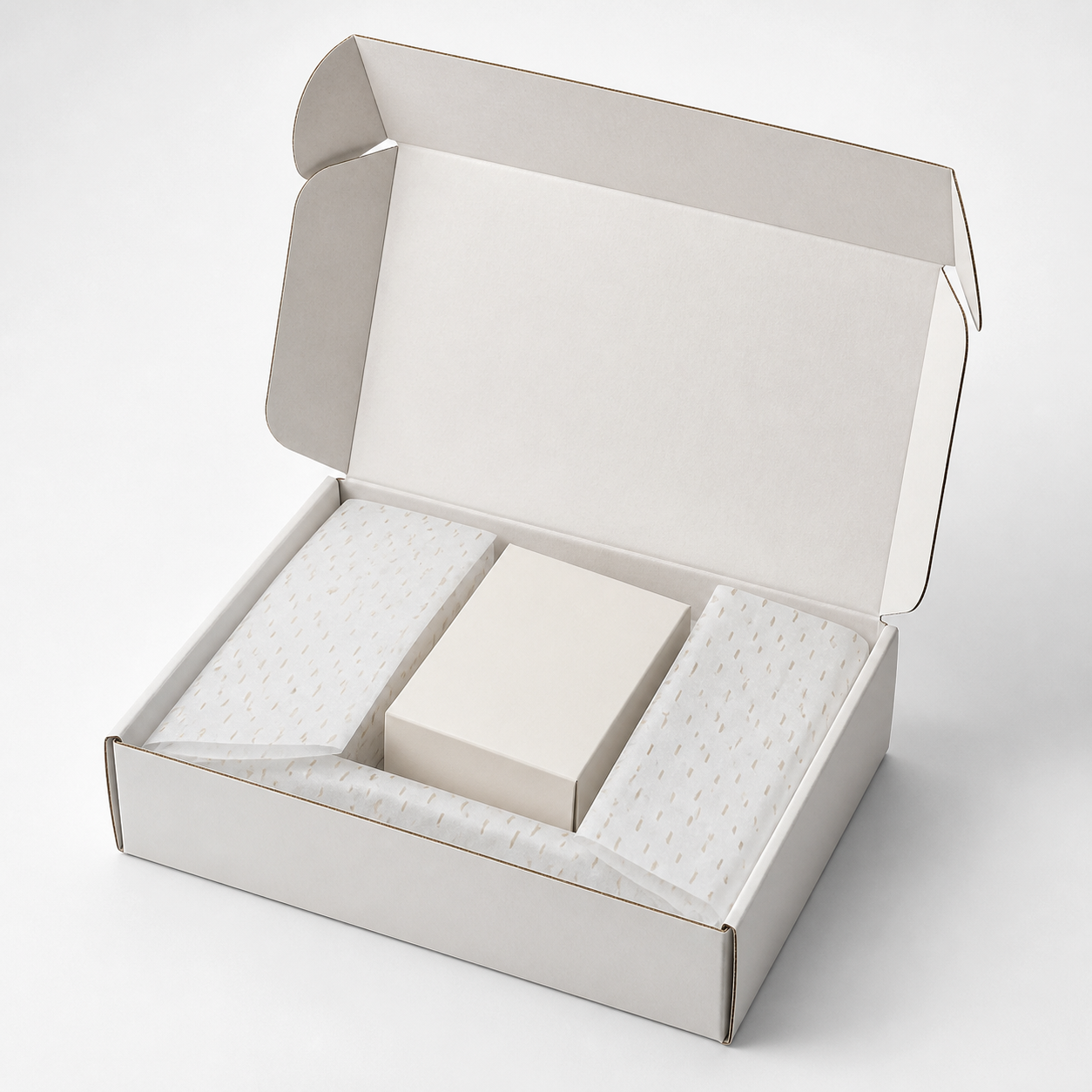
Tissue is rarely the only packaging item in an order. It may sit inside a mailer box, gift box or paper bag, beside an insert or label. Because Forests also supplies these connected formats, the tissue can be judged as part of the finished pack.
Check the dimensions with the real product
Send the product dimensions and box or bag format first. Forests can use the packed size, fold and overlap to work out a usable sheet size.
Review paper and artwork together
GSM is only a starting point. Paper colour, opacity, absorbency, print coverage and pattern scale need to be checked together, especially when a logo must remain clear after folding.
Pack and open a physical sample
Wrap the product, place it in the finished pack, and check it under normal indoor light. This reveals show-through, ink placement on folds and handling performance.
Keep the approved specification for repeats
Record the approved paper grade, GSM, colour, sheet size, pattern repeat, print details, fold and packing quantity. This gives the next order a clear reference.
Tissue paper formats
Review the paper before approving the pack
Compare printed patterns, folds, paper weight and product presentation. The final stock, print coverage and sheet size should be confirmed with the actual pack-out.
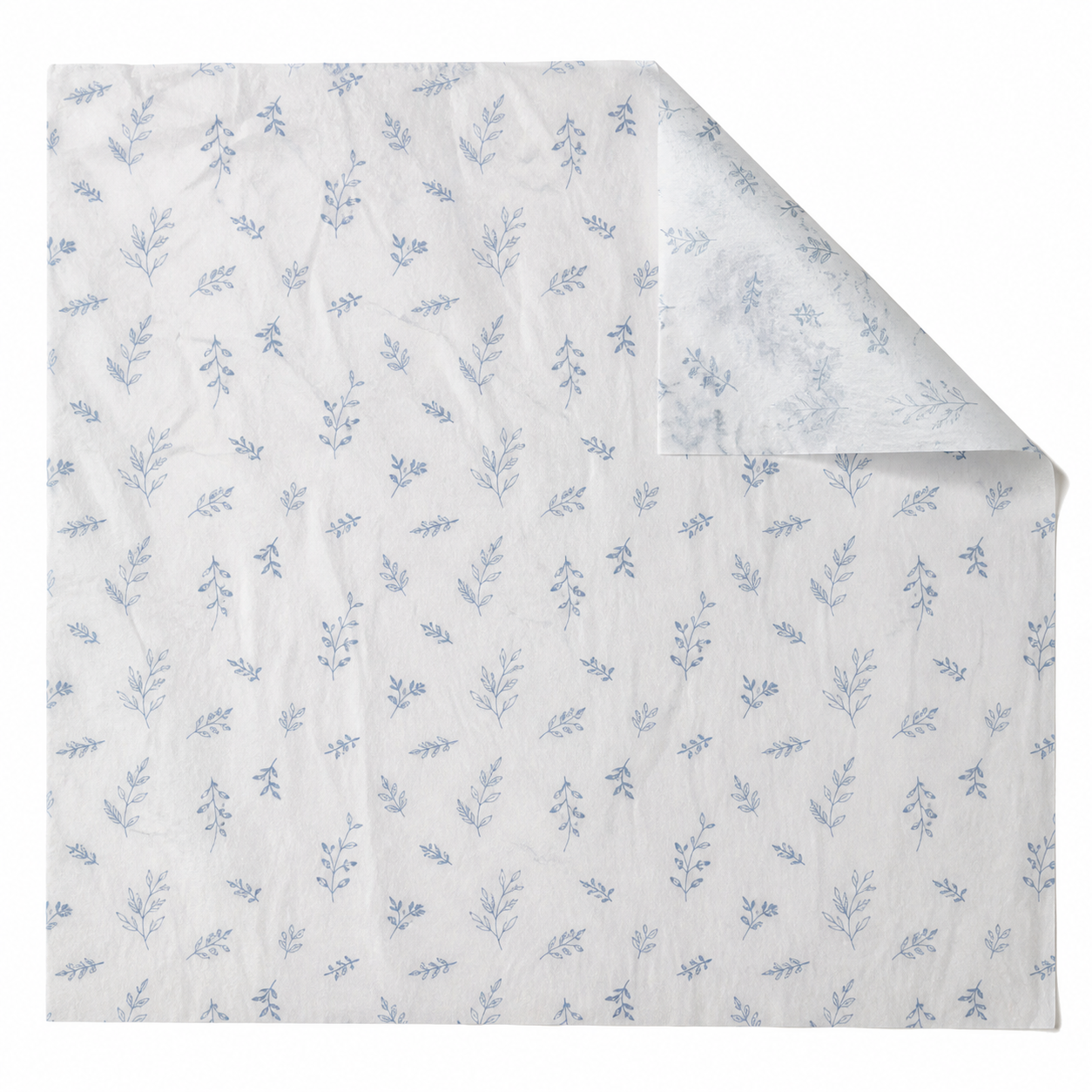
Gallery images show different tissue paper formats and packing situations. Confirm the final specification for your product.
Applications and industries
Where custom printed tissue paper fits the handover
Tissue suits products where the wrap is part of the presentation. The choice changes with product shape, handling and the way the order reaches the customer.
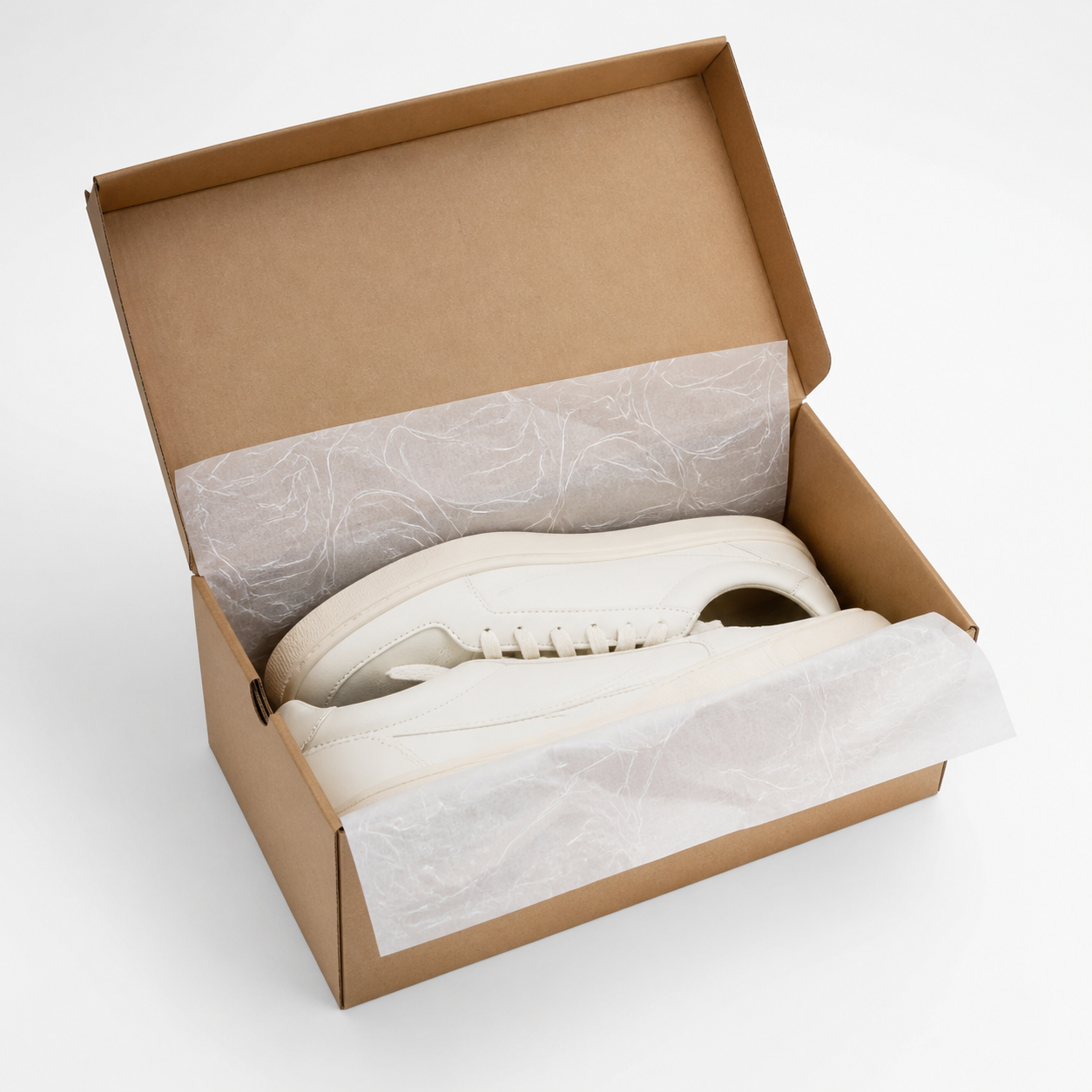
Apparel and fashion orders
Use tissue to wrap garments, shoes, accessories and soft goods inside a mailer or presentation box. Check the drape, coverage and logo after folding.
View fashion applications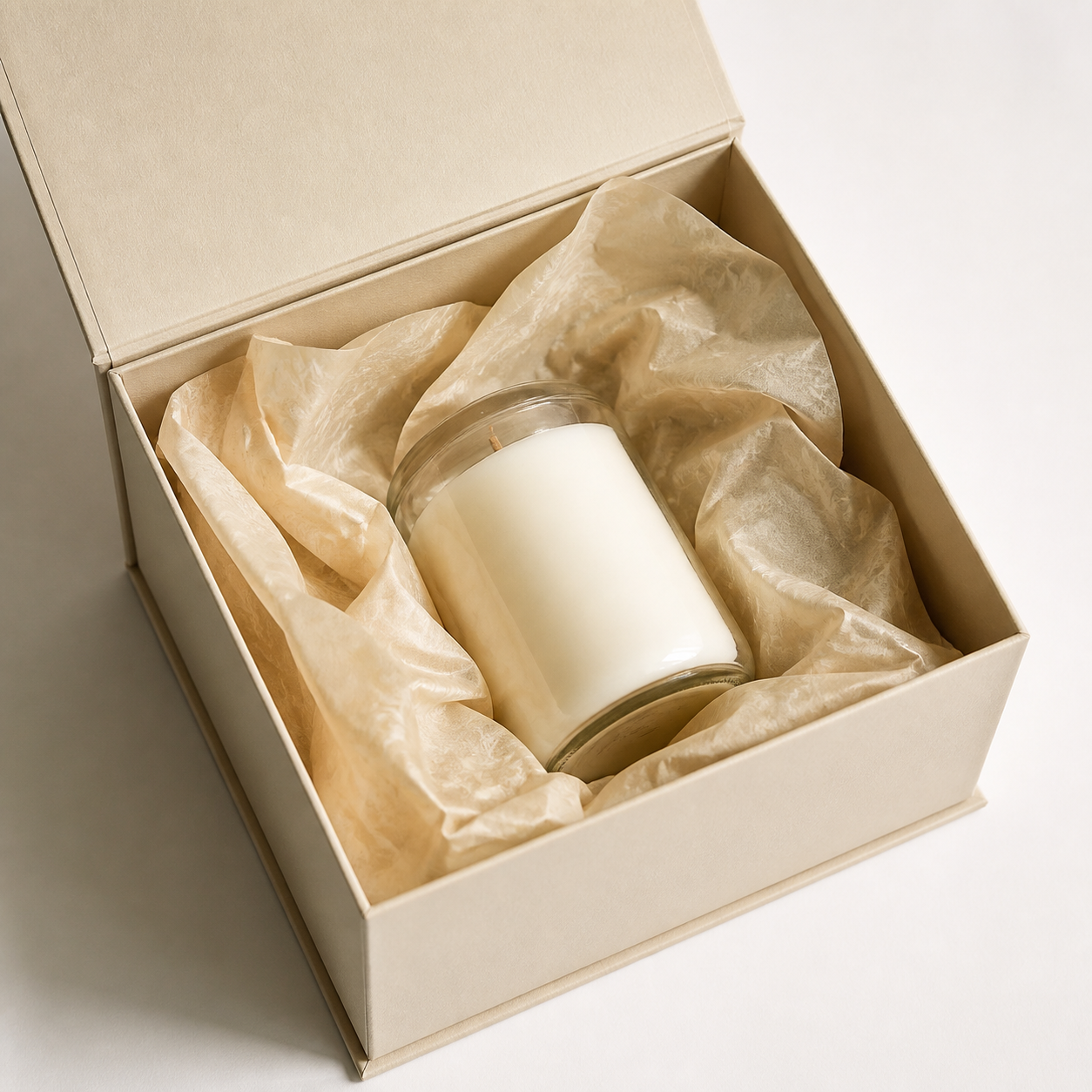
Gifts, beauty and presentation boxes
Tissue can conceal the product, separate items and control the first reveal for gifts, candles, cosmetics and accessories. A heavier option may suit a pack that needs more body or less show-through.
View gift applications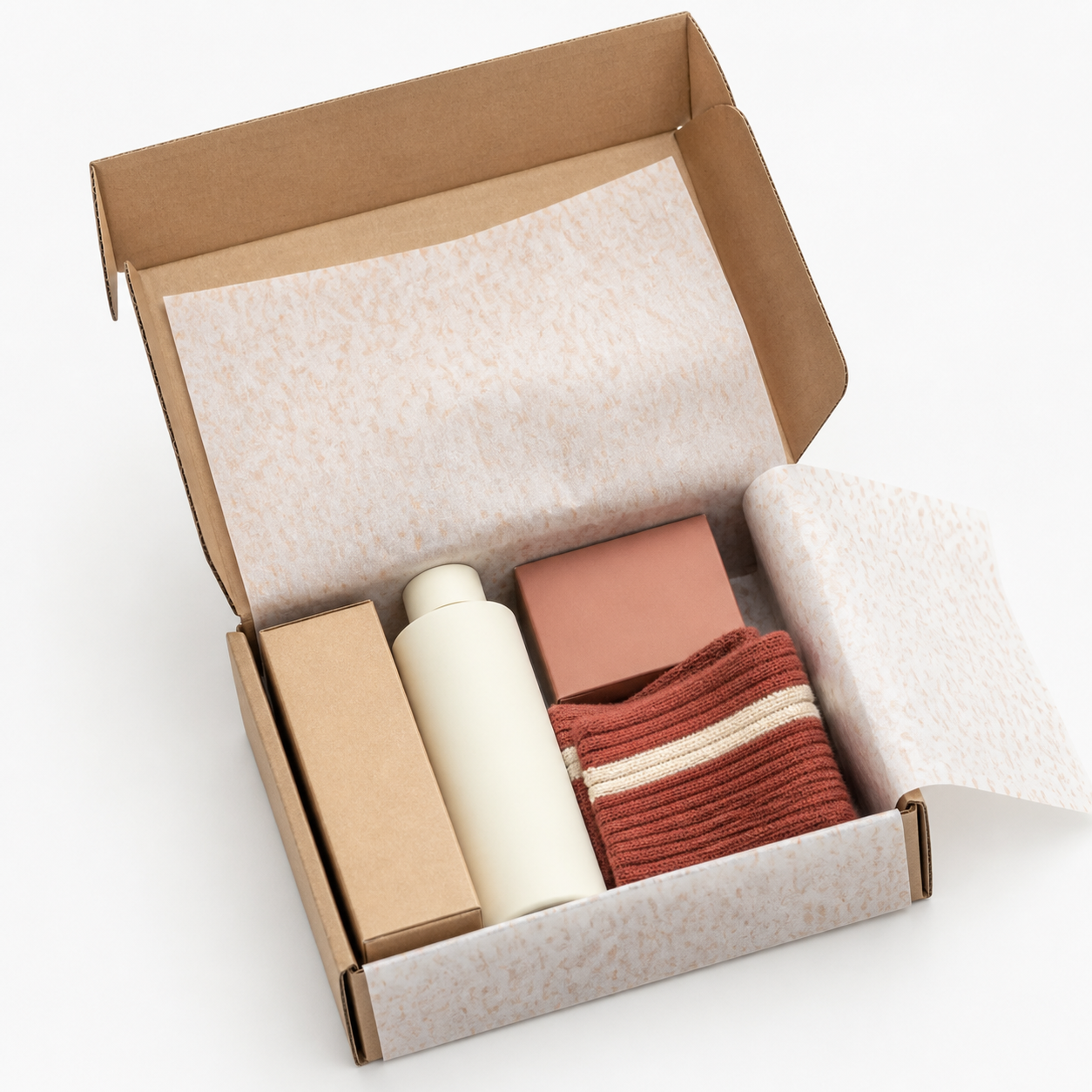
E-commerce and retail packs
For direct-to-consumer orders, subscriptions and retail handover, sheet size matters at the packing station. Test the sequence so the tissue is quick to use without excess material or extra handling.
View e-commerce applicationsCustomer testimonials
What buyers checked before approving the tissue
“We compared 17 GSM and 28 GSM with the actual mailer box. The lighter sheet had the drape we wanted, but the heavier sample hid the product better.”Grace Miller · United Kingdom
Tissue paper FAQ
Questions to settle before ordering custom tissue paper
What GSM is best for custom tissue paper?
Most projects start by comparing two options. Around 17 GSM can suit light wrapping; around 28 GSM can provide more body and less show-through. Compare samples with the real product because grade, colour, artwork and folding still matter.
Is 17 GSM tissue paper too thin for packaging?
17 GSM is not automatically too thin. It can work well for apparel, soft goods and decorative wrapping when the tissue is not expected to cushion the product. If you need more opacity or body, test a heavier option too.
What is the difference between GSM and tissue paper thickness?
GSM tells you the mass per square metre; caliper tells you the physical thickness. Higher GSM often feels more substantial within the same paper family, but fibre, density and finish can change the result.
Can custom tissue paper be printed with a logo or repeating pattern?
Yes, a logo or repeating pattern can be printed, but the artwork needs to suit the paper surface and coverage. Check fine type, dark solids and reversed details because absorbency, base colour and folds can change the result.
How large should tissue paper sheets be for packaging?
There is no universal sheet size. Start with the product and finished box or bag, then allow for the fold and overlap needed by the packing team. Test the actual pack-out before ordering.
What should I send for a custom tissue paper quote?
For a quote, send product and pack dimensions, intended use, preferred feel or GSM, tissue colour, artwork, print colours or coverage, sheet size, quantity, destination and delivery date. A photo or current sample is also useful.
Need tissue paper that works with the rest of the pack?
Share the product dimensions, box or bag format, desired paper feel, artwork, sheet size, quantity, destination and deadline. Forests can help turn those details into a practical custom tissue paper sample brief.
Send Your Packaging Brief to Our Team
Share your product type, format, size, quantity, material, destination, and required date. Our team can support artwork review, sampling, production, inspection, and export coordination.
Contact us for a project-specific recommendation.
Ready to build packaging with a factory team?
Send your product size, material, artwork, quantity, destination, and deadline so our team can focus the first review on quotation and sampling.