Eco-Friendly Packaging Adhesives: Types, Uses and Selection

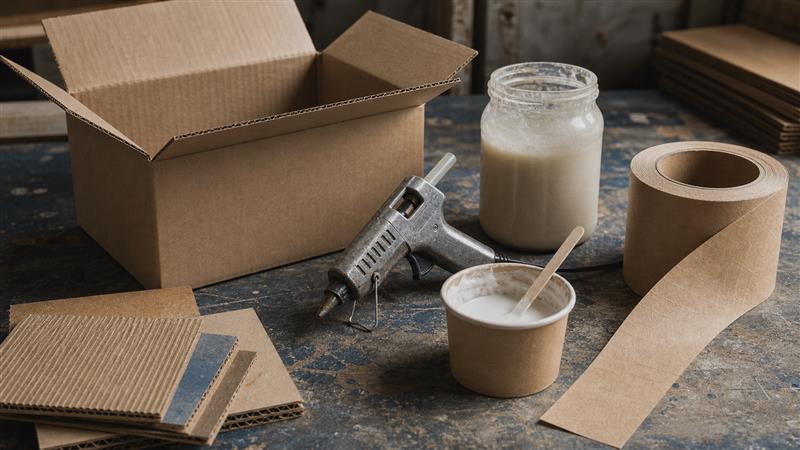
Quick answer: An eco friendly adhesive is not chosen by the word “natural” alone. The practical choice depends on the substrate, bond strength, set speed, equipment, emissions, adhesive quantity and what happens to the finished package after use.
Packaging glue is easy to ignore until a carton opens, a label lifts or a mailer stalls on the packing line. This guide compares the main packaging glue types and shows how to choose a sustainable packaging adhesive without turning a real production decision into a green-label guessing game.
What makes a packaging adhesive sustainable?
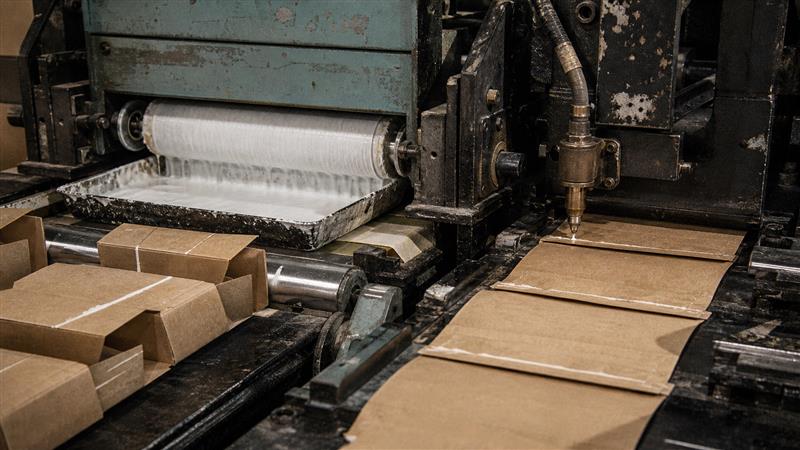
Start with the bond. If a carton fails during transport, the result may be a damaged product, a replacement shipment and another package being made. A formulation that uses renewable feedstock but needs three times as much adhesive, runs slowly or fails in humidity may have a worse practical result than a synthetic adhesive applied in a thin, reliable layer.
For procurement, assess six things together: bond performance, raw material source, VOC profile, application energy, waste and end-of-life compatibility. A water-based adhesive can reduce reliance on solvent carriers, but it is not automatically bio-based or biodegradable. A hot-melt adhesive can be synthetic, yet its fast set may reduce waiting time and excess application.
VOC is also a specific term, not a synonym for “bad glue.” The US EPA includes glues and adhesives among products that can emit volatile organic compounds, so ask for the technical or safety data rather than relying on a front-label claim. The EPA’s VOC overview is a useful starting point when your brief includes indoor air or emissions concerns.
Packaging glue types: how the main systems work
Water-based adhesives
Water-based systems use water as a carrier or dispersion medium. As the water leaves by evaporation or absorption, the adhesive film forms. They are common on porous paper, board, cartons, paper mailers and some labels. Their strengths are formulation flexibility and good compatibility with many fibre-based substrates.
The trade-off is time. Drying depends on coat weight, board absorbency, temperature and humidity. A recycled sheet with a dusty or uneven surface may absorb differently from a clean virgin board. Water-based does not mean weak, but the process needs enough open time and drying capacity.
Hot-melt adhesives
Hot melt is solid at room temperature, heated until it flows, then bonded as it cools. It is useful when cartons, boxes or mailers need a quick set. The fast cycle suits automated packaging lines, but the equipment needs controlled temperature, safe handling and regular cleaning.
Hot melt also needs a more careful sustainability discussion than “plastic versus natural.” Some formulations are polymer-based, but a small, well-controlled application can prevent rejects and keep a high-speed line moving. Ask about the adhesive chemistry, application weight, energy use and how the complete package behaves in its intended recycling route.
Pressure-sensitive adhesives
Pressure-sensitive adhesive, or PSA, bonds when the user presses it onto a surface. It appears on labels, stickers, tapes and self-seal mailers. Initial tack, peel strength, shear strength and the pressure applied during closing all matter.
PSA is often where recycled corrugated creates a surprise. Rough fibres, dust and lower surface strength can make a standard label lift at the edges. The answer may be a different adhesive, a different label face stock or simply a short, deliberate pressure step during application.
Starch-based adhesives
Starch systems are widely associated with corrugated board and water-activated paper tape. They can use plant-derived feedstocks such as corn or potato starch and are a familiar option for paper-to-paper bonding. That makes them relevant to paper packaging, but not automatically compostable in every finished construction.
Reactive and solvent-based systems
Reactive adhesives cure through a chemical reaction and are used when a demanding bond or specialised structure requires them. Solvent-based adhesives also have specific applications, especially where wetting or substrate compatibility is difficult. They should be assessed through technical data, ventilation needs, VOC content and the actual production process, not dismissed or approved by category name alone.
Water-based adhesive vs. hot melt: which is better?
| Decision factor | Water-based | Hot melt |
|---|---|---|
| Bond formation | Drying or absorption | Cooling from a molten state |
| Typical substrates | Paper, board and porous surfaces | Board, mailers and selected mixed substrates |
| Set speed | Depends on drying conditions | Usually fast once cooled |
| Equipment | Roller, nozzle or coating system plus drying control | Heated tank, hose and applicator |
| Main watch-out | Humidity, absorbency and open time | Heat, energy and formulation-specific recycling behaviour |
There is no universal winner. Choose water-based when the substrate and line can accommodate drying. Choose hot melt when a quick, repeatable set matters more and the equipment is already suited to it. Compare the complete process, including rejected packs and downtime, rather than comparing one drum of adhesive with another.
Where adhesives appear in a packaging system
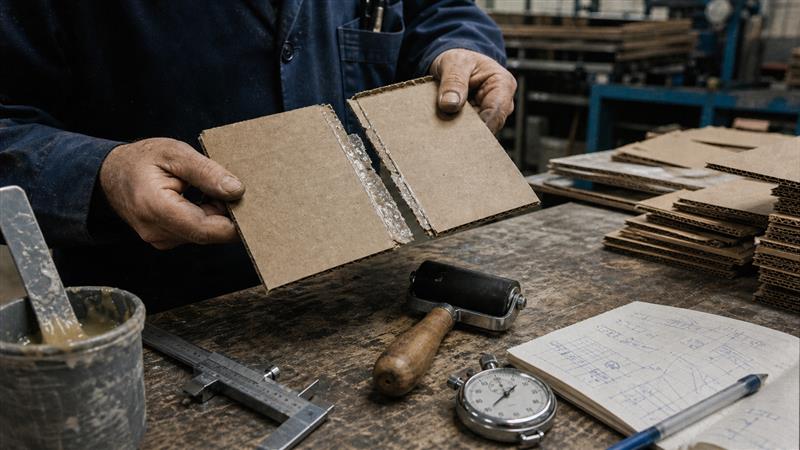
One package can contain several adhesive decisions. Corrugated board may use starch adhesive at the board-making stage. A folding carton may use water-based or hot-melt glue at the side seam. A mailer may use a construction adhesive plus a pressure-sensitive strip for the customer to close. A shipping label may use a PSA and a release liner.
This is why a supplier brief should describe the whole structure. If you need a paper mailer, for example, specify the paper grade, flap design, seal type, opening direction, expected handling and whether the mailer must pass through a particular recycling stream. For broader packaging formats, see our packaging applications page and map the adhesive to the product’s real use.
How to choose an eco friendly adhesive
1. Name the substrates first
Write down exactly what is being bonded: virgin kraft, recycled corrugated, coated board, glassine paper, film, label stock or a mixed structure. Two materials that look similar can have very different surface energy, absorbency and fibre pull.
2. Define the bond and the line
Is the bond permanent or intended to open cleanly? Does the pack need to survive cold storage, humidity, parcel impact or shelf handling? Then record the line speed, application method, available temperature range and the time the package can remain under pressure.
3. Test the actual board
Do not approve an adhesive on a bright white laboratory sheet when production will use dusty recycled corrugated. Run a sample on the final board, with the final print, coating and fold direction. Check the bond after a short dwell and again after conditioning.
4. Measure application, not just chemistry
Ask for recommended coat weight or bead size, open time, set time, operating temperature and storage conditions. A glue that works at one speed may string, squeeze out or fail when the machine is adjusted for a different board thickness.
5. Decide the end-of-life route
For paper packaging, ask how the adhesive behaves during repulping and whether the full construction has been evaluated. The Cepi paper-based packaging recyclability guidelines make the important point that coatings, laminates and functional treatments must be considered with the paper, not separately from it.
Why recycled corrugated can be harder to bond
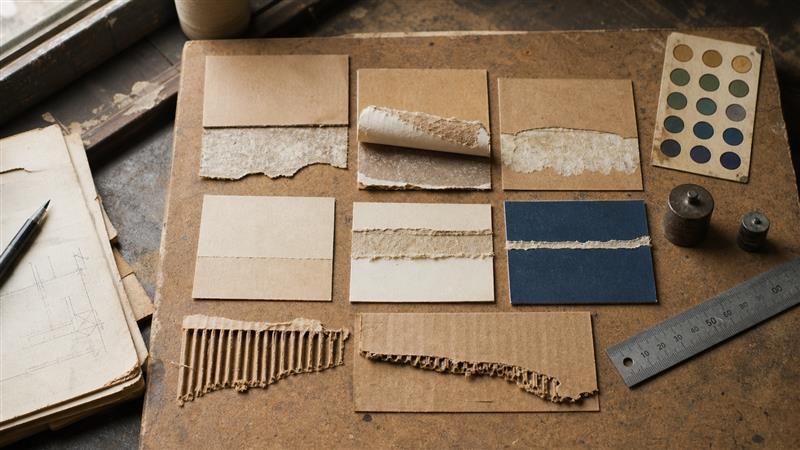
Recycled corrugated is not one uniform material. Fibre length, surface dust, absorbency, coatings and humidity can vary between batches. A PSA label that worked on a smooth virgin liner may lift on a rough recycled liner because the adhesive cannot make the same contact.
Start with the simplest correction: clean the surface, apply the specified pressure and allow the bond to develop. If the problem remains, test a higher-tack or corrugated-specific formulation, adjust the label construction or review the board surface. Increasing the adhesive amount is not always the fix. It can increase mess, cost and recycling complications.
How to diagnose adhesive failure
When a package opens, do not immediately order a stronger glue. Pull the failed joint apart and look at the surfaces.
- Adhesive failure: the glue releases cleanly from one substrate.
- Cohesive failure: the adhesive layer splits and remains on both surfaces.
- Substrate failure: the paper or board tears before the bond gives way.
Each failure points to a different response. Adhesive failure may need better wetting, pressure or a different formulation. Cohesive failure may need more cure or a thicker, better-matched adhesive film. Substrate failure may mean the bond is already stronger than the board, so changing glue will not solve the weak paper. For further technical reading, TAPPI’s corrugated adhesive resources show why troubleshooting should be tied to the actual process.
Sales win · starch-based adhesive
The Canadian paper mailer that stopped opening in transit
A 75% recycled-content mailer did not need a louder glue claim. It needed the adhesive, pressure and drying window tuned to the board.
Local ecommerce brand · high-volume mailers
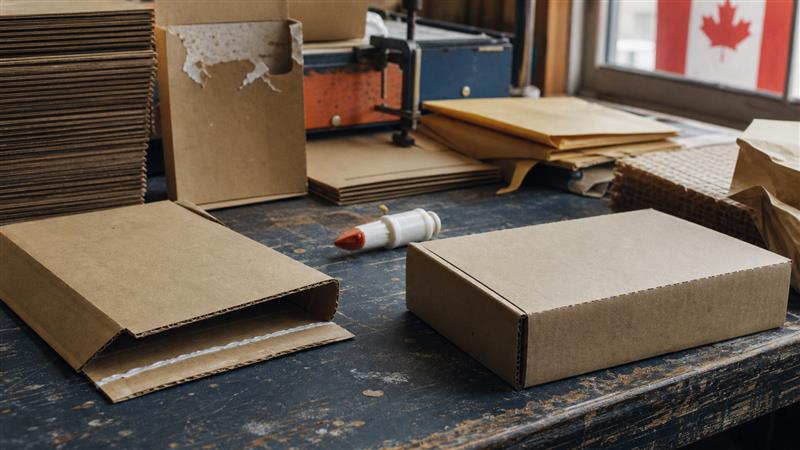
On the higher-recycled-content E-flute board, the old water-based adhesive dried slowly. Winter temperature and humidity changes made the side seam unpredictable, leaving the customer with rework, opening failures and a packaging line that could not hold a steady rhythm.
BEFORE Ordinary water-based adhesive
- Recycled fibers and paper expansion weakened the seam.
- Drying time stretched as the season changed.
- Side tearing and transit opening pushed rework to about 8%.
AFTER Starch adhesive, matched to the line
- Coat weight was raised only as far as the board required.
- Compression pressure and contact time were reset together.
- Drying temperature and liner surface finish were fine-tuned.
What changed on the production line
The team treated the 75% recycled E-flute board as a different bonding surface, not a standard sheet.
The new adhesive supported the odor-free, recyclable packaging brief.
Coat weight, compression pressure and contact time were adjusted as one set.
Drying temperature and a small liner-surface adjustment helped the line keep pace.
What this project taught us
High-recycled-content board is not fixed by simply choosing a “stronger” glue. The repeatable result came from matching coat weight, compression and drying conditions to the paper. That is why the opening-failure rate fell to 1.5% or lower, while the mailer stayed odor-free and recyclable.
Source note: Based on an internal sales-win record for a Canadian paper mailer project. Customer identity is withheld; order quantity, value and failure-rate figures are reported as ranges or approximate production data.
Questions to ask an adhesive supplier
A useful technical conversation should produce more than a product name. Ask which substrates were tested, what application weight is recommended, how much pressure or heat is needed, and what happens when board moisture changes.
Also ask for VOC information, storage life, working temperature, open time, set time, recycling-compatibility evidence and food-contact documentation where relevant. If the adhesive is part of a custom carton, mailer or corrugated structure, request a production sample before placing a large order. Our custom packaging manufacturing team can review those details with the structure rather than treating the glue as an isolated purchase.
Common mistakes with sustainable packaging adhesives
- Assuming water-based means biodegradable.
- Assuming starch-based means the whole package is compostable.
- Choosing chemistry before checking the actual substrate.
- Ignoring production speed, pressure and equipment.
- Testing on virgin board but shipping with recycled corrugated.
- Using a broad “recyclable glue” claim without checking the finished construction.
A good packaging adhesive is the smallest, cleanest and most reliable amount that keeps the package working through production, distribution and use. That may be a water based adhesive, a starch system, a hot melt or a pressure-sensitive formulation. The label comes after the test. You can also browse our packaging materials and process articles when building a broader packaging brief.
FAQs
What is an eco friendly adhesive?
It is an adhesive selected for a lower-impact packaging system after considering bond performance, raw material source, VOCs, application quantity, process energy, waste and end-of-life compatibility. No single chemistry is automatically sustainable.
Is water-based adhesive more sustainable than hot melt?
Not in every application. Water-based adhesive may reduce reliance on solvent carriers, while hot melt can set quickly and reduce production waiting time. Compare the substrate, equipment, energy, application weight, failures and recycling route.
Which adhesive is used for corrugated packaging?
Starch-based adhesives are common for forming corrugated board. Box converting may also use hot melt or other systems for seams and closures. The right choice depends on the board, line speed, joint design and required set time.
Can packaging adhesive affect paper recycling?
Yes. Some adhesive fragments can become contaminants during repulping, especially when the formulation or application is poorly matched to the package. Check the complete construction and the target market’s recycling guidance instead of judging the adhesive alone.
How should adhesive performance be tested?
Test the final adhesive on the actual paper or board, with the final print and coating where possible. Check bond strength, set time, pressure, humidity, temperature, line speed and failure mode before approving volume production.
Conclusion: choose the bond, then judge the footprint
Eco friendly glue is not a single product category. Water-based, hot-melt, PSA, starch and reactive systems each solve different packaging problems. The better sustainable packaging adhesive is the one that fits the substrate, survives the route, uses an efficient application and has a credible end-of-life path.
For a custom project, prepare the product dimensions, board or paper specification, quantity, artwork, line speed, shipping conditions and target market. That gives the supplier enough information to compare packaging glue types honestly and test the bond before the final run.
Request a packaging adhesive review
Forests Packaging Group can help review adhesive choices alongside cartons, corrugated boxes, paper mailers, labels and tape. Send the substrate, structure, quantity, application method, destination market and deadline so the recommendation is tied to a real package.
For a practical next step, use our packaging inquiry form to request a material and adhesive review before sampling.
Send Your Packaging Brief to Our Team
Share your product type, format, size, quantity, material, destination, and required date. Our team can support artwork review, sampling, production, inspection, and export coordination.
Contact us for a project-specific recommendation.

Ready to build packaging with a factory team?
Send your product size, material, artwork, quantity, destination, and deadline so our team can focus the first review on quotation and sampling.