EVA Foam vs EPE Foam for Packaging Inserts: Cost, Fit & Protection

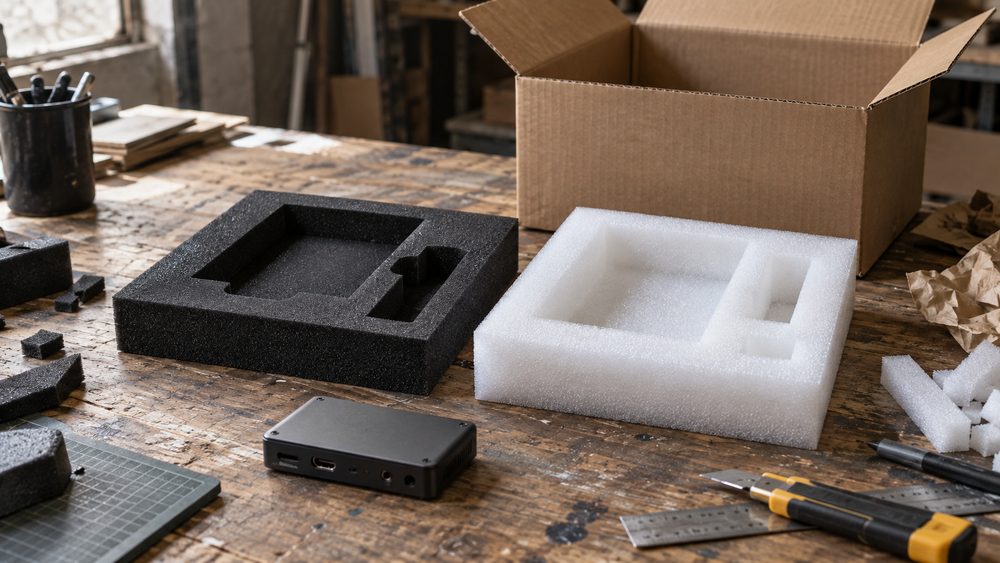
Quick answer: EVA foam is usually the better choice for a precise cavity, premium presentation, and repeatable positioning. EPE foam is usually the better choice for lightweight cushioning, abrasion control, and cost-sensitive shipping protection. The result depends on density, thickness, cavity geometry, clearance, outer-box strength, and the handling route.
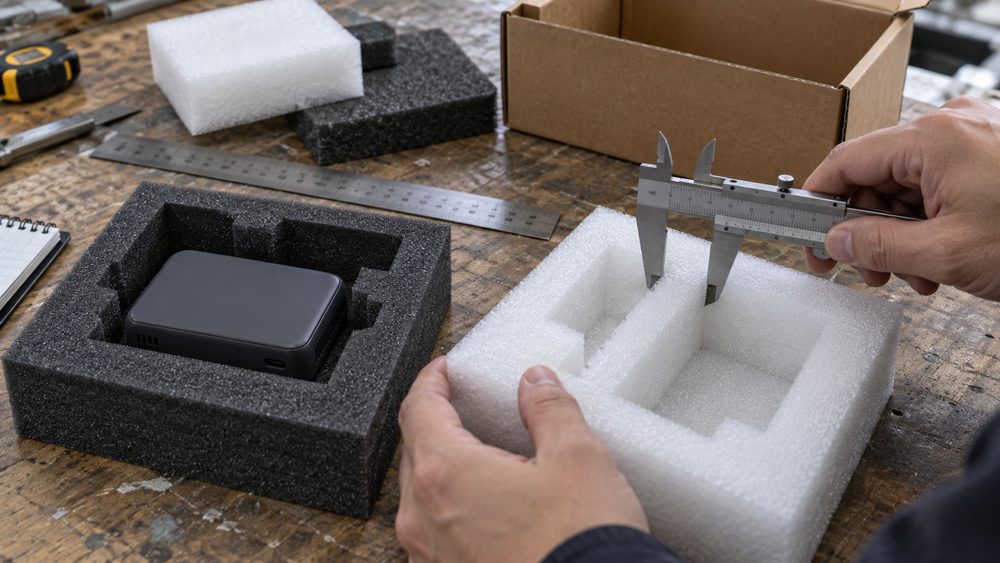
A color sample is not enough. The insert must hold the product, leave enough loading clearance, protect its surface, and stay effective after drops, stacking, and vibration.
EVA foam and EPE foam: what is the difference?
EVA is a denser closed-cell foam used for fitted trays, electronics, tools, medical devices, cosmetics, and gift packaging. It cuts cleanly and holds a shaped cavity well. It can also be laminated or flocked. The trade-off is higher material cost and, in some formats, a heavier structure.
EPE is expanded polyethylene foam. It is light, resilient, moisture-resistant, and common in pads, sleeves, end caps, separators, and concealed transport inserts. It absorbs handling shock well, but a loose cavity can allow the product to move.
Neither name defines density, hardness, thickness, surface finish, or cutting method. Those details belong in the RFQ. A 6 mm EVA insert and a 6 mm EPE insert will not support a product in the same way.
EVA vs EPE foam inserts: a buyer comparison
| Decision point | EVA foam | EPE foam |
|---|---|---|
| Best fit | Shaped cavity, premium opening, stable positioning | Lightweight pads, sleeves, general transit protection |
| Surface | Dense and controlled; can be flocked or laminated | Light and resilient; more utilitarian |
| Weight | Usually heavier than a thin EPE pad | Usually lighter and efficient to ship |
| Cost direction | Higher material and finishing cost in many projects | Often lower for simple pads and larger volumes |
| Processes | CNC cutting, die-cutting, laminating, molding | Die-cutting, knife cutting, laminating, selected forming |
| Main risk | Over-tight or over-hard cavities can mark surfaces | Loose or over-soft cavities can shift |
Use the table to narrow the options, then test the complete construction. Foam thickness alone is not a performance specification.
When should you choose EVA foam inserts?
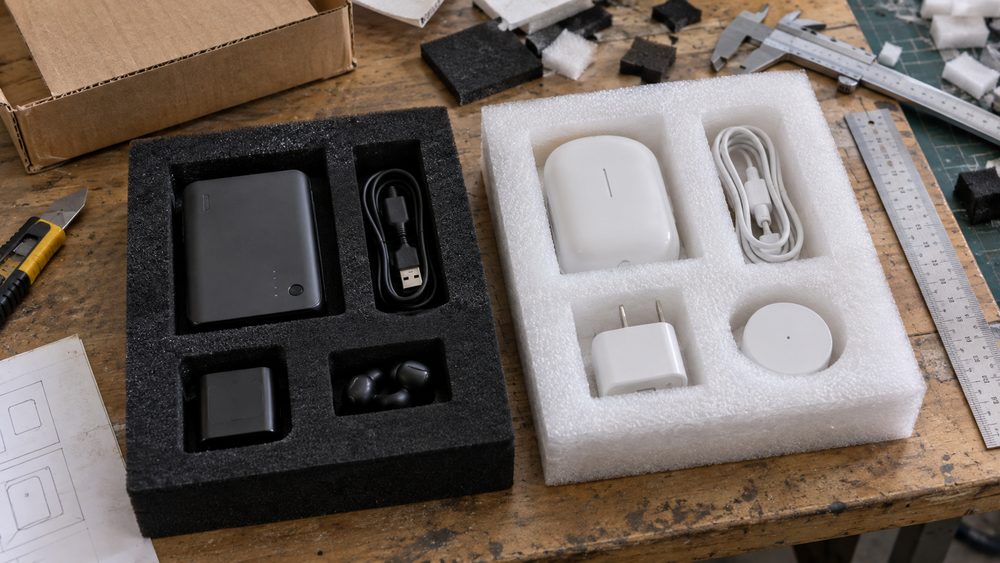
Choose EVA when the product needs a shaped, stable cavity and the insert will be visible at unboxing. Watches, small electronic devices, cosmetic sets, and tool kits often benefit from clean edges and dedicated accessory pockets.
Measure the actual product, not only its nominal drawing. Record surface finish, protrusions, cable positions, loading direction, and removal method. A painted or glossy surface may need a softer contact layer even when the structural foam is dense EVA.
When the outer package is a premium gift box, review the full insert and box together through the rigid box packaging range. Approving the foam by itself can hide fit and presentation problems.
When is EPE foam the more practical option?
EPE makes sense when low weight, resilience, and basic impact protection matter more than a luxury opening experience. Use it for corner blocks, sleeves, pads, separators, appliances, glassware, and shipping kits where the insert is concealed.
It can also suit changing product ranges because a layered pad is easier to revise than a complex molded cavity. The condition is movement control: if the product can rotate inside the carton, the foam is not doing enough.
Do not write only “white EPE” on a purchase order. Add density or hardness, thickness, pad or cavity dimensions, allowable compression, surface requirements, and any antistatic or low-odor requirement.
Density, thickness, and clearance matter more than the label
Density affects firmness, cushioning response, compression, and cost. Soft foam can allow a heavy product to bottom out; hard foam can transfer impact or create pressure marks. Thickness must be matched to impact direction, product weight, and outer-carton crush resistance.
Define clearance as a range. Product variation, foam tolerance, surface layers, and the packer’s loading method all affect real fit. Include finger access, removal force, accessory pockets, and possible product revisions in the design review.
Cutting method: CNC, die-cut, or molded?
CNC cutting is useful for prototypes and complex cavities because the design can be revised without a production die. Die-cutting is practical for flat layers, pads, and repeat-volume parts. Molded foam suits stable product geometry and three-dimensional cradles, but it brings a higher tooling and revision commitment.
Ask whether the sample and bulk order use the same process. A CNC prototype may have different edges, tolerances, or surface marks from the final die-cut or molded part.
What should you include in a foam insert RFQ?
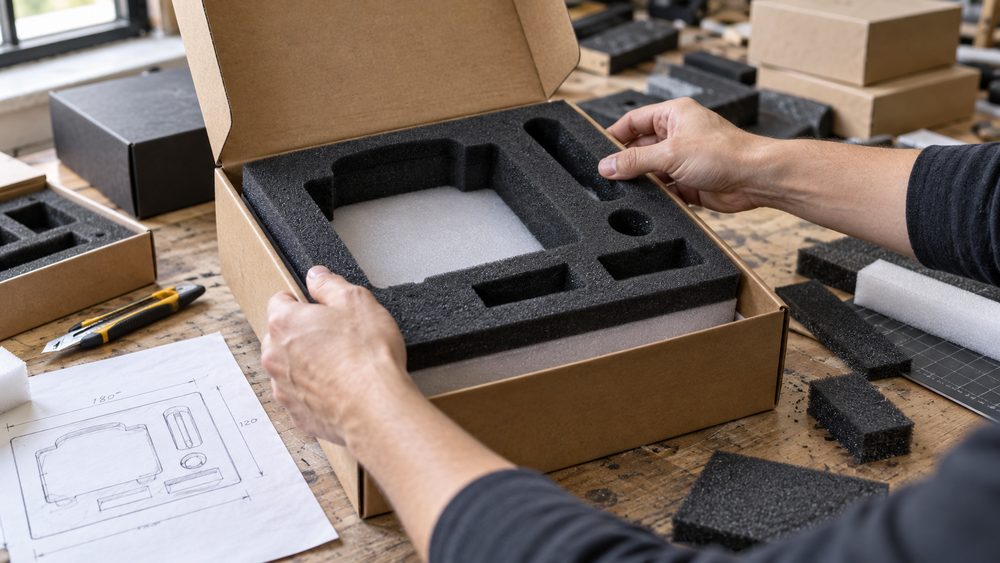
Include product dimensions, weight, photos or a physical sample, weak points, surface finish, accessories, outer-box internal dimensions, loading direction, quantity, destination, and distribution route. Request:
- foam type, density or hardness, and thickness;
- cavity dimensions and clearance range;
- cutting, laminating, or molding process;
- surface finish, color, flocking, and adhesive details;
- antistatic, low-odor, or cleanliness requirements;
- sample quantity and whether the sample matches bulk production;
- export-carton dimensions and compression protection;
- drop-test or pilot-shipment expectations.
Test the complete product, insert, closure, outer carton, and packing method. The ISTA test procedure resources can help frame the discussion around the actual distribution route.
Sustainability and disposal questions
EPE and EVA are polymer foams. Neither should be called universally recyclable without checking the local collection route and finished construction. Laminations, flocking, adhesives, and coatings can change what a recycler accepts. The EPA recycling guidance explains why local systems matter.
If paperboard or molded pulp is being considered, treat it as a new design. Recheck cavity fit, surface contact, drop performance, moisture, packing time, and damage rate. A replacement that causes more product damage is not a better solution.
FAQ
Is EVA foam better than EPE foam for electronics?
Not in every shipment. EVA is often useful for a precise, presentation-ready cavity. EPE can be sensible for lightweight transport cushioning. The device, surface finish, density, and route decide the result.
Is EPE foam cheaper than EVA foam?
It is often less expensive for simple pads, sleeves, and larger-volume transport parts. Compare tooling, freight, labor, replacement risk, and treatments before fixing the total cost.
Can foam inserts be replaced with paperboard?
Sometimes. The replacement must be tested for movement, surface protection, fit, moisture, assembly, and damage rate.
The practical choice
Choose EVA when precise fit, clean presentation, and durable cavity walls justify the higher cost. Choose EPE when lightweight cushioning and transport protection are the priority. If the project sits between the two, request both samples using the same product, outer box, and test checklist.
The useful question is not “which foam is stronger?” It is “which construction gives the lowest cost per successful delivery?” See the CustomPackMart packaging homepage for packaging formats, then send your product size, weight, quantity, route, and fragile areas through the packaging inquiry page.
Send Your Packaging Brief to Our Team
Share your product type, format, size, quantity, material, destination, and required date. Our team can support artwork review, sampling, production, inspection, and export coordination.
Contact us for a project-specific recommendation.


Ready to build packaging with a factory team?
Send your product size, material, artwork, quantity, destination, and deadline so our team can focus the first review on quotation and sampling.