How Many Graham Crackers Are in a Sleeve?

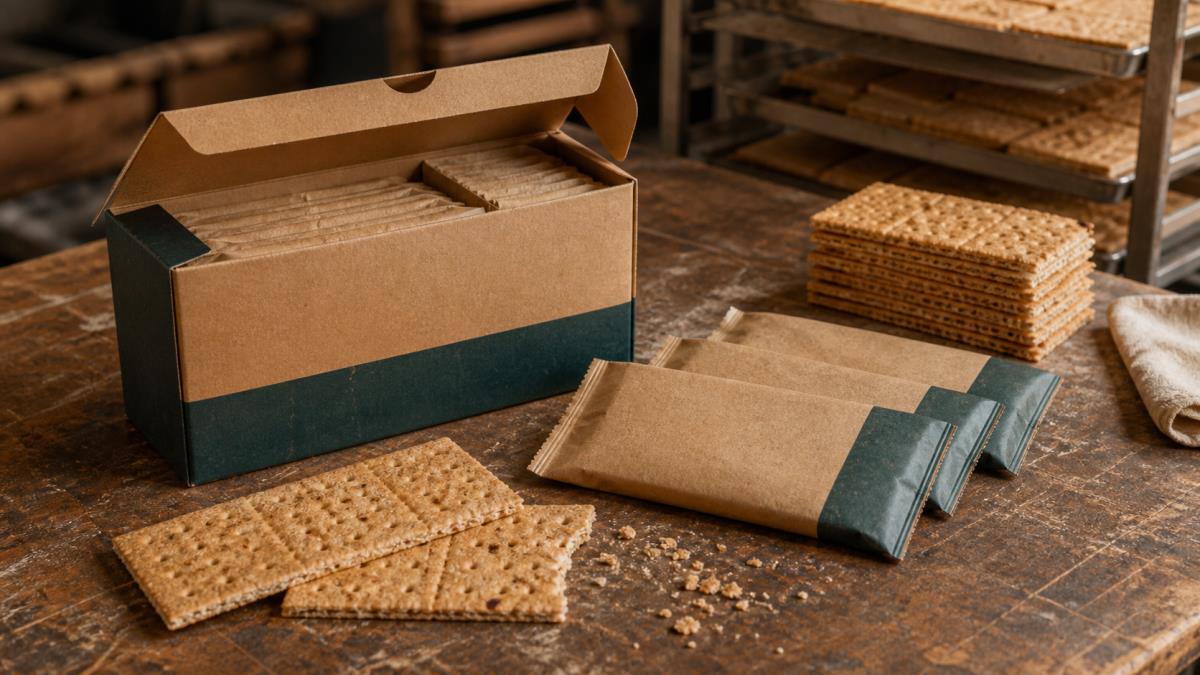
Short answer: a typical sleeve contains about 9 full graham cracker sheets. A common box has three sleeves, or roughly 27 full sheets. That is a useful kitchen estimate, not a promise that every brand, box size, or production run will match it exactly.
The word “cracker” causes some of the confusion. One full sheet is the large perforated rectangle. Break it along the lines and you have smaller pieces, but the package may still count the original sheet. For recipes, packaging design, and purchasing, it helps to decide which unit you are actually measuring.
How many graham crackers are in a sleeve?
The practical count
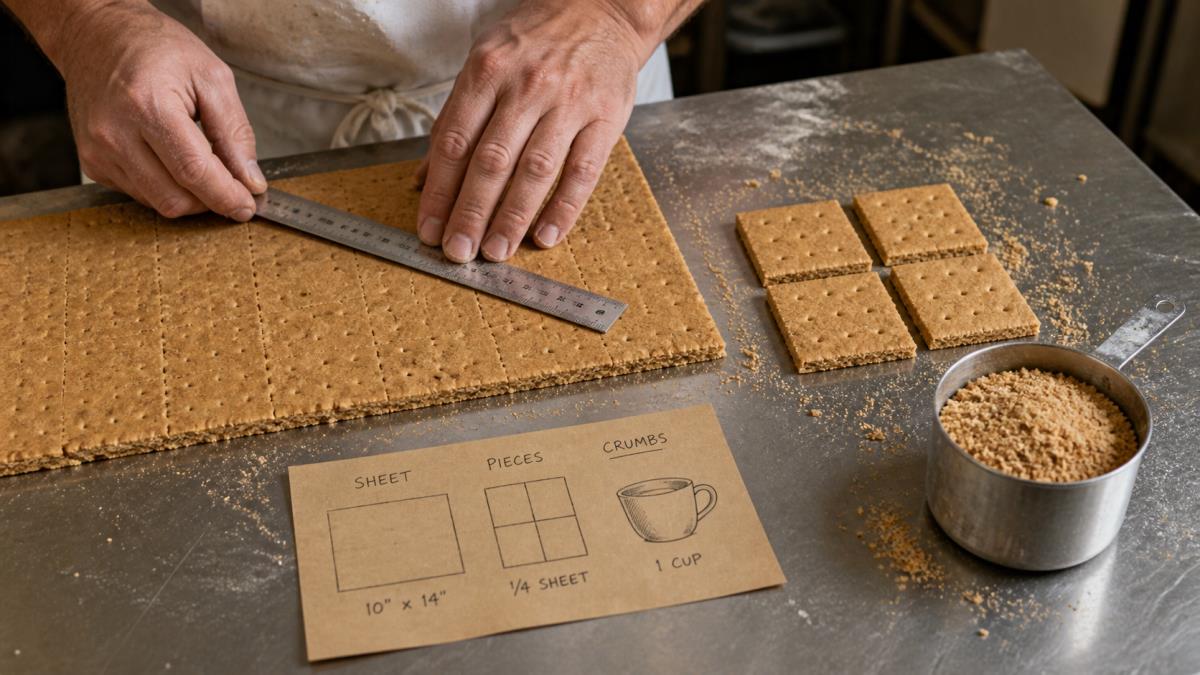
Use 9 full sheets per sleeve as the normal rule of thumb. If each sheet is divided into four sections, that works out to about 36 smaller rectangles. Recipes and online answers sometimes call each rectangle a “cracker,” which is why two apparently different counts can both be describing the same sleeve.
Why the number is approximate
The count changes when the manufacturer changes the net weight, sheet dimensions, thickness, or number of sleeves in the carton. A family-size box may use the same sleeve format but include more sleeves. A smaller snack box may contain fewer. There is also ordinary production variation in breakage and loading.
What to do when the recipe matters
If you are making a cheesecake crust, count full sheets or weigh the crackers instead of counting small pieces. If the recipe says “one sleeve,” nine full sheets is a sensible starting point. If the recipe is fussy about texture, measure the crumbs after crushing them.
How many graham crackers are in a box?
A standard retail box commonly contains about three sleeves. At nine full sheets per sleeve, that is approximately 27 full sheets. The same box may produce around 3 to 4 cups of crumbs, depending on the brand and how finely you crush it.
Do not treat 27 as a universal specification. The front of the box can look almost identical while the net weight, sheet count, or sleeve arrangement changes. When an exact quantity matters, check the current pack rather than relying on a remembered number.
Full sheets, sections, and crumbs are different units
Full sheet
A full sheet is the large perforated rectangle as it comes out of the sleeve. It is the clearest unit for comparing cartons and recipes.
Small piece
A sheet is often divided into four smaller sections. Those pieces are easier to serve, but they are not four separately manufactured crackers. Say “four sections per sheet” when describing the pack.
Crumb volume
Crumbs depend on how hard you crush them and how tightly you pack the measuring cup. Two cups made with a loose, rough crush will not weigh the same as two cups of fine crumbs. That is why weight is the safer fallback when a brand or recipe must be repeatable.
Graham cracker conversion guide
| Reference | Useful estimate | Note |
|---|---|---|
| 1 sleeve | About 9 full sheets | Brand and pack size can vary |
| 1 standard box | About 3 sleeves / 27 sheets | Check the net weight on the current pack |
| 1 cup crumbs | About 7 full sheets | Crush size changes the volume |
| 2 cups crumbs | About 14 full sheets | Roughly 1½ typical sleeves |
These figures are convenient for a shopping list. They are not a substitute for weighing the finished crumbs when you are scaling a commercial recipe or testing a new supplier.
For storage and handling questions, the USDA food-safety reference is a better source than a packaging sales page.
How many graham crackers make one cup of crumbs?
Start with about 7 full sheets for 1 cup of crumbs. For 2 cups, start with about 14 sheets. A sleeve may therefore yield roughly 1 to 1½ cups, but the result depends on thickness, sheet size, moisture, and how fine the crush is.
There is no shame in crushing one extra sheet. In a home kitchen, it is easier to adjust the crust than to rebuild it. In a food-production setting, record both the sheet count and the gram weight so the result can be repeated after a packaging or supplier change.
Why brands use separate sleeves
The sleeve does several jobs at once. It limits the amount of product exposed when the carton is opened, keeps portions together, and gives brittle sheets some support during handling. It also makes the retail box easier to load and gives the consumer a natural “open one portion now, save the rest” rhythm.
The outer carton has a different job. It carries the brand, nutrition panel, barcode, claims, and serving information. It also keeps the sleeves aligned and adds another layer of protection. The inner wrap is normally the more important barrier for freshness; the printed carton should not be treated as the complete moisture solution.
For folding-carton terminology, FEFCO’s packaging standards resources are useful when a project moves from a simple retail carton to a shipping case.
What packaging should protect inside the sleeve?
Graham crackers are light, but they are not forgiving. A little movement inside an oversized carton becomes repeated impact during parcel handling. The inner sleeve should hold the stack neatly without crushing the edges, while the outer carton should resist panel bulging and corner damage.
For a food brand, the packaging brief should state whether the sleeve is paper, film, or a paper-based laminate, and what moisture and seal performance are required. Components that contact the product may also need food-contact documentation for the target market. The FDA food-contact materials guidance is a useful starting point for U.S.-bound projects, but the final requirement depends on the market and the material structure.
If the project includes multiple formats, review the supplier’s custom packaging product range only after the sleeve dimensions and seal requirements are written down. A product list can show available structures, but it cannot replace a fit test.
How cracker size affects a custom carton
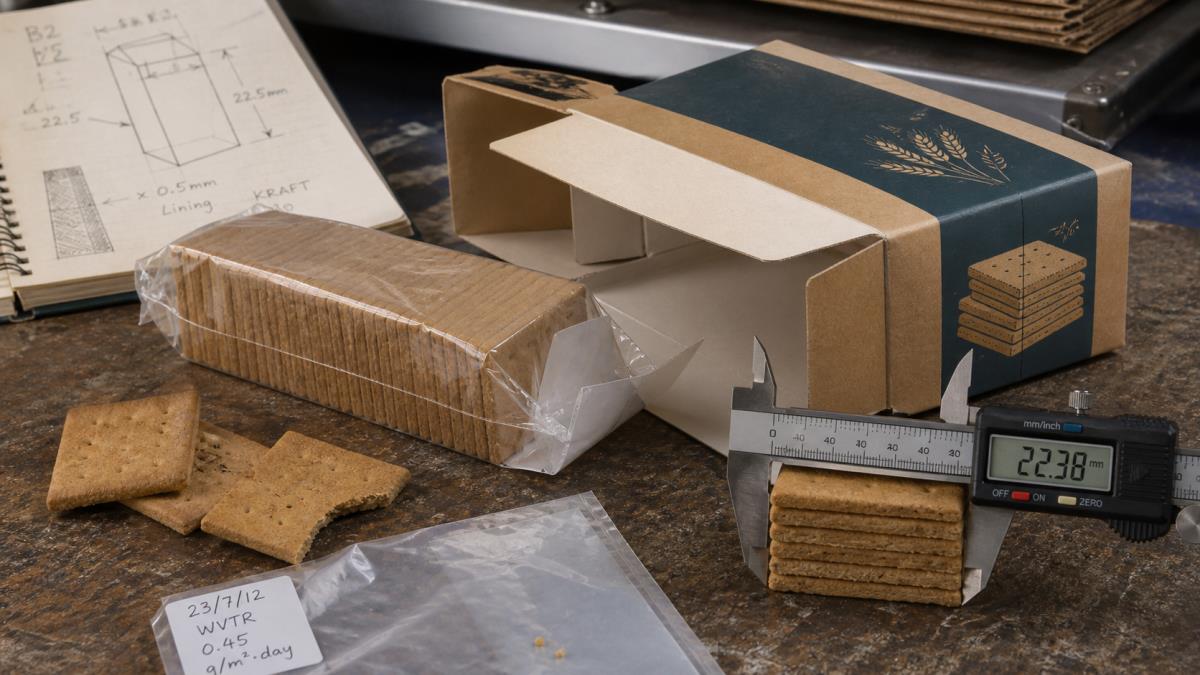
Before a custom carton is drawn, measure the actual product: sheet length, sheet width, thickness, stack height, sleeve seam, and the space needed for loading. A published dimension may describe an unwrapped sheet, while the carton must accommodate the wrapped stack. That small difference is enough to create a difficult loading station or a loose pack.
Leave room for normal product variation, but do not create a large empty cavity. The right amount of clearance lets operators load the sleeves without forcing them and stops the product from sliding. If the box will be shipped rather than only displayed in a store, include corner and compression testing in the sample plan.
Custom graham cracker packaging options
One sleeve, three sleeves, or a larger family carton?
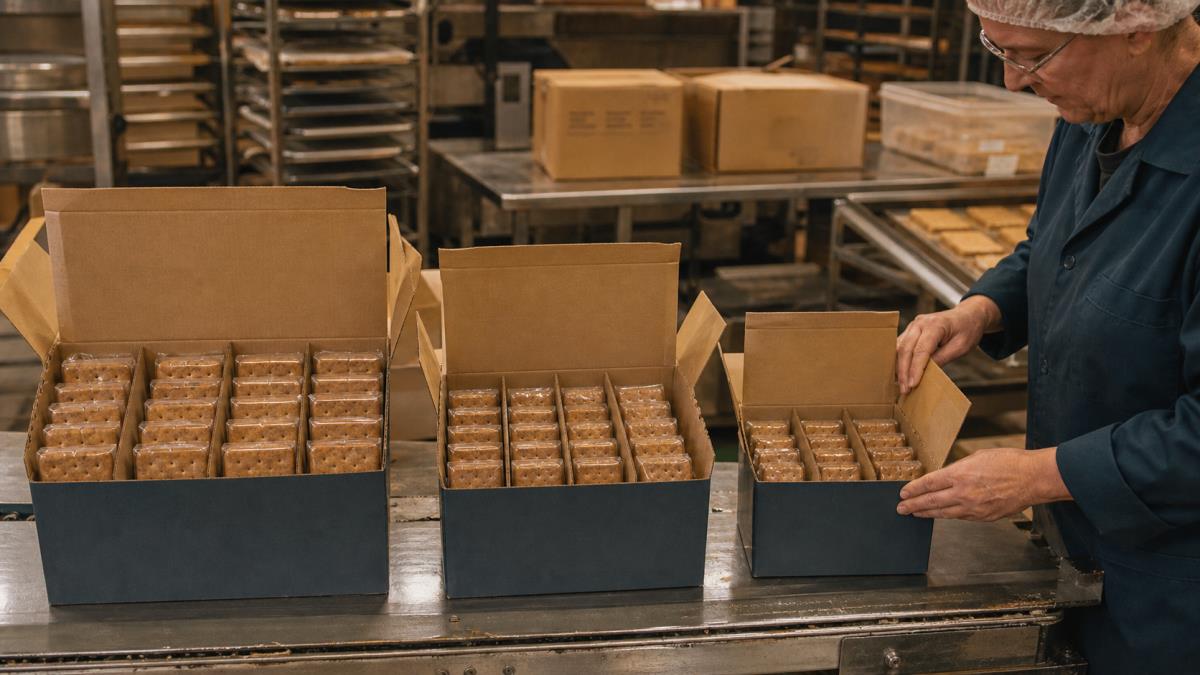
The right carton starts with the selling format. A single sleeve may suit a snack pack or a small baking ingredient box. Three sleeves give the familiar household format, while a larger family carton may need a stronger side panel and a more controlled loading pattern. The outside footprint affects shelf placement, case packing, pallet efficiency, and freight, so the count is not only a recipe question.
Protecting the first sheet and the last one
Crackers often fail at the ends of the stack. If the sleeve is loose, the first and last sheets can move into the seal area or rub against the carton. If it is too tight, loading can crack the product before the box reaches the customer. A short run of physical samples usually tells more than a neat drawing on screen.
For a retail program, compare the filled carton after vibration, repeated opening, and ordinary shelf handling. Check the barcode area, tuck closure, sleeve fit, and the amount of dust or broken edge left inside. These small observations are useful when deciding whether to change the sleeve count, board grade, or internal clearance.
A custom graham cracker box can be built around the count consumers expect or around a different retail format. Common decisions include one, two, or three sleeves per carton; tuck-end or auto-lock construction; paperboard grade; window or no window; one-color or full-color printing; and whether the inner sleeve needs a separate seal.
A supplier’s packaging blog and resource library can help with terminology, but the final choice still belongs to the tested pack-out.
For brands comparing custom food packaging development, the useful conversation starts with the product and route, not the box name. Share the sheet dimensions, sleeve count, packed weight, annual volume, target market, print artwork, and desired launch date. Those details allow the supplier to recommend a structure that can actually be loaded and repeated.
A supplier-ready cracker packaging checklist
- Full-sheet length, width, thickness, and average unit weight
- Sections per sheet and full sheets per sleeve
- Sleeves per carton and finished carton dimensions
- Inner-wrap material, seal style, and moisture target
- Paperboard grade, printing process, and finish
- Product movement, edge-crush, drop, and compression checks
- Food-contact requirements for the destination market
- Quantity, MOQ, repeat-order plan, and required delivery date
A food-packaging supplier should be comfortable discussing product count and production risk in the same conversation. If the brief only says “make a nice cracker box,” the important decisions are still missing.
Common mistakes to avoid
First, do not design the outer carton before confirming the actual wrapped stack. Second, do not use a crumb conversion as a substitute for a product specification. Third, do not assume the carton provides the moisture barrier. Finally, do not copy a sleeve count from another brand and assume the same count will fit your sheet size or loading method.
FAQs
How many graham crackers are in a sleeve?
A typical sleeve contains about 9 full graham cracker sheets. The exact number can vary with brand, pack weight, and sheet size.
How many graham crackers are in a standard box?
A common box contains about three sleeves, or roughly 27 full sheets. Check the current package when an exact count matters.
How many graham crackers make 1 cup of crumbs?
About 7 full sheets is a useful starting estimate. Crumb size and packing density can change the result.
Are four small pieces equal to one graham cracker?
They are usually four sections from one full sheet. For clarity, specify whether you are counting full sheets or broken pieces.
What should a custom cracker box supplier measure?
Measure the wrapped stack, sleeve seam, product weight, carton clearance, moisture needs, and shipping risk before finalizing the structure.
Conclusion
The practical answer to how many graham crackers in a sleeve is about 9 full sheets. A typical three-sleeve box contains about 27. For baking, use those numbers as estimates and switch to measured crumbs or weight when precision matters. For commercial packaging, confirm the wrapped dimensions, sleeve configuration, seal, moisture needs, and breakage risk before approving the carton.
Plan a cracker packaging review
Send the product dimensions, sheets per sleeve, sleeves per carton, material preference, artwork, quantity, and destination market to our packaging consultation team. We can help compare carton structures, inner sleeves, paperboard, printing, samples, and production requirements.
Send Your Packaging Brief to Our Team
Share your product type, format, size, quantity, material, destination, and required date. Our team can support artwork review, sampling, production, inspection, and export coordination.
Contact us for a project-specific recommendation.
Ready to build packaging with a factory team?
Send your product size, material, artwork, quantity, destination, and deadline so our team can focus the first review on quotation and sampling.