Is Wax Paper Toxic When Baked? Wax Paper vs Parchment Explained


Quick answer: Wax paper is not automatically toxic, but it is not a general-purpose oven liner. Its wax coating can soften, transfer, smoke, scorch, or burn when directly exposed to oven heat. For cookies, roasting, and other uncovered baking, use parchment paper rated for the temperature and method. Some manufacturers allow wax paper under a fully covered cake or loaf batter; that is a product-specific exception, not a rule for every wax paper sheet.
The same distinction matters in commercial packaging. A paper can be suitable for food contact, grease resistance, or microwave covering without being suitable for direct oven exposure. If you are buying custom wax paper, bakery paper, or greaseproof sheets, define the actual use before comparing coating names or unit prices. See the packaging formats Forests supports when the paper is only one part of a larger food pack.
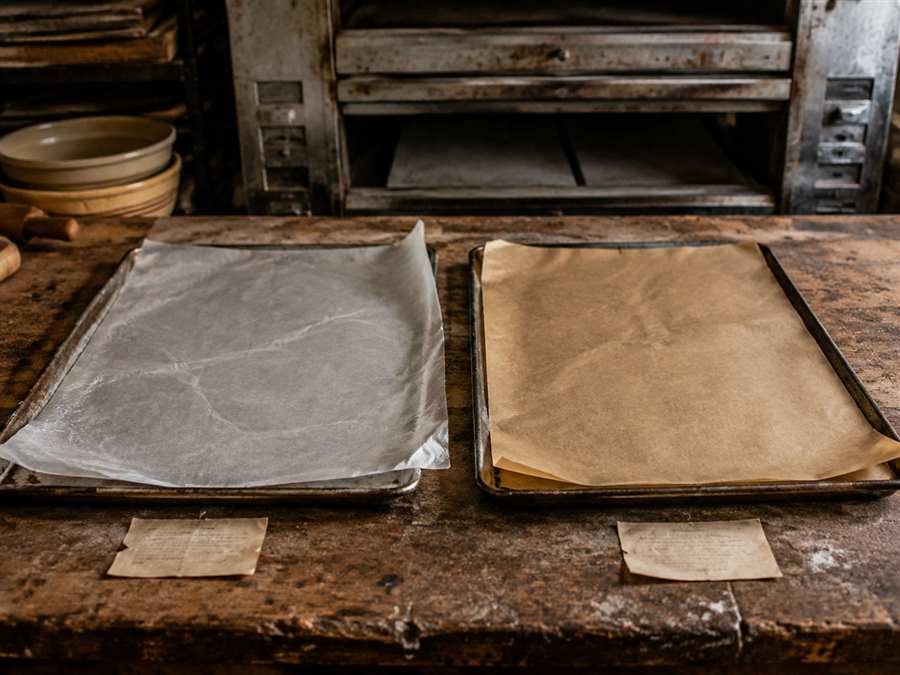
Is wax paper toxic when baked?
The practical answer is no, not in the simple sense suggested by the question. Wax paper is usually a thin paper sheet coated with food-grade wax for release, wrapping, and surface protection. The problem is direct heat. When the sheet is exposed on a hot tray, the coating may melt or move into the food, while the paper can brown, smoke, or catch if it reaches a hot element or open flame.
That is why “not oven-safe” should not be rewritten as “poisonous.” It describes a use limit. The exact coating, temperature range, and permitted application still belong to the product specification. For food-contact packaging, the intended use, migration conditions, and supporting documentation matter more than a broad label such as “natural” or “food-safe.” The FDA’s food-contact guidance explains why a material must be assessed for its intended contact with food.
What happens when wax paper goes into an oven?
Three things can happen, depending on the paper, temperature, and how much of the sheet is covered:
- The wax softens. The surface may become greasy or lose its release performance.
- The exposed sheet discolors or smokes. This is more likely near a hot tray edge, heating element, or broiler.
- The paper can scorch. A loose corner or overhanging sheet is a bigger risk than a sheet fully trapped under cool batter.
Do not use wax paper under a broiler, against an open flame, or where it can touch the oven wall or heating element. If a manufacturer gives a narrow exception for a fully covered pan liner, follow that instruction exactly. Do not extend it to cookies, vegetables, pizza, or any application where the paper remains exposed.
Can wax paper go in the oven?
For most ordinary baking situations, assume no. The safer default is parchment paper, especially when the sheet will be visible around the food. Some consumer wax paper instructions allow a cake, bread, brownie, or similar batter to cover the sheet completely. In that case, the batter shields the wax paper from direct heat, but the permission still comes from the specific product instructions.
If the recipe says “line the tray with paper,” check whether it means parchment. That small wording difference can change the result. Wax paper is useful for rolling dough, separating sticky pieces, covering food in a microwave, and protecting a counter from drips. Parchment is the usual choice for direct oven contact. Manufacturer instructions for one common wax paper product make this distinction explicit and show why exceptions should not be generalized.
What if wax paper was baked by mistake?
Turn off the oven and assess the sheet before serving the food. If the paper melted, smoked, browned heavily, touched a heating element, or left an unusual odor or residue, do not serve the affected food. Ventilate the area and let the oven cool before removing the paper. If the sheet was fully covered, did not smoke, and the product instructions allow that use, the situation may be different, but the product label remains the controlling reference.
For a production kitchen or bakery, record the incident rather than treating it as a recipe nuisance. Note the paper name, coating, batch, oven type, temperature, contact time, and whether the sheet was exposed. The same record helps a packaging buyer explain the required use to a supplier before ordering a replacement material.
Wax paper vs parchment paper
Both sheets can look similar in a drawer, but they are made for different conditions.
| Question | Wax paper | Parchment paper |
|---|---|---|
| Surface | Paper coated with wax | Paper treated to create a dense, non-stick surface |
| Direct oven use | Generally unsuitable when exposed | Commonly suitable within the stated temperature limit |
| Microwave covering | Often suitable when the product says so | Often suitable when the product says so |
| Best everyday uses | Wrapping, separating, rolling dough, covering splatters | Baking, roasting, lining trays, releasing baked goods |
| Main caution | Do not treat food contact as oven approval | Check maximum temperature and keep away from open flame |
Temperature limits are not universal. As one example, Reynolds states that its parchment paper can be used in a conventional oven up to 425°F, while its wax paper should not be directly exposed to oven heat. A different manufacturer may use a different coating or give a different limit, so the specification for the exact product should travel with the purchasing file.
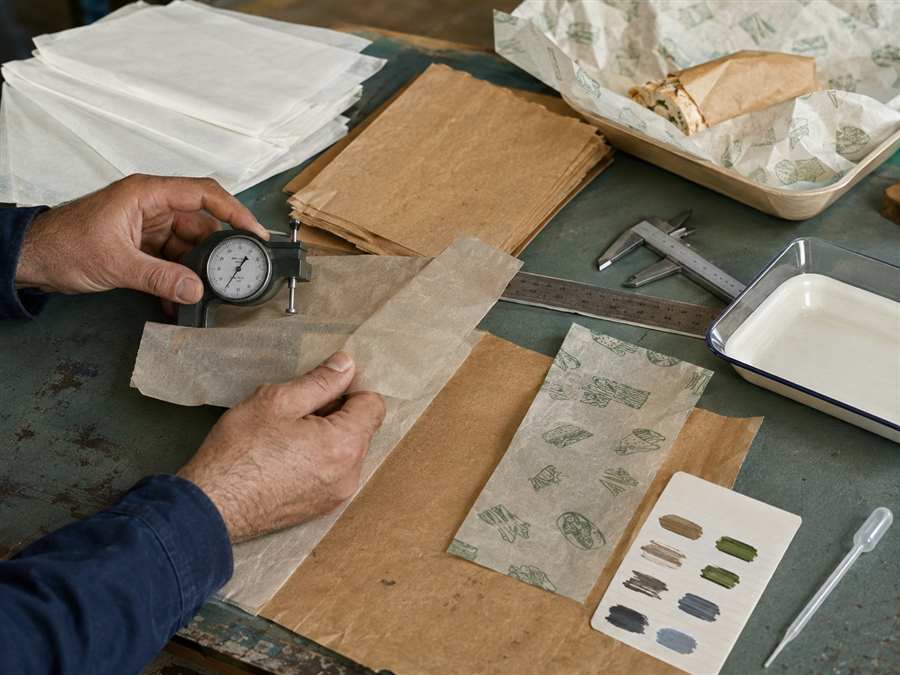
Food-safe is not the same as oven-safe
This is the point most packaging specifications miss. “Food-safe” can describe intended food contact under stated conditions. It does not automatically cover high temperature, long holding time, grease, moisture, freezing, microwave heating, or direct oven exposure.
For a custom paper project, write the use as a short scenario: “wraps a room-temperature pastry for takeaway,” “separates frozen confectionery,” “lines a tray at 400°F,” or “covers a bowl during microwave reheating.” Each scenario can require a different paper, coating, ink, adhesive, or document set.
Also separate the food-contact side from the printed side. Ask which surface touches the product, whether the print is reverse-side or direct-side, and whether the paper will be folded so ink or coating can transfer. For grease-resistant papers, request the coating composition and market-specific compliance file rather than relying on a generic statement. Coating documentation deserves its own review, especially when the paper will be used in a regulated food-contact application.
A Food-Safe Paper That Still Failed in the Oven
A UK bakery brand thought its imported greaseproof paper was ready for production because it was food-safe. During batch baking, part of the coating softened and lightly stuck to the pastry. After summer storage, grease resistance also became less stable.
paper weight
working temperature
sample rounds
first order
What changed?
- Switched to a silicone-coated baking greaseproof paper.
- Tested real oven conditions from 160–210°C.
- Repeated the test after simulated shipping and warehouse ageing.
- Used 42g paper with reverse-side single-colour logo printing.
Coating softened during baking and grease resistance became unreliable after storage.
The selected paper stayed stable during baking and reduced oil migration complaints.
Food-safe describes a contact condition. It does not automatically mean oven-safe. For baking paper, the RFQ should state the real temperature range, heating time, coating type, storage conditions, and required food-contact documentation.
Customer identity withheld. Project details are presented as a sales-project summary.
How to specify custom wax paper packaging
Start with the job, then specify the sheet:
- Product and temperature: name the food, contact temperature, heating method, and maximum exposure time.
- Barrier: define the required grease resistance, moisture resistance, release performance, or translucency.
- Paper construction: confirm basis weight, thickness, coating side, sheet or roll format, and folding behavior.
- Printing: state the artwork repeat, ink colors, print side, coverage, and whether the design must survive oil contact.
- Pack-out: give the finished food size, wrap style, folding sequence, dispenser, and daily usage volume.
- Documents: ask for food-contact declarations, coating information, test conditions, and the relevant destination-market requirements.
If the paper will be used for food presentation rather than baking, a custom printed wax paper can be a sensible format. It can separate pastries, line a tray, wrap a sandwich, or protect a product surface. For a wider food project involving bags, pouches, cartons, or inserts, compare the paper with the complete pack-out on the food and beverage packaging application page.
For repeat production, ask for a retained reference sample and a simple incoming-check plan. A paper roll can look correct while its coating weight, curl, moisture response, or print registration has shifted. Compare sheet size, basis weight, coating side, odor, visible defects, fold behavior, and one small grease test against the approved sample. If the paper is used near heat, add the actual heating step to the approval record instead of relying on a photograph.
Common mistakes buyers make
- Using “food-grade” as a substitute for an oven rating.
- Approving a sample without testing the actual food, grease level, fold, and holding time.
- Checking the paper but not the printing ink or adhesive on a custom wrap.
- Assuming parchment, wax paper, freezer paper, and greaseproof paper are interchangeable.
- Choosing a coating from a sample photo without asking which side contacts food.
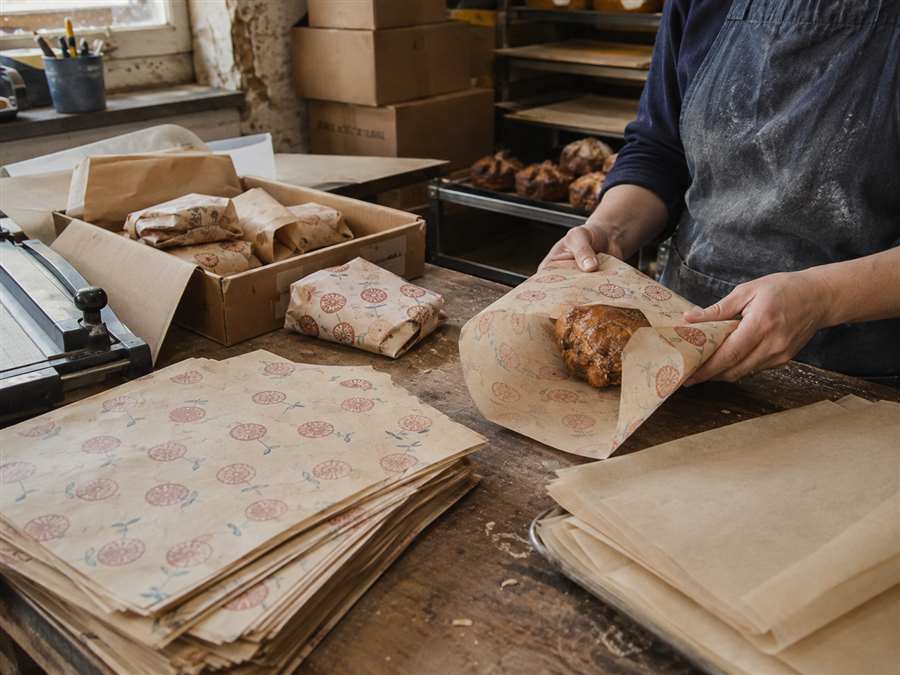
What to ask a custom paper supplier
A useful supplier conversation should end with written answers, not only a material name. Ask: Is the paper intended for direct food contact? Which side is approved? What grease and moisture conditions were tested? Is it suitable for microwave covering? Is it approved for direct oven exposure, and at what temperature? What are the limits for broiler, convection, freezer, and hot-fill use? Which inks and coatings are included in the declaration?
Send the finished use case, target market, food dimensions, artwork, and sample photos. If the supplier cannot tell you the permitted use of the coating, the sample is not ready for production approval. The packaging blog can help with related material and format questions before you prepare a quote brief.
For a project-specific review, send the paper format, food-contact conditions, print details, quantity, and destination through the custom packaging quote page.
FAQs
Is wax paper toxic if it accidentally goes into the oven?
Not automatically. Remove the food if the wax paper melted, smoked, scorched, touched a heating element, or left residue. Check the exact product instructions before deciding whether any covered-pan exception applies.
Can wax paper replace parchment paper for cookies?
No. Cookies leave much of the sheet exposed, so use parchment paper rated for baking instead of ordinary wax paper.
Is wax paper microwave-safe?
Many consumer products are microwave-safe for covering or wrapping, but the package instructions control. Microwave suitability does not make wax paper oven-safe.
What should a bakery include in a paper-packaging RFQ?
Include the food, contact side, temperature, exposure time, grease and moisture conditions, sheet size, basis weight, coating, print, folding format, quantity, destination market, and required food-contact documents.
Which is better for custom bakery wrapping: wax paper or parchment?
Choose based on the operation. Wax paper can suit room-temperature wrapping and separation; parchment is the better starting point for exposed oven baking. Confirm the exact coating and intended use before approving a production sample.
Final answer
Wax paper is not automatically toxic when baked, but direct oven heat is usually outside its intended use. The safer choice for exposed baking is parchment paper rated for the required temperature. In commercial packaging, specify food contact, grease, moisture, microwave, oven, printing, and documentation requirements separately. That brief prevents a common mistake: approving a paper because it looks suitable, then discovering that the coating was never meant for the actual process.
Send Your Packaging Brief to Our Team
Share your product type, format, size, quantity, material, destination, and required date. Our team can support artwork review, sampling, production, inspection, and export coordination.
Contact us for a project-specific recommendation.


Ready to build packaging with a factory team?
Send your product size, material, artwork, quantity, destination, and deadline so our team can focus the first review on quotation and sampling.