Luxury Spirits Packaging: Trends That Survive Production

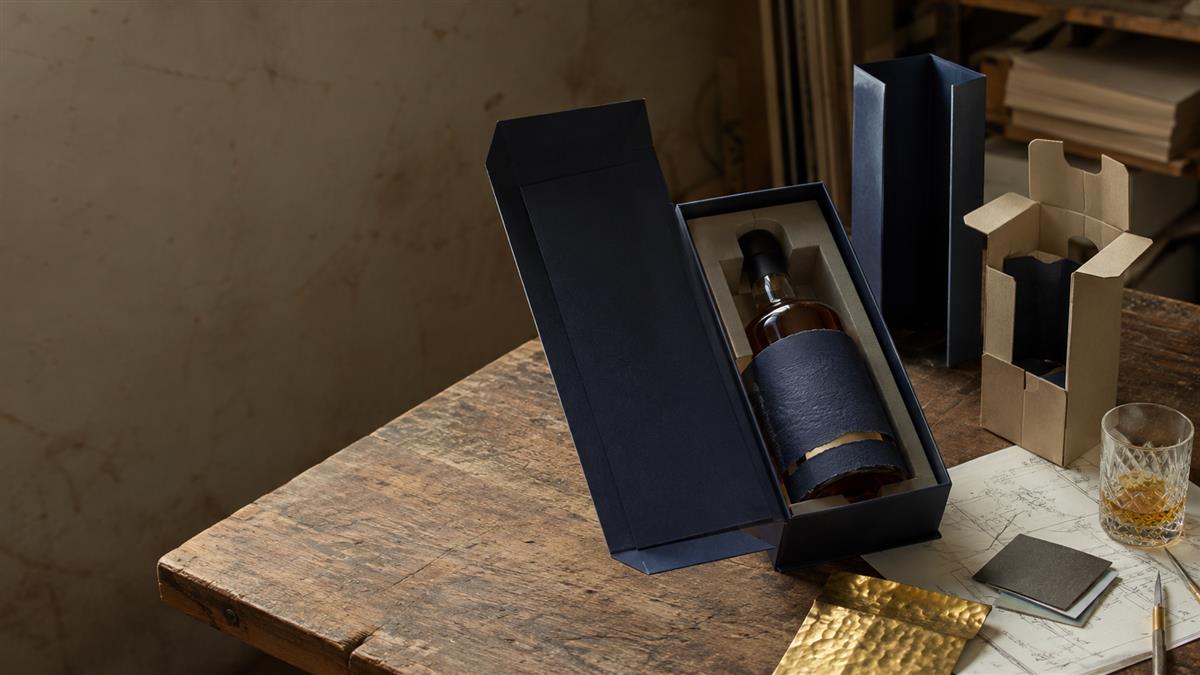
A luxury spirits pack has a short window to make its point: the bottle is lifted, the lid opens, and the buyer decides whether the price feels justified. The trick is not to add weight, foil, and parts at random. Luxury spirits packaging works when the bottle, box, insert, surface, and opening sequence feel like one considered object.
Current projects are moving toward collectible presentation, quieter decoration, cultural detail, smarter inserts, and lower material use. Those ideas are useful only when they can survive sampling, warehousing, and transport. This guide connects the visual trend to the production decision behind it.
What makes spirits packaging feel luxurious now?
First, the proportions need to be deliberate. A tall bottle should not rattle in a box designed around a generic silhouette, and a small bottle should not disappear inside an oversized gift pack. Board quality, paper texture, hinge alignment, the resistance of a drawer, and the way the bottle lifts out all affect the result.
Second, the surface needs a reason. A textured paper with one restrained foil detail can feel more expensive than a black carton covered in five effects. The best packs usually have one dominant gesture: a deep color, a tactile mark, a strong illustration, or a reveal that gives the bottle a clear stage.
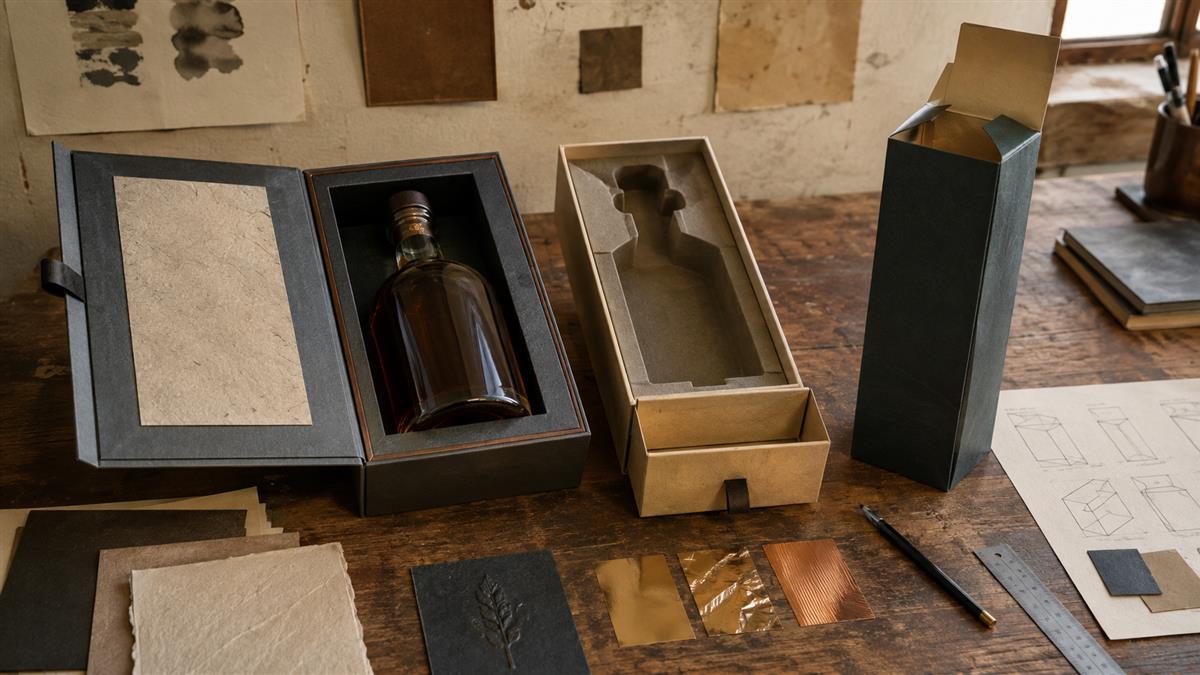
Five dominant trends in luxury liquor packaging
1. Collectible packaging
Limited editions increasingly borrow from art, fashion, and small-batch craft. Numbered cartons, artist panels, sculptural bottles, and reusable boxes give the customer a reason to keep the pack after the drink is gone. A useful test is simple: would the buyer keep this box on a shelf, or throw it away before the bottle is empty?
2. Experiential opening
Hinged rigid boxes, drawer boxes, pull ribbons, and layered reveals turn opening into a sequence rather than a single action. That sequence should suit the occasion. A gift box may benefit from a slow lift-out; a core retail SKU may need a clean, quick opening that does not frustrate the buyer or the fulfillment team.
3. Decoration with a technical purpose
Foil stamping, embossing, debossing, tactile varnish, matte-and-gloss contrast, and 360-degree print can create a strong visual cue. They also introduce registration, pressure, drying, and surface problems. Keep the most important finish away from tight folds and test the actual paper. A beautiful render cannot show whether foil will crack over a sharp score.
4. Cultural storytelling
A bottle from a particular place should not be wrapped in generic “heritage” decoration. Start with something the brand can prove: a landscape, ingredient, distillery building, local craft, family archive, or production method. Translate that source into a motif, type treatment, paper choice, or interior print. One specific detail is stronger than a collage of borrowed nostalgia.
5. Lighter, more selective luxury
Lightweight glass, right-sized cartons, fiber inserts, and fewer mixed materials are gaining attention. Less material does not automatically mean less premium. Precise typography, good color control, and a confident texture can carry more value than a thick box full of foam, magnets, and unused space.
The useful insight: trends work in pairs
The strongest concepts rarely use one trend alone. Collectible artwork can carry a brand’s local story. A drawer opening can lead to a digital story, but only if the QR code takes the buyer somewhere worthwhile. Quiet luxury can combine a deep solid color with one blind deboss and a small foil mark. A reusable presentation box can make a sustainability claim more credible because the structure has a second job.
This pairing also helps control production. Instead of asking for “more premium,” define the one or two ideas that must be noticed, then remove decoration that does not support them. That gives the factory a clearer target and gives the buyer a better way to judge a sample.
Choose the box structure around the bottle and the occasion
Rigid setup boxes provide a substantial hand feel and are a natural fit for gift sets and limited releases. They need more storage volume and usually cost more to ship. Hinged rigid boxes give the cleanest presentation reveal, while drawer boxes create a slower, layered opening. Both need accurate clearances so the drawer or lid does not scrape the inner pack.
Premium folding cartons are often the better answer for a core SKU or a larger run. They use less board, fold flat for storage, and can still carry specialty paper, foil, embossing, and carefully controlled color. A presentation trunk is reserved for an exceptional gift or collector edition; otherwise it can become an expensive piece of empty air.
The insert is where presentation becomes protection
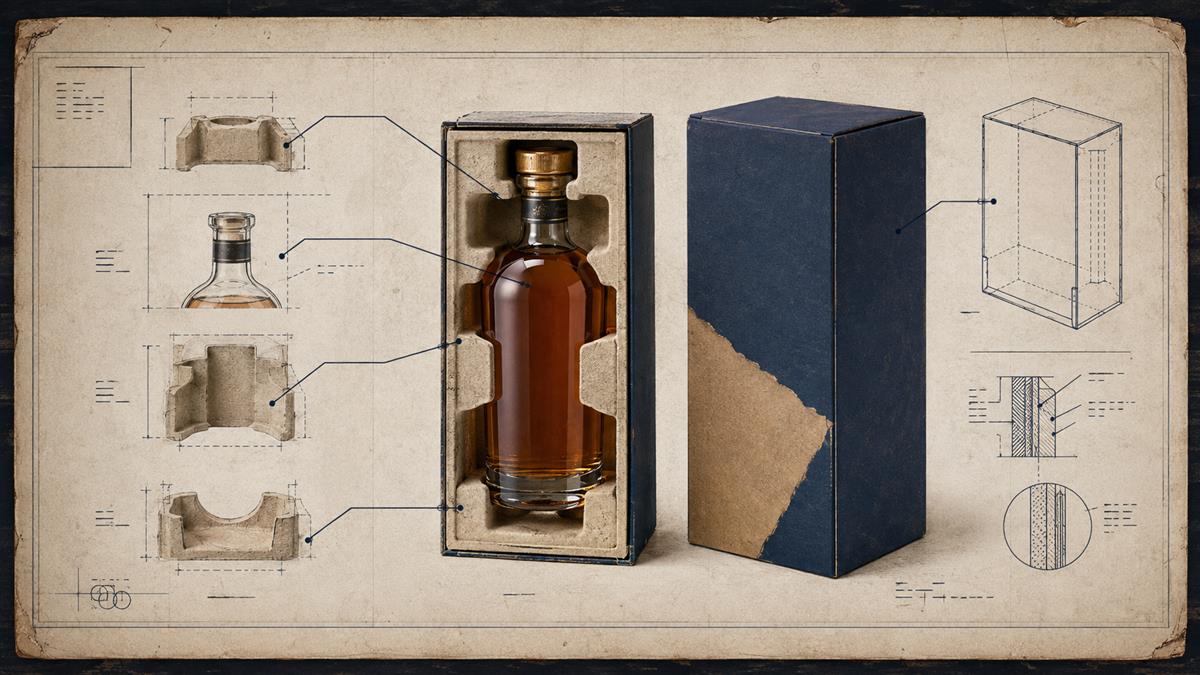
A spirits insert has to do two jobs without advertising the compromise. It must keep the bottle centered and still look intentional when the lid opens. Support usually matters at the base, body, shoulder, and neck, depending on the bottle shape. The goal is to stop lateral movement and prevent glass from touching the box, not to fill every open area with cushioning.
Molded fiber, paperboard, corrugated structures, engineered fiber, and foam can all be suitable. The right answer depends on the bottle weight, fragility, presentation angle, sustainability target, and route. A fiber insert may suit a recyclable gift pack; a foam insert may be justified when a heavy, irregular bottle needs tight control. The decision should come from a physical fit and drop test, not from a material preference made at the mood-board stage.
Luxury finishes: use one lead effect
Foil works well for a crest, signature, or small line of type. Embossing gives a mark a raised tactile point; debossing is quieter and can suit a restrained brand. Specialty coatings create contrast when they are limited to a panel, label, or pattern. Specialty paper can establish the mood before any decoration is added.
Problems start when every finish is asked to be the hero. A textured paper, heavy foil, deep emboss, soft-touch film, and complex die-cut may look impressive in a sample room but become difficult to reproduce at volume. Confirm foil color on the chosen substrate, check fine type at the real size, and inspect scores, corners, and wrapped edges after assembly.
Can premium spirits packaging be more sustainable?
Start with reduction rather than a slogan. Right-size the box around the bottle and insert. Review whether a double wall, magnetic closure, plastic window, or foam layer has a real function. Consider recycled or certified fiber where the appearance and strength are suitable, and separate components that make recovery difficult.
Heavier is not a synonym for better. A well-fitted folding carton can reduce board, freight, and storage without looking cheap. A reusable rigid box may make sense for a collector edition, but reuse should be plausible rather than decorative wishful thinking. If the brand makes a recycled-content or certification claim, ask for the supporting documentation before the claim reaches the printed carton.
For material and recycling terminology, review the relevant guidance from the European Federation of Corrugated Board Manufacturers and confirm the final structure with the supplier and target-market requirements.
Prototype the full unboxing, not just the closed box
Put the real bottle into the real insert. Check whether the cap clears the lid, whether the shoulder is supported, whether the bottle can be lifted without fingernails, and whether the box closes without bowing. Then repeat the check after vibration, drops, stacking, and ordinary handling. The buyer should see a calm, controlled reveal; the warehouse should see a pack that can be assembled without a training manual.
For a bottle-packaging project, prepare the bottle height and diameter, filled weight, closure dimensions, label position, insert concept, box style, artwork, finishes, target volume, destination market, transport method, and launch date. A supplier can price a box name, but only a complete brief can expose the real manufacturing risk.
Common mistakes that make luxury packs expensive
- Designing around a catalogue bottle instead of the final filled sample.
- Using gold foil because the category uses gold, not because the brand needs it.
- Adding a large empty cavity and calling it premium.
- Ignoring neck, shoulder, and base movement.
- Approving a rendering without checking a physical prototype.
- Choosing a supplier from attractive images without asking for spirits-specific samples, testing, and repeat-order controls.
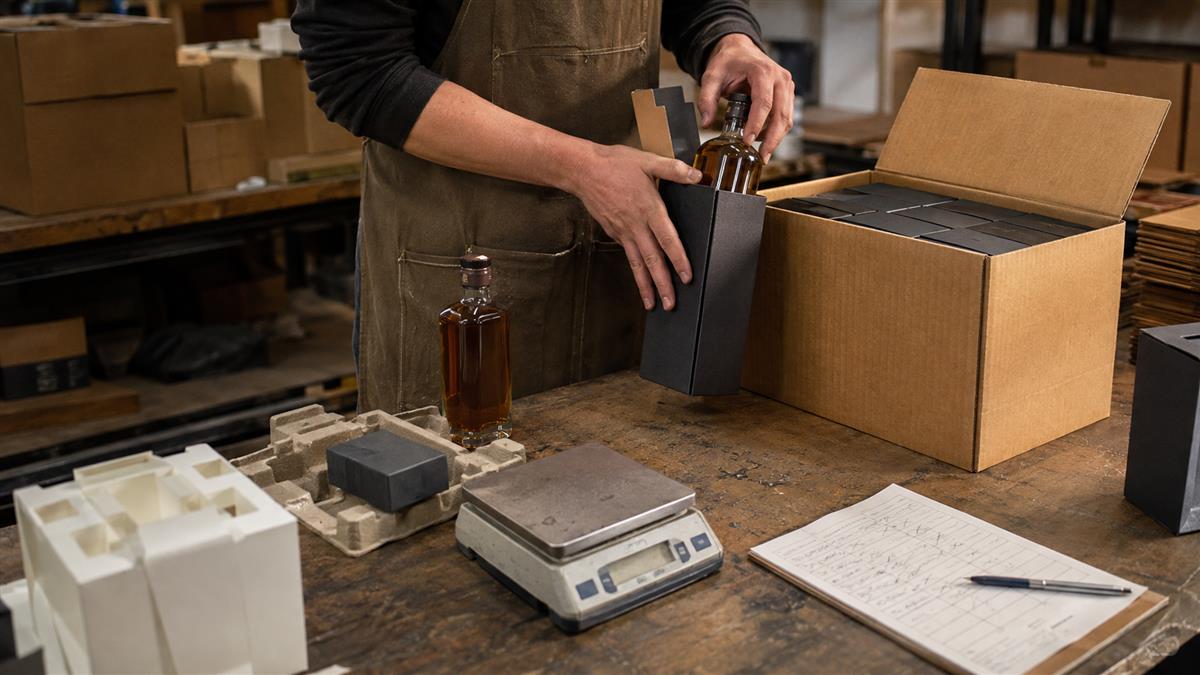
How to choose a luxury spirits packaging supplier
Look for evidence in the parts that are hard to fake: bottle insert samples, rigid and folding-carton capability, finishing registration, prototype reviews, transit testing, export packing, quality checks, and repeat-order consistency. Ask how the supplier handles a change in bottle closure, paper texture, or annual quantity. That answer tells you more than a gallery of dramatic gift boxes.
Our custom packaging product range can be used as a starting point, but the useful quotation conversation should include the actual bottle, filled weight, dimensions, insert, finish, quantity, route, and delivery date.
For a broader look at structure, printing, and material options, browse our packaging blog and resource library before writing the final brief.
If recycled or certified fiber is part of the brief, check the supplier paperwork and the current rules from the Forest Stewardship Council rather than relying on a vague “eco” label.
For alcohol products sold in the United States, confirm label and container requirements through the U.S. Alcohol and Tobacco Tax and Trade Bureau before artwork approval.
FAQs
What makes spirits packaging look luxurious?
Precise proportions, a suitable material, controlled decoration, a clear brand story, and a smooth opening experience usually matter more than box weight or the number of finishes.
Are rigid boxes always the best choice?
No. Rigid boxes suit gifts and limited editions, while a well-finished folding carton may be more practical for core retail products, larger volumes, storage, and freight.
What should a bottle insert protect?
It should limit side-to-side movement and protect the base, body, shoulder, and neck where the bottle shape requires support. It should also allow clean loading and removal.
How many premium finishes should one box use?
There is no fixed number, but one dominant finish with one or two supporting details is easier to control than several competing effects.
What should I include in a supplier brief?
Include the filled bottle dimensions and weight, closure and label details, box format, insert, materials, artwork, finishes, quantity, destination, transport route, testing needs, and launch date.
Conclusion
Luxury spirits packaging is moving away from “make it heavier and add more gold.” Collectible structures, experiential openings, cultural details, controlled decoration, and lighter materials all have a place. The winning concept is the one that gives the bottle a clear role, protects it in transit, and still makes sense when the order reaches production.
For a practical starting point, review our custom packaging development services and prepare the bottle, insert, finish, route, and volume details before requesting a quotation.
Plan the next packaging review
Share the bottle dimensions, filled weight, desired retail or gift format, materials, artwork, quantity, target market, and deadline with our packaging consultation team. We can help compare rigid boxes, folding cartons, bottle inserts, premium finishes, prototypes, and production constraints before the design is locked.
Send Your Packaging Brief to Our Team
Share your product type, format, size, quantity, material, destination, and required date. Our team can support artwork review, sampling, production, inspection, and export coordination.
Contact us for a project-specific recommendation.


Ready to build packaging with a factory team?
Send your product size, material, artwork, quantity, destination, and deadline so our team can focus the first review on quotation and sampling.