Manufacturing Packaging Solutions: An RFQ Guide

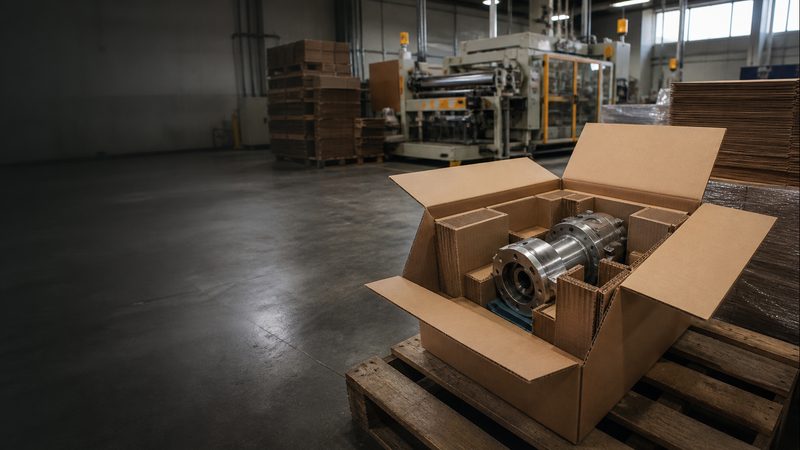
Quick answer: Manufacturing packaging solutions should be specified around the product, the distribution environment, and the packing operation—not around a box price alone. A useful RFQ should include product dimensions, weight, quantity, shipping method, stacking conditions, protection risks, packaging structure, testing expectations, delivery location, and replenishment timing.
Manufacturers rarely lose money because a carton costs a few cents more. They lose it when a part arrives scratched, a packer spends too long building a box, a pallet wastes cubic space, or production stops while waiting for packaging. The right packaging system keeps those problems connected.
What Are Manufacturing Packaging Solutions?
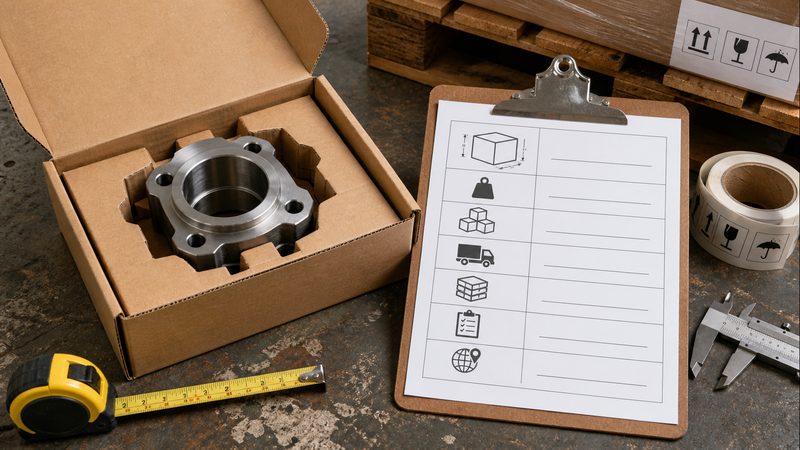
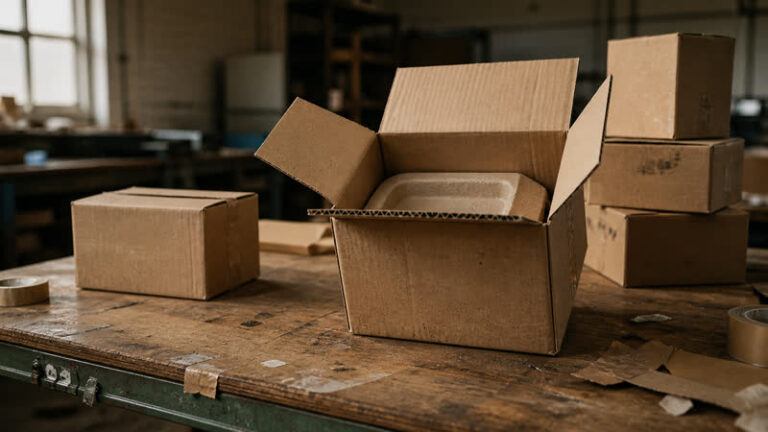
Manufacturing packaging solutions are packaging systems designed for products made, stored, handled, and shipped through an industrial supply chain. They may include corrugated shipping boxes, heavy-duty cartons, partitions, die-cut inserts, pads, bulk containers, pallets, and closures. Explore related custom packaging products when you are narrowing the format.
The important word is system. A box for a machined component has to control movement and prevent abrasion. A carton for electronics may need a tighter fit and cushioning. A bulk pack for repetitive parts may need stack strength and fast loading. The package is part of the production workflow, not just the last container on the line.
Why Industrial Packaging Is an Operational Decision
Packaging affects at least five operating costs: material, labor, freight, product damage, and downtime. A low unit price can disappear if the box uses too much void fill, requires several manual steps, or takes more pallet positions than necessary.
That is why a manufacturing packaging supplier should look beyond the carton itself. The useful question is not “What is the cheapest box?” but “Which packaging format protects the part and moves through our operation with the fewest avoidable costs?”
Which Manufacturing Packaging Formats Should You Consider?
Corrugated Shipping Boxes
Corrugated boxes are a practical starting point for many manufactured products. The specification can be adjusted through box dimensions, board construction, flute profile, printing, closure, and internal protection. Standard styles may be enough for stable products with predictable sizes; custom dimensions become more valuable when empty space, movement, or stacking is causing problems.
Heavy-Duty Industrial Packaging
Large, dense, or high-value parts may need stronger board construction, reinforced corners, blocking, bracing, or a unit-load design. The correct strength depends on product weight, stacking height, handling equipment, and the actual route. “Heavy duty” is not a universal grade; it should be tied to a load and distribution condition.
Custom Inserts, Partitions, and Pads
Inserts keep products from touching one another or the outer wall. Partitions separate components, while pads distribute compression and protect surfaces. These features can also make packing repeatable: the operator sees where each part belongs instead of improvising with loose material.
What Shipping Box Specifications Should You Include in an RFQ?
A supplier can quote faster and more accurately when the RFQ describes the job, not only the desired box name. Include the following information wherever it is known:
- Product dimensions: provide length, width, height, and whether the measurements are taken with protrusions, handles, fittings, or protective parts included.
- Product weight: state the single-unit weight and the intended quantity per box. If the product has a shifting center of gravity, mention it.
- Product geometry and surfaces: note sharp edges, fragile finishes, oily surfaces, exposed threads, glass, polished metal, or parts that must not touch.
- Pack quantity: specify units per carton, cartons per pallet, expected monthly volume, annual volume, and whether the quantity is stable or seasonal.
- Shipping method and destination: identify parcel, LTL, truckload, air, sea, export, internal shuttle, or a mixed route. Give the delivery country or region and any carrier requirements.
- Stacking and storage: describe warehouse stack height, pallet pattern, rack storage, temperature or moisture exposure, and how long the package may remain in storage.
- Protection requirements: identify the main risks—drop, vibration, compression, abrasion, dust, moisture, corrosion, or product movement. Include any known damage pattern from the current package.
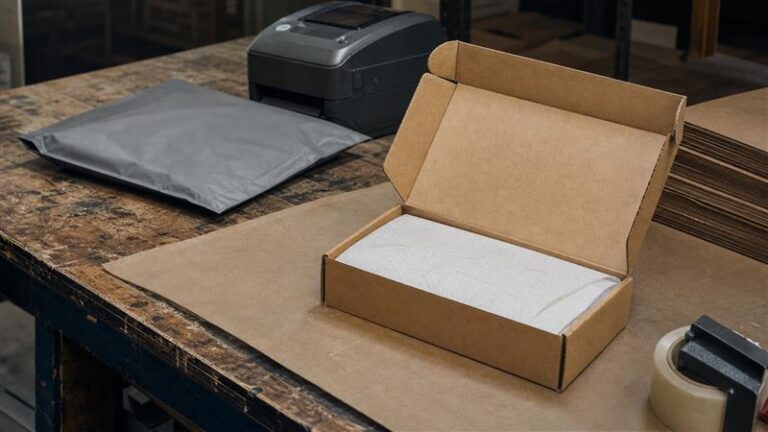
- Box structure and inserts: say whether you need a regular slotted carton, die-cut box, partition, molded or paperboard insert, blocking, bracing, hand holes, or an auto-lock feature.
- Artwork and identification: include print colors, labels, barcodes, handling marks, lot codes, orientation arrows, and whether the box needs internal or external identification.
- Testing and approval: request a physical prototype, fit check, pilot run, compression or drop testing, or a distribution test when the product and route justify it. Testing should be selected for the actual package-product combination; ISTA explains that different procedures serve screening, simulation, and development purposes.
- Delivery and replenishment: state the first required date, repeat-order rhythm, delivery locations, inventory expectations, and whether scheduled releases are needed to prevent line stoppages.
When some information is missing, label it as an assumption rather than leaving the supplier to guess. A short drawing, product photo, current carton sample, or failure photo can prevent several rounds of quotation changes.
For parcel or freight shipments, compare the proposed carton with the carrier’s published packing guidance as well as your internal handling route. FedEx packing guidance is a useful reference for matching box size, cushioning, and shipment conditions to the distribution method.
When a 1,711 mm Box Won the Repeat Order
A long four-flap box looked simple in the RFQ. In reality, the joints, UV finish, sample approval, and delivery terms all had to work together.
📐 The RFQ Challenge
The customer needed an unusually long package for a shower-drain product, with full-coverage UV printing and a specific glossy appearance. At this size, the connection method was not a small production detail—it could decide whether the box was workable.
📏 Structure
1,711 mm unfolded length made the four-flap joint and board-converting route critical.
✨ Finish
The customer wanted the bright UV area to look right, not merely match a line in a quotation.
🚚 Delivery
The quote had to account for DDP delivery, not only the carton price.
⏱ From RFQ to Repeat Order
🧩 The Extra Project That Exposed a Fit Risk
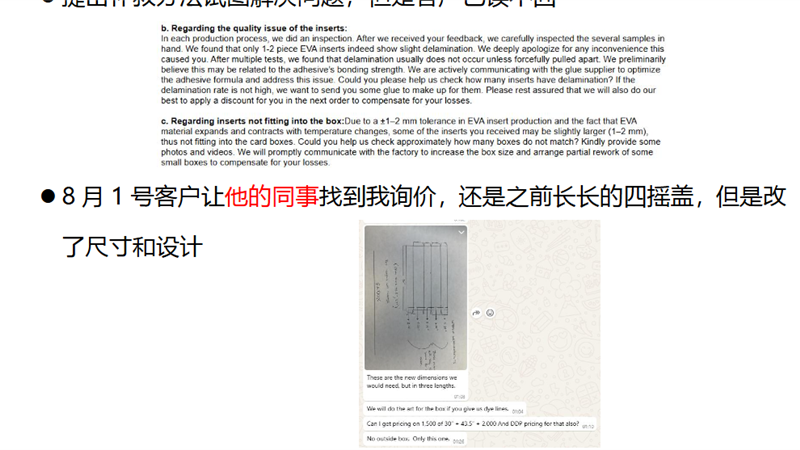
During the long-box project, the customer also requested 4,000 card boxes and 4,000 EVA inserts. The later complaint was practical: some EVA inserts released too easily, while some slots were too tight because product dimensions varied.
💡 Three Lessons for Manufacturing Packaging RFQs
Include unfolded size, flap layout, joint method, board construction, and loading direction.
Use samples, marked-up photos, or video for glossy, matte, UV, and color expectations.
Approve insert clearance and product variation before mass production—not after a complaint.
How Are Custom Manufacturing Packages Engineered?
The process normally begins with the product and its risks. The supplier reviews dimensions, weight, fragility, geometry, surface condition, and the way the product is loaded and removed. Then the distribution environment is mapped: manual handling, palletization, parcel networks, export freight, warehouse stacking, and possible climate exposure. For industry-specific combinations, review the relevant packaging applications before finalizing the brief.
Next comes the structure. The outer box, insert, partition, closure, and cushioning should work as one arrangement. A good prototype is not only measured on a table; it is loaded by the people who will actually pack the product. That is where awkward folds, slow closures, and parts that shift during handling usually reveal themselves.
For testing, choose the test objective first. A screening test may compare two early designs, while a general simulation may be used to study transport hazards. Do not describe a package as “damage-proof” without measured evidence. The ISTA test-procedure guidance explains why different procedures serve screening, simulation, and development purposes. The right result is a documented design decision with clear limitations.
How Can Packaging Improve Manufacturing Efficiency?
Packaging efficiency is often won through small structural decisions. A self-locking closure can remove a taping step. A pre-cut insert can make loading consistent. A right-sized carton can reduce void fill and improve pallet density. Consistent dimensions can also help a case erector, conveyor, or packing workstation operate with fewer adjustments.
The benefit should be measured in the operation. Record packing time per unit, the number of materials handled, carton usage, pallet positions, product damage, and packaging-related interruptions before and after a trial. This gives procurement and production a shared basis for judging the package.
Standard or Custom Manufacturing Packaging?
| Choose a standard format when | Consider a custom format when |
|---|---|
| Product sizes vary and speed matters more than fit | Excess void space increases freight or damage |
| Existing cartons provide adequate protection | The product is heavy, fragile, sharp, or unusually shaped |
| Volume is low or demand is uncertain | Packing labor, damage, or SKU complexity is costly |
| No insert or special closure is needed | Partitions, inserts, automation, or repeatable loading are required |
Custom does not automatically mean better. It is justified when the design solves a measurable problem or creates a meaningful operational advantage. For a stable high-volume product, a custom box may reduce labor and freight. For a low-volume product with changing dimensions, a flexible standard format may be the more sensible choice.
How to Choose a Manufacturing Packaging Supplier
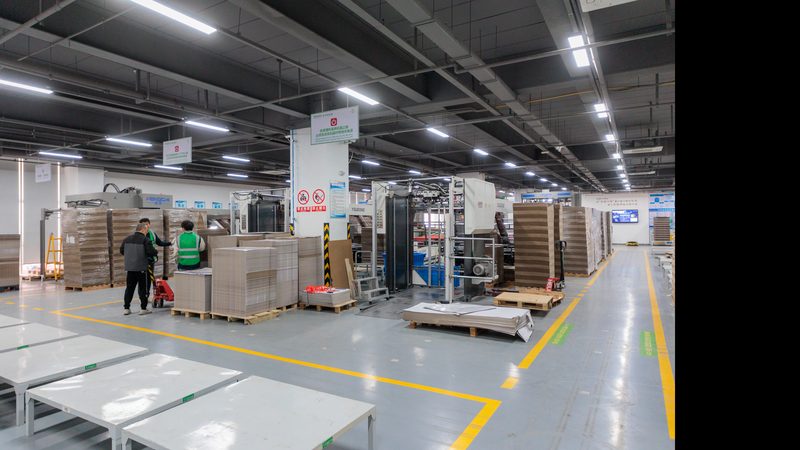
Look for more than converting capacity. A capable supplier should be able to discuss structural design, materials, inserts, sampling, quality checks, production planning, and delivery continuity. Ask how the supplier handles a specification change, a pilot order, a repeat schedule, and a packaging shortage.
Evidence matters. Ask for relevant samples, test records where available, production photos, quality-control steps, and an explanation of what is confirmed versus what will be validated during sampling. A supplier that asks about the product, route, packing method, and delivery rhythm is usually looking at the real packaging problem.
If the package carries barcodes, batch identifiers, or shipment data, confirm the artwork against the buyer’s system before approval. The GS1 barcode standards provide a recognized reference for identifying and tracking products through supply chains.

For a closer look at factory production and converting capability, review the company’s Intelligent Factory information.
When a project brief includes documented compliance requirements, review the relevant certification information alongside the specific product and material scope.
Manufacturing Packaging RFQ Checklist
- Product dimensions and weight
- Units per box and monthly or annual volume
- Current packaging and known failure points
- Shipping method, destination, and handling environment
- Stacking, pallet, rack, and storage requirements
- Insert, partition, cushioning, closure, and identification needs
- Artwork, printing, barcode, and labeling requirements
- Prototype, pilot, test, and approval expectations
- First delivery date, repeat schedule, and replenishment plan
- Sustainability or market-specific requirements
FAQs
What packaging is best for manufactured products?
The best package depends on product dimensions, weight, fragility, surface condition, shipping method, stacking, handling, and volume. Corrugated cartons, inserts, partitions, pads, or bulk systems may be appropriate in different conditions.
When should a manufacturer use custom packaging?
Consider custom packaging when standard cartons create excessive damage, empty space, packing labor, freight cost, movement, or inconsistent loading. Custom design should solve a defined operating problem.
What should I provide when requesting a manufacturing packaging quote?
Provide product dimensions, weight, quantity per box, monthly or annual volume, current packaging, shipping route, stacking conditions, protection concerns, insert needs, artwork, delivery location, and deadline.
Do industrial shipping boxes need testing?
Testing is useful when the product is fragile, heavy, valuable, export-shipped, or exposed to a known damage risk. The appropriate test depends on the package-product combination and the intended distribution environment.
How can packaging reduce total manufacturing cost?
A package can reduce total cost by shortening packing time, reducing damage, improving pallet utilization, lowering material use, simplifying SKUs, and preventing packaging shortages. Measure those effects during a pilot instead of assuming them from the carton price.
Conclusion: Specify the Operation, Not Just the Box
The best manufacturing packaging solutions protect the product while supporting the way it is packed, stored, moved, and replenished. A quote becomes much more useful when it includes product facts, distribution risks, operating requirements, and measurable approval criteria.
Before you compare suppliers, prepare the RFQ information above. Then compare the full result: protection, labor, freight, damage exposure, testing, lead time, and supply continuity—not only the unit price.
Request a Manufacturing Packaging Quote
Share your product dimensions, unit weight, pack quantity, current packaging, shipping destination, protection concerns, and deadline. A packaging team can then recommend a practical box, insert, or bulk-pack configuration instead of guessing from a product name.
For a project review and quotation, use the Packaging RFQ contact path and include drawings, photos, annual volume, and any known damage or packing-time problems.
Send Your Packaging Brief to Our Team
Share your product type, format, size, quantity, material, destination, and required date. Our team can support artwork review, sampling, production, inspection, and export coordination.
Contact us for a project-specific recommendation.
Ready to build packaging with a factory team?
Send your product size, material, artwork, quantity, destination, and deadline so our team can focus the first review on quotation and sampling.