Packaging Materials: 80% Recycled Mailer, 22% Lighter

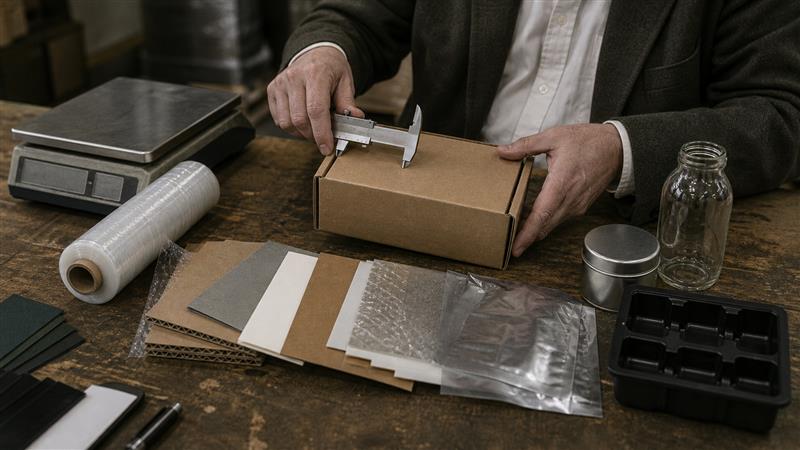
Quick answer: The best packaging material is the one that protects the product through its actual supply chain without adding unnecessary weight, cost or disposal problems. The main categories are paper and corrugated, plastic, glass, metal and multi-material structures. The material name is only the starting point; the package format, barrier, dimensions and shipping route decide whether it works.
Compare the product, handling risks and end market before asking for a quote. A cosmetic jar, machine part and ecommerce order may all need custom packaging, but not the same material.
What Are the 5 Main Types of Packaging Materials?
Most packaging decisions fall into five broad groups. Each group includes several grades, thicknesses and converting methods, so “paper” or “plastic” is not yet a usable specification.
1. Paper and Corrugated
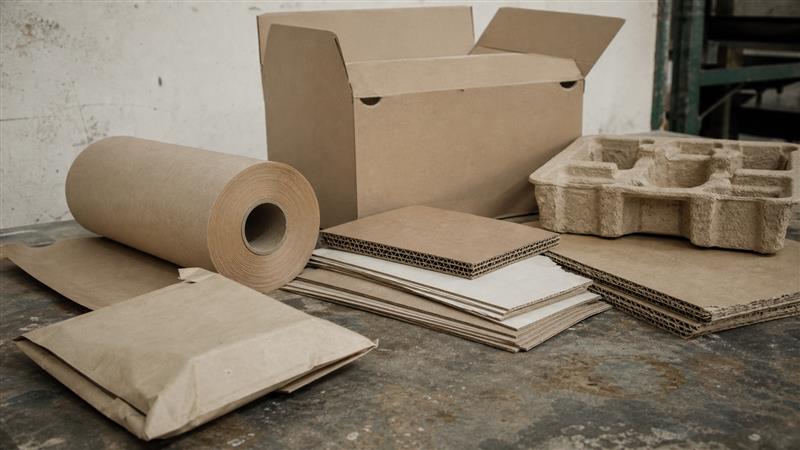
Paper-based packaging includes kraft paper, paperboard, folding cartons, corrugated board, molded pulp and specialty papers. Corrugated packaging adds fluting between liner sheets, which creates a lightweight structure with useful compression and cushioning performance.
Paper is easy to print, die-cut and customize. It suits ecommerce mailers, shipping cartons, retail cartons and inserts. Its weak spot is moisture: board can soften or lose strength when wet. Coatings and liners can help, but they also change the recycling conversation.
2. Plastic
Plastic is a family of materials, not one single packaging substrate. LDPE and other flexible films are common in bags and pouches, while PET, HDPE and PP appear in bottles, tubs, jars and rigid components. The choice changes stiffness, clarity, sealability, chemical resistance and barrier performance.
Plastic is light and often performs well against water and puncture. The tradeoff is recovery: a mono-material structure may be easier to process than a mixed laminate, but local infrastructure still matters.
3. Glass
Glass provides a strong, nonporous barrier and lets the customer see the product. It is common in beverages, sauces, candles, cosmetics and premium presentation. It can also be reused when the format and return system support that model.
Weight and breakage are the practical concerns. A glass package may need molded pulp, dividers, corner protection or a stronger outer carton during parcel shipping. Evaluate the product and protective packaging as one system.
4. Metal
Aluminum and steel bring durability, heat tolerance and strong protection from light and gases. Cans, tins, pails and drums serve food, beverage, industrial and personal-care applications. Thin metal can dent, but it usually will not shatter like glass.
Metal can involve tooling and forming decisions that are less flexible at very low volumes. It is also heavier than many flexible alternatives, so freight density matters.
5. Multi-Material Packaging
Multi-material packaging combines substrates to get a property that one layer cannot provide alone. A pouch may use different layers for seal strength, oxygen protection, light blocking and puncture resistance. A paper-based structure may add a barrier layer when the product or climate demands it.
This is not automatically a bad choice. Ask whether the extra layer solves a real performance problem. If it does not, complexity may add cost and end-of-life friction without improving the package.
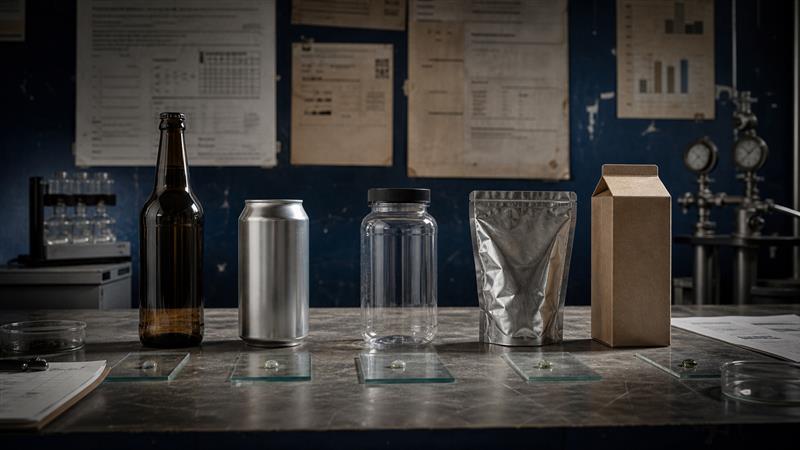
Material vs. Packaging Format: Do Not Mix Them Up
A box is a format. Corrugated board or paperboard is a material choice within that format. A bottle may be made from glass, PET, HDPE or metal. A pouch may use PE, PP, paper-based layers or a laminate.
This distinction matters when preparing a request for quotation. “We need a sustainable box” leaves too many unanswered questions. A better brief states the format, internal dimensions, product weight, loading method, board grade, printing, closure and shipping environment.
Which Packaging Material Fits Your Product?
| Application | Usually important | Materials to investigate |
|---|---|---|
| Food | Barrier, food-contact suitability, seal integrity and shelf life | Paperboard, films, glass, metal or approved laminates |
| Ecommerce | Impact protection, low weight, right-sizing and easy opening | Corrugated, paper mailers, flexible mailers and protective inserts |
| Cosmetics | Product compatibility, appearance, barrier and presentation | Glass, plastic, folding cartons, rigid boxes and molded pulp |
| Electronics | Shock, moisture, static control and dimensional stability | Corrugated, molded pulp, EPE or engineered plastic components |
| Luxury goods | Rigidity, surface feel, print and unboxing sequence | Rigid board, paperboard, glass, metal and specialty papers |
For a broader application review, buyers can start with the site’s packaging applications and then narrow the material based on product risk.
Five Questions to Ask Before Choosing a Material
1. What must the product be protected from?
Impact, compression, moisture, oxygen, light, contamination and temperature each point toward different structures. A moisture problem cannot be solved by choosing a thicker carton alone, and a fragile product may need a fitted insert rather than loose fill.
2. How heavy and fragile is it?
Record the actual packed product, not only the product on its own. Weight affects box strength, pallet loading, parcel charges and the amount of protective material required.
3. How will it move?
Warehouse handling, parcel networks, cross-border trucking, ocean freight and retail palletization create different risks. Note the route, likely stacking, climate exposure and whether the package will be handled by people or automated equipment.
4. What shelf life or barrier is required?
Food, fragrance, chemicals and moisture-sensitive goods may need a specific barrier. Ask for technical data and test the finished package, because a material’s headline property may change after printing, sealing, forming or perforation.
5. What happens after use?
Separate three questions: does the package contain recycled content, can it be recycled, and is there a realistic collection route where it will be sold? They are related, but they are not the same claim.
Which Packaging Material Is Most Sustainable?
There is no universal winner. A lighter package can reduce transport weight, while a heavier reusable format may make sense in a return loop. A paper package may have a familiar recovery route in one market and a moisture limitation in another. A plastic structure may protect a product with less material, but its collection pathway needs to be checked.
Compare material quantity, recycled content, shipping weight, reuse potential, local recovery and product damage together. Product loss matters too: a package that fails repeatedly can create more waste and cost than a slightly heavier design that keeps the product intact.
For general sustainability terminology and waste-prevention context, the EPA’s sustainable materials guidance is a useful reference point.
How Material Choice Changes Shipping Cost
Material price is only one line in the total. Compare the finished package’s weight, packed dimensions, pallet density, dimensional-weight exposure, protective components and expected damage or returns. A cheap carton that needs extra void fill may cost more once it reaches the parcel network.
Right-sizing can be more valuable than switching materials blindly. Measure the product, leave only the clearance needed for loading and protection, and check the packed unit on the carrier’s scale. If breakage or movement is the problem, fix the structure before adding more loose filler.
How Material Choice Affects Printing and Branding
Paperboard and corrugated support direct printing, labels, coatings, foil, embossing and debossing. Plastic may use flexographic, gravure or digital printing, while glass and metal often rely on labels, sleeves, direct decoration or formed details. The chosen surface changes color, ink adhesion, scuff resistance and the acceptable level of variation.
Ask for a physical proof on the final substrate. A logo that looks correct on a white coated sheet may look warmer on recycled kraft board or softer on an uncoated surface.
Custom Packaging Materials: What Can Be Specified?
A custom packaging order can define more than a color and a logo. Specify the material or grade, thickness, internal dimensions, structure, closure, barrier, coating, print process, recycled-content target, insert, tolerance and intended shipping route.
When food or cosmetic contact is involved, confirm the relevant compliance requirements before production. The FDA food-contact reference explains why the intended use and substance matter; a supplier should still provide documentation for the specific material and application.
Stock or Custom Packaging?
Stock packaging makes sense when the volume is low, a standard size fits and speed is more important than branding or material optimization. Custom packaging earns its place when product fit, print, protection, barrier or repeat volume justify the setup and sampling work.
Compare MOQ, lead time, fit, print, material options, freight density and sample approval. A custom size that removes empty space may reduce shipping cost, but it should be validated with the actual product before the order is released.
Packaging Material Testing Checklist
- Pack the actual product and check movement in every direction.
- Record packed dimensions and weight.
- Check compression, impact, seal or closure performance where relevant.
- Expose the package to realistic moisture, temperature or handling conditions.
- Review print, color, coating, scuffing and opening experience.
- Run a realistic distribution trial rather than relying only on a bench sample.
- Document failures and revise the structure before mass production.
For distribution-testing terminology, buyers can review the relevant ASTM distribution testing standard and then agree with the supplier which tests match the route.
Common Packaging Material Selection Mistakes
The most common mistake is choosing by appearance alone. Other costly shortcuts include assuming paper is always more sustainable, ignoring barrier needs, specifying material before format, comparing only unit price, using a complex laminate without a performance reason and skipping real-world testing.
The cleanest correction is simple: write down the product risk first. Then choose the format, material, structure and finish in that order. This keeps a premium look from hiding a weak seam, a wet carton or an avoidable freight charge.
A French perfume brand cut damage with a lighter mailer
The winning change was not “use more material.” It was choosing the right recycled board and designing the mailer around the product.
Solid perfume ecommerce brand
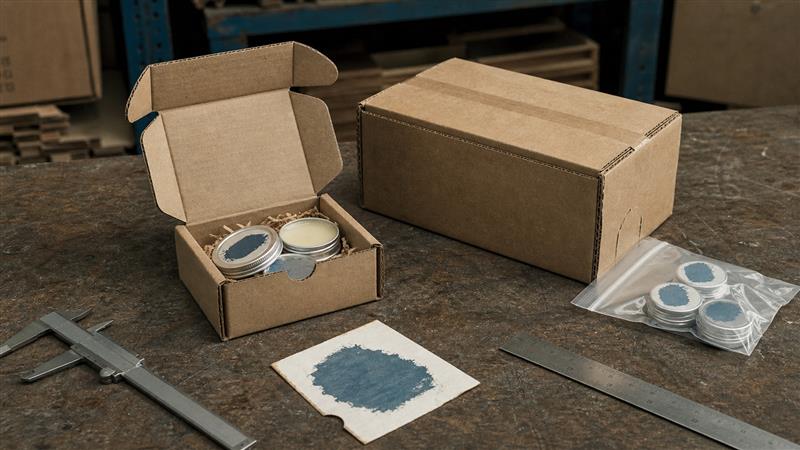
A PET composite pouch sat inside a three-layer B-flute carton. It protected the tins, but increased logistics cost, triggered an environmental packaging surcharge and gave the brand a dull print surface.
BEFOREMore layers, more cost
- PET composite pouch plus three-layer B-flute carton.
- Heavy outer box and weak print appearance.
- Damage rate around 6–7%.
AFTEROne recycled mailer
- 80% recycled E-flute, 250 gsm liner, about 1.2 mm board.
- 16×22×4 cm one-piece folding structure.
- Moisture-resistant treatment; no extra inner box.
What the team learned
When changing material, do not copy the old carton size. Measure the product, check compression reserve and test the finished surface. After three sample rounds, the new mailer reduced package weight by 22%, brought damage to 2% or less and led to a repeat order.
Source: Internal sales-win record, France, June 2023. Order value: approximately US$9,600–11,200. Customer identity withheld.
How to Choose a Packaging Materials Supplier
A capable packaging materials supplier should help connect the product, material, structure and production method. Ask whether the supplier can provide samples, explain grade differences, recommend a realistic material option, support testing, document sustainability claims and maintain the same specification across repeat orders.
Share the product type, dimensions, weight, quantity, artwork, target market, shipping destination, barrier needs, preferred material and deadline. The more concrete the brief, the less likely the quote will compare different packages as if they were the same thing.
For more practical packaging comparisons before sending a brief, browse the packaging blog and use the examples to refine the questions for your own product.
Our custom packaging team can help compare paper, corrugated, rigid, flexible and protective formats against the product and delivery route.
FAQs
What are the five main types of packaging materials?
The five broad groups are paper and corrugated, plastic, glass, metal and multi-material packaging. Each group contains many grades and formats.
Which packaging material is best for shipping?
It depends on product weight, fragility, dimensions, route and protection requirements. Corrugated is widely used, but paper mailers, flexible formats, inserts or specialized structures may fit better.
Are paper packaging materials always more sustainable?
No. Compare material quantity, recycled content, transport weight, product protection and local recovery. A paper package still needs the right moisture and strength performance.
What should I include in a custom packaging material request?
Include product dimensions and weight, units per pack, fragility, barrier needs, shipping route, material preference, artwork, finish, quantity, target budget and delivery date.
Should I choose stock or custom packaging?
Choose stock when standard sizes and speed are enough. Choose custom when fit, protection, branding, barrier performance or repeat volume justify sampling and setup.
Conclusion: Choose the System, Not Just the Substrate
Paper and corrugated, plastic, glass, metal and multi-material packaging each have a sensible place. The right answer depends on what the product must survive, how it will move, how it will be presented and what happens after use.
Define the material, structure and format together. Then sample, test and compare the total delivered cost. If you need to turn that brief into a production-ready request, use the packaging inquiry page and include the product details, quantity and deadline.
Send Your Packaging Brief to Our Team
Share your product type, format, size, quantity, material, destination, and required date. Our team can support artwork review, sampling, production, inspection, and export coordination.
Contact us for a project-specific recommendation.


Ready to build packaging with a factory team?
Send your product size, material, artwork, quantity, destination, and deadline so our team can focus the first review on quotation and sampling.