Padded Envelopes: Types, Sizes, Materials & Custom Packaging


Quick answer: a padded envelope is useful when a product needs more protection than a flat mailer but does not need a full corrugated box. The right choice depends on the item’s weight, thickness, shape, fragility, moisture exposure and shipping route. A bubble mailer, paper padded mailer and rigid mailer may look similar from a warehouse shelf, but they do different jobs.
For ecommerce teams, the practical question is not “Which padded envelope looks nicest?” It is “What is the lightest format that will protect this product without creating movement, waste or a packing slowdown?” A custom packaging manufacturer can help answer that when the SKU, pack-out and shipment volume are known.
What is a padded envelope?
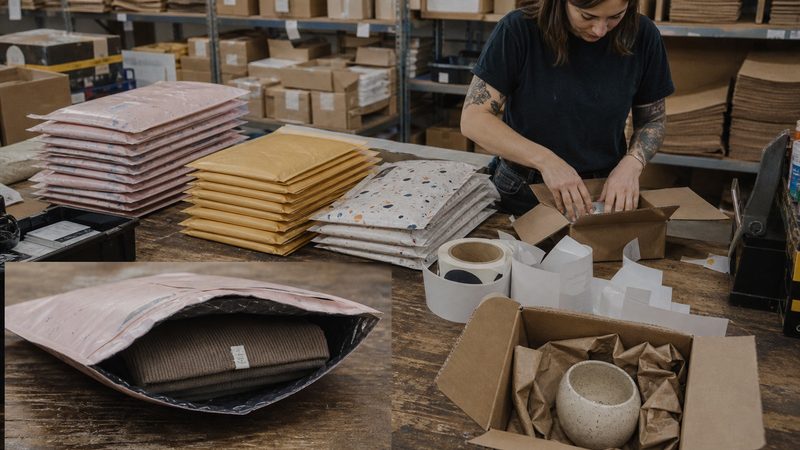
A padded envelope, also called a cushioned mailer or padded mailer, is a flexible shipping envelope with a built-in protective layer. That layer may be plastic bubble film, paper padding, foam, a honeycomb-style structure or another cushioning material.
Padded envelope vs. bubble mailer
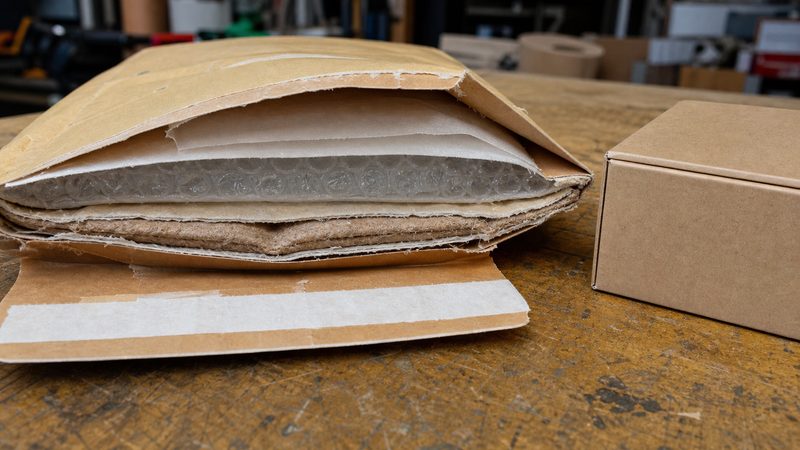
“Padded envelope” is the broader category. A bubble mailer is one type of padded envelope that uses air bubbles for cushioning. A paper padded mailer may use crimped paper, shredded paper or a folded paper structure instead. The visible kraft exterior does not tell you the complete construction inside.
Where does it fit in ecommerce packaging?
It sits between an unpadded mailer and a corrugated shipping box. That makes it useful for light products with moderate impact or scuffing risk, but a poor fit for heavy, crush-sensitive or highly fragile items that need structural support.
Is a padded envelope right for your product?
Start with four filters: weight, thickness, dimensions and fragility. If one of those sits outside the normal range, test the package before placing a volume order.
The U.S. Postal Service packaging guidance describes padded envelopes as one option for small odd-shaped items, but it still emphasizes padding, separation and prevention of movement. That is a useful reminder: the mailer format does not replace a proper fit.
Types of padded envelopes
All-plastic bubble mailers
These combine a plastic outer film with bubble cushioning. They are light, flexible and more resistant to brief moisture exposure than an untreated paper mailer. They work well for compact goods where moderate cushioning matters, but the plastic structure may complicate end-of-life handling depending on the local collection route.
Paper and plastic bubble mailers
A kraft or paper-looking exterior may be bonded to a plastic bubble interior. This can improve print appearance and give the mailer a familiar retail feel, but it creates a mixed-material structure. Check whether the paper and plastic can be separated and what the customer is realistically expected to do after use.
Fully paper padded mailers
Paper padded mailers use a paper exterior and paper-based cushioning. They are attractive to brands trying to simplify the material story, especially when curbside paper recycling is available. Performance still depends on the paper weight, cushioning geometry, seam strength and the product being shipped.
Specialty and degradable mailers
Some products use recycled content, compostable components or degradable additives. Treat each claim as a specification to verify, not a shortcut. Ask whether the claim covers the whole mailer, whether it needs an industrial facility and whether that disposal route exists for the target market.
Compare packaging by protection level
A simple protection ladder helps buyers avoid using a box for everything or a padded envelope for products that need more structure.
- Level 1 — Flat mailer: surface protection with little cushioning.
- Level 2 — Lightweight paper padding: light buffering for compact, low-risk items.
- Level 3 — Bubble or padded mailer: moderate impact cushioning for small goods.
- Level 4 — Rigid mailer: better bend resistance for flat, sensitive products.
- Level 5 — Corrugated box with cushioning: structural protection for heavy or fragile products.
The decision rule is simple: choose the lowest level that reliably survives the expected handling route. Then test it with the actual product, not an empty envelope.
Padded envelope vs. shipping box
Choose a padded envelope when the product is lightweight, moderately compact, and unlikely to be crushed by the items around it. It also makes sense when packing speed, storage density and low outbound weight matter.
Choose a box when the product is heavy, crush-sensitive, irregular, highly fragile or dependent on a fitted insert. A box gives you more control over compression and separation, although it uses more warehouse space and usually takes longer to pack.
Padded envelope vs. flat mailer vs. rigid mailer
A flat mailer suits soft goods and low-risk items. A padded envelope adds cushioning for compact products. A rigid mailer is the better answer when bending is the main threat, such as with prints, cards, documents or thin books. If the item is both fragile and heavy, move up to a corrugated box.
The most useful packaging application guidance should connect these formats to real products instead of presenting mailers as interchangeable stock sizes.
Paper vs. plastic padded envelopes
Paper and plastic should be compared as complete structures, not as two labels. Protection efficiency, moisture resistance, recycled content, printability, storage, unit price and local recovery all matter.
When paper has an advantage
A paper padded envelope can support a simpler material message and may fit existing paper recycling systems. Paper surfaces also provide a natural print area and can work well for brands that want a tactile, uncoated appearance.
When plastic has an advantage
Plastic bubble construction is often lighter and more tolerant of brief moisture exposure. It can also offer consistent cushioning with a thin profile. The tradeoff is that film collection and mixed-material recycling are not equally available in every market.
CEPI’s paper-based packaging recyclability guidance makes the same broader point: combining paperboard with other materials should not be judged by appearance alone, and national collection systems can differ.
Are padded envelopes recyclable?
Sometimes. A single-material paper padded mailer may have a simpler recycling path where paper packaging is collected. A bonded paper-and-plastic mailer may not. Recycled content and recyclability are also different claims: one describes what went into the package, while the other describes what can happen after use.
Ask the supplier for the material breakdown by weight, adhesive details, recycled-content documentation and disposal instructions for the market where the mailer will be used. The American Forest & Paper Association’s guidance on recycling paper padded mailers is a useful starting point, but local collection rules still control the real outcome.
How to choose the right padded envelope size
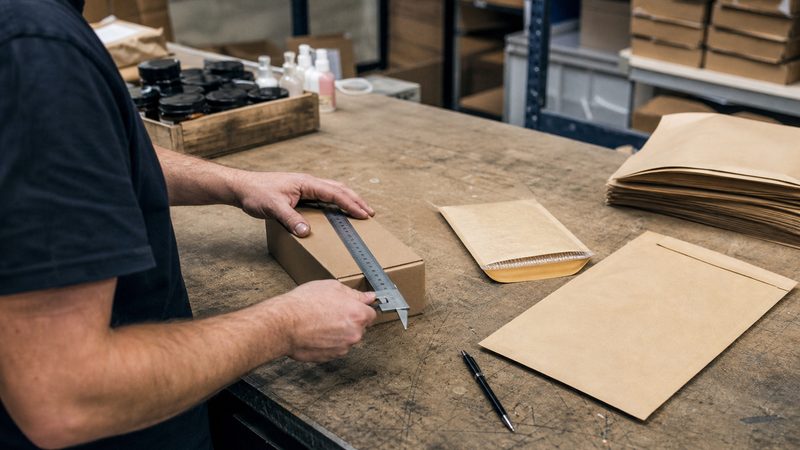
Measure the product after its inner packaging is complete. Record length, width and thickness, then check the mailer’s usable internal dimensions rather than relying on the outside measurement printed on a catalogue.
- Place the packed product on a flat surface.
- Measure the longest side, shortest side and maximum thickness.
- Allow enough room for easy insertion without forcing the seams.
- Leave closure clearance so the adhesive flap can seal cleanly.
- Test whether the product can move too freely after sealing.
An undersized envelope causes seam stress, bent corners and difficult fulfillment. An oversized one adds material, storage volume and movement. Samples should be tested with the actual SKU before production is approved.
Why mailer size affects total packaging cost
Size changes more than the purchase price. It affects material consumption, inbound freight, pallet density, shelf space, packing time and outbound dimensions. A mailer that is slightly more expensive but fits the product cleanly may still reduce total cost by cutting extra cushioning and packing labor.
For ecommerce operations, record the packed weight and outer dimensions of each common SKU. Those numbers make it easier to compare stock and custom sizes without guessing from the empty mailer.
What can you customize?
A custom padded envelope can be specified by more than logo and color. Important choices include internal dimensions, exterior paper or film, cushioning structure, recycled content, adhesive closure, tear-open strip, return strip, barcode area and print coverage.
For repeat programs, the best improvement may be a small change: a wider flap, a better label zone, a stronger seam or an extra adhesive strip for returns. These details can make a bigger warehouse difference than a decorative print upgrade.
Stock vs. custom padded envelopes
Stock mailers make sense for lower volume, standard products and urgent launches. Custom production becomes more attractive when the same SKUs ship repeatedly, standard sizes leave too much space, or the brand needs a specific construction.
Compare MOQ, lead time, unit cost, storage, print setup, fit and repeat-order consistency. A low unit price is not a saving if the packer needs extra filler or the wrong fit causes preventable returns.
Packaging project snapshot
When a padded envelope stopped cosmetic tools from arriving scratched
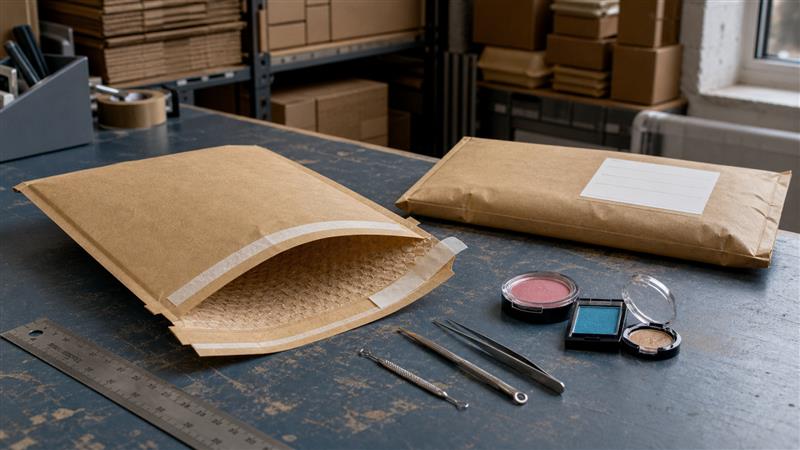
A British beauty ecommerce seller was shipping colourful cosmetics and metal makeup tools in ordinary plastic mailers. The parcels were light, but the products were not forgiving: metal edges rubbed against the outer surface, and short courier drops quickly became customer complaints.
What changed?
Before: ordinary plastic mailer
- No cushioning around metal parts
- Scratches and corner knocks
- Damage rate around 7–9%
After: custom paper padded mailer
- Built-in 2–3 mm paper cushioning
- Branded print without an extra sleeve
- Damage rate reduced to 2% or less
What the project taught us
For padded envelope packaging, measure the product plus the full cushioning layer. A mailer that looks compact on a quotation sheet can become too tight after padding is added; one that is too large lets small tools move and rub. The useful specification is the usable internal size, tested with the packed product—not the outside dimension printed on a catalogue.
Source note: Based on an internal sales-win record. Customer identity is withheld; quantities and performance figures are reported as project ranges.
Test before placing a volume order
Request samples with the real product. Check insertion, closure clearance, seam stress, cushioning contact, label placement and the opening experience. Weigh the sealed package and record its dimensions.
Then run a practical movement check. Turn the mailer over, listen for sliding, inspect the corners and open it again. If the product has a higher damage cost, use a realistic shipping test rather than approving the sample from a clean desk.
Common padded envelope mistakes
- Choosing by exterior appearance instead of product risk.
- Assuming every bubble mailer provides the same cushioning.
- Using a padded envelope for heavy or highly fragile products.
- Ignoring usable internal dimensions and closure clearance.
- Assuming a kraft exterior means the whole mailer is paper-based.
- Comparing only the empty-mailer price.
- Ordering custom production without testing a packed sample.
How to choose a padded envelope supplier
Ask for the available stock sizes, custom sizing range, paper and plastic constructions, cushioning options, print capability, recycled-content documentation, samples, MOQ, lead time and high-volume capacity.
A good supplier should ask about the product, packed dimensions, monthly usage, target market and damage history before recommending a mailer. Its packaging blog and technical content should also show how it thinks through fit, materials and fulfillment instead of only displaying finished artwork.
Supplier-ready padded envelope brief
Include the product dimensions and weight, inner packaging, fragility, required protection level, preferred material, mailer size, closure, return function, artwork, sustainability requirements, quantity, monthly usage and target delivery date.
The more complete the brief, the easier it is to compare two quotations fairly. Ask suppliers to state whether dimensions are internal or external, whether the price includes printing and tooling, and what sample will be approved before production.
FAQs
What can I ship in a padded envelope?
Lightweight, relatively compact products that need moderate cushioning are usually suitable. Heavy, crush-sensitive or highly fragile products generally need a corrugated box and a fitted pack-out.
Is a padded envelope the same as a bubble mailer?
No. A bubble mailer is one type of padded envelope. Other padded mailers use paper-based or alternative cushioning structures.
How do I choose the right padded envelope size?
Measure the fully packed product, including inner packaging. Choose a mailer with enough usable internal space for easy insertion and closure, but not so much space that the product slides.
Are paper padded mailers recyclable?
Some are, depending on their construction and local collection system. Check whether the mailer is single-material paper or a bonded paper-plastic combination, then follow local recycling instructions.
When should I choose a custom padded envelope?
Custom production is worth considering when you ship repeat volumes, need a better fit, require specific materials or closures, or want to standardize packing across several ecommerce SKUs.
Conclusion
The right padded envelope is a product-fit decision. Weight, thickness, dimensions and fragility should come before paper-versus-plastic preference. Then compare protection level, material structure, size, storage, fulfillment speed and end-of-life route.
Custom padded envelopes make the most sense when repeat volume, unusual dimensions, branding or warehouse efficiency justify the development work. The goal is not the softest mailer on the shelf. It is a package that arrives intact, packs consistently and costs less across the full shipping cycle.
Request a custom padded envelope quote
Share the product dimensions, packed weight, monthly quantity, preferred material, destination markets, artwork and delivery target. A packaging team can then compare a paper padded mailer, bubble mailer, rigid mailer or box based on the real product risk.
For custom sizing, print, return features or a new cushioning structure, request a padded envelope quote with the packed product dimensions and a sample requirement.
Send Your Packaging Brief to Our Team
Share your product type, format, size, quantity, material, destination, and required date. Our team can support artwork review, sampling, production, inspection, and export coordination.
Contact us for a project-specific recommendation.

Ready to build packaging with a factory team?
Send your product size, material, artwork, quantity, destination, and deadline so our team can focus the first review on quotation and sampling.