Paper Void Fill Packaging: How to Choose the Right Format

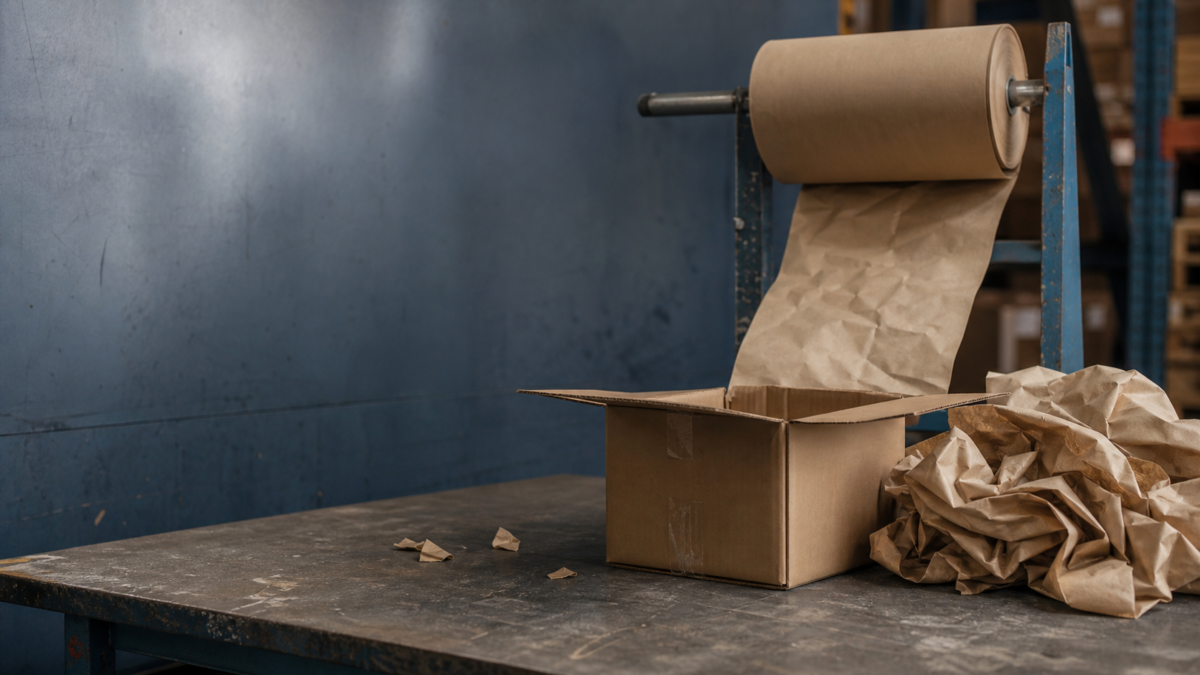
Quick answer: paper void fill is used to control empty space and product movement inside a shipping carton. It can block, brace, wrap, cushion, or improve presentation—but those are different jobs. The right paper void fill packaging depends on product weight, fragility, carton size, packing speed, and how much material each shipment actually consumes.
A box that arrives with a product rolling around inside is not “using too little filler.” It may be using the wrong box, the wrong paper format, or the wrong protective function. This guide explains how to choose paper void fill without treating every brown paper roll as the same product.

What Is Paper Void Fill?
Paper void fill is paper-based material added to unused space inside a shipping package. It keeps products from sliding, colliding, tipping, or pressing against the carton wall during handling. Common formats include kraft packing paper, crumpled paper, indented paper, paper cushioning, honeycomb paper, and connected spiral paper systems.
However, void fill is not automatically the same as cushioning. A loose paper pad may stop movement but provide limited shock absorption. A structured paper wrap may protect a surface but leave the top and bottom of the product exposed. A right-sized shipping box may reduce the need for filler altogether.
Start With the Protective Function
Before choosing a paper void fill supplier, define what the material must do. One shipment may need more than one function, but separating the functions makes the decision clearer.
- Void fill: occupies unused carton space and limits movement.
- Blocking and bracing: holds heavier products in a stable position.
- Cushioning: reduces the effect of impact or vibration.
- Individual wrapping: protects surfaces and separates products from one another.
- Edge and corner protection: reinforces areas vulnerable to crush damage.
- Presentation: improves the opening experience but may add little structural protection.
These functions are easy to confuse. Tissue paper can protect against dust and scuffing, but it is not a substitute for cushioning around glass. Kraft paper can block movement, but a heavy machine component may need a designed insert or a stronger blocking system.
When Do You Actually Need Void Fill?
Use paper void fill when the product can move inside the carton, when several items can collide, or when the package must keep a particular orientation. A simple movement test is often more useful than guessing from the product photograph:
- Pack the product using the current carton and normal packing routine.
- Close the carton and gently move it in several directions.
- Listen for contact and check whether the product shifts, tips, or reaches the carton wall.
- Add a small, repeatable amount of paper and run the test again.
If a large amount of filler is needed in every order, inspect the carton size first. A better-fitting shipping box or custom insert may reduce material use, packing time, and dimensional shipping cost. More paper is not automatically more protection.
Types of Paper Void Fill Packaging
Kraft Packing Paper
Kraft paper is the flexible, general-purpose option. It can be crumpled into loose fill, folded into simple braces, or wrapped around an irregular product. Lighter paper is easier to handle and wrap; heavier paper creates more stiffness with less material volume.
Indented or Textured Paper
Indented paper has ridges or surface texture that add structure and a small amount of cushioning. It can be useful when flat paper does not provide enough body but a full honeycomb system would be unnecessary.
Honeycomb Paper
Honeycomb paper expands into a three-dimensional wrap or sleeve. It is better suited to individual product protection and presentation than to simply filling a large empty cavity. It can be a strong option for bottles, candles, ceramics, and other products that need a flexible paper layer around their surface.
Paper Cushioning Systems
Converted paper systems create crumpled, folded, spiral, or structured cushioning at the workstation. They can improve consistency and reduce the storage footprint of loose-fill materials, but the equipment and material supply should be evaluated together.
Packaging decision in practice · Internal record 43417
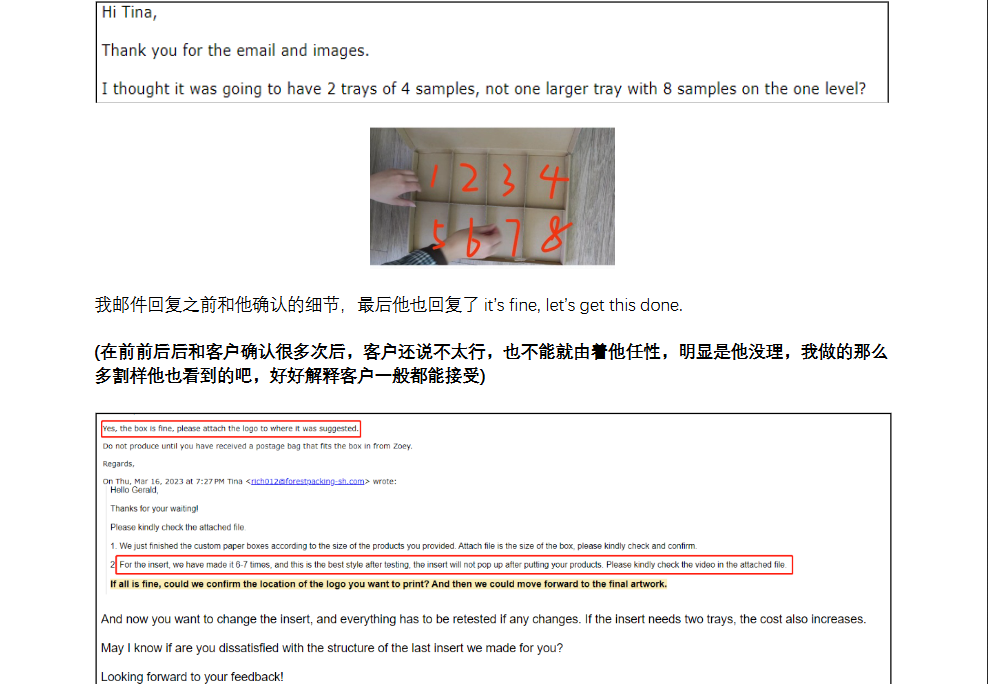
When Paper Void Fill Wasn’t Enough for an Eight-Piece Pack
An eight-piece order can look simple on a product list and become a very different problem inside a shipping box. This internal case focused on an airplane-style box and the communication needed for a complex insert—exactly the point where loose paper fill must be judged against a more structured solution.
The packaging question
For a multi-item pack, the first instinct is often to add more paper. That can work when the main risk is empty space. It becomes less reliable when each item needs a defined position and the products can collide with one another.
The 43417 case is a useful reminder: before choosing a paper void fill packaging format, ask whether the material is controlling movement or simply hiding a fit problem.
What the case puts on the table
- Compare loose paper fill with a shaped insert before finalizing the box.
- Confirm the number of products, loading order, and clearance around each item.
- Use a physical sample to discuss fit instead of relying on a flat drawing alone.
- Keep the outer box and the internal protection as one pack-out decision.
The practical takeaway for buyers
Paper void fill is useful when products need blocking, bracing, wrapping, or light movement control. When an eight-piece set must arrive in a repeatable layout, a custom insert may reduce shifting more effectively than adding another handful of paper. The right question is not “Which material is greener?” or “Which filler is cheapest?” It is “What protection function must remain consistent in every carton?”
Source note: Based on Forests Packaging Group internal case record 43417, titled “8-piece airplane-style box sharing — communication for a complex insert.” Customer identity, market, pricing, quantity, and performance results are not stated in the public case index and are intentionally not added here.
How to Choose Paper Weight and Format
A useful paper void fill selection starts with five questions:
- How heavy is the product? Heavy items need stronger blocking and bracing than lightweight apparel.
- How fragile is it? Glass, ceramics, electronics, and high-value products may require cushioning in addition to void control.
- How large is the empty space? Small gaps may need only a little crumpled kraft paper; large cavities may indicate an oversized carton.
- Does the paper need to wrap or brace? Flexible paper suits wrapping, while stiffer formats are better for maintaining position.
- How consistent is the packing process? If different packers use very different amounts, a dispenser or converted format may improve repeatability.
The practical rule is simple: use the lightest and least complicated system that reliably controls movement and meets the product’s protection requirement. Confirm that rule with a real packed-product test, not an empty carton.
Paper Void Fill vs. Other Protective Packaging
Paper is not universally better than every alternative. It is often attractive because it can be stored compactly, used for several functions, and handled without a dedicated inflation machine. But a buyer should compare the complete packing system.
| Option | Strength | Limitation | Best fit |
|---|---|---|---|
| Paper void fill | Flexible movement control and easy material handling | May need more volume for cushioning | Mixed orders and variable empty space |
| Air pillows | Fast and compact before inflation | Puncture risk and equipment dependence | High-volume light-duty void filling |
| Bubble wrap | Conforms well around fragile products | Plastic recovery and storage concerns | Individual wrapping and cushioning |
| Foam | Predictable cushioning and close fit | Higher tooling, storage, or disposal complexity | Delicate or high-value components |
| Custom insert | Precise positioning and repeatable loading | Less flexible when products or order sets change | Stable product geometry and standard kits |
For fragile products, paper void fill often works as one layer in a system. Use it to prevent movement, then add a wrap, paper pad, molded component, or designed insert where the impact risk requires more control. Transport testing should represent the actual packed product and route; ISTA testing resources can help structure that discussion.
For a formal distribution-test framework, ASTM D4169 is a useful reference point, but the final test sequence still needs to match the product and route.
Manual, Dispenser, or Automated Paper Void Fill?
The right equipment depends on fulfillment volume and repeatability, not on whether a dispenser looks professional.
- Manual rolls: suitable for low volume, irregular orders, and operations still testing the material.
- Tabletop or stand-mounted dispensers: useful when the team needs faster tearing and more consistent lengths.
- Powered systems: worthwhile when paper conversion is frequent and labor consistency matters.
- Automated void fill: best considered for high-volume, repetitive fulfillment with a defined workstation and replenishment plan.
Measure packing seconds per carton before buying equipment. A machine cannot fix an oversized box, an unclear packing method, or a material that does not suit the product.
Calculate Cost per Protected Shipment
Comparing paper void fill suppliers by roll price alone can produce the wrong result. Record the amount of paper used per order, the time required to pack, equipment cost, storage space, shipping cube, and damage or reshipment cost. A thicker paper may cost more per roll but use substantially less material per carton. A dispenser may cost more upfront but reduce labor variation.
The most useful comparison is:
Total cost per successfully delivered shipment = material + labor + equipment + storage/freight + damage cost.
Run the comparison on a sample of real orders. Include small orders, mixed orders, heavy products, and the awkward carton that always causes trouble.
Custom Paper Void Fill and Branding
Custom paper void fill can support a branded unboxing experience through printed patterns, logos, color, or a carefully selected natural-paper finish. It makes the most commercial sense for premium ecommerce, subscription boxes, gifting, and products where the interior presentation is part of the purchase experience.
For industrial shipments, protective performance should come first. Confirm paper width, weight, roll format, conversion method, print coverage, ink requirements, and replenishment quantity before approving a custom program. Branding should not reduce the paper’s ability to wrap, brace, or hold the product in place.

What I Check During a Paper Void Fill Test
During a practical test, I check product movement before and after the paper is added, the amount of material used per box, exposed corners and surfaces, packing time, ease of training, and the condition of the product after handling. I also watch the opening experience. Paper that protects well but spills everywhere may create a different operational problem for the warehouse and the customer.
For a packaging audit, measure the current empty space, paper consumption, box size, packer-to-packer variation, damage rate, and labor time. Then compare a right-sized carton, a different paper format, or a small custom insert. The best answer may be less void fill, not a larger supply of it.
For paper recovery claims, compare the complete construction with the guidance from the U.S. EPA recycling resources and confirm local collection rules.
Common Paper Void Fill Mistakes
- Filling an oversized box instead of correcting the carton size.
- Using lightweight paper for a heavy product that needs bracing.
- Expecting void fill to replace impact cushioning.
- Allowing each packer to use a different amount of paper.
- Choosing a dispenser without measuring throughput.
- Comparing suppliers only on roll price.
- Making recyclability or recycled-content claims without checking the complete construction and local recovery route.
How to Choose a Paper Void Fill Supplier
A capable paper void fill supplier should be able to discuss more than paper availability. Ask about paper weights, formats, converted cushioning, roll dimensions, printing, dispensers, production capacity, replenishment, sample testing, and quality checks. For a high-volume program, ask how the supplier will keep paper weight, width, perforation, texture, and delivery consistency within the approved specification.
Prepare product dimensions, weight, photos, current carton, empty-space measurements, order mix, annual volume, destination market, artwork, and deadline. A supplier can then recommend custom paper void fill, a standard paper format, a dispenser, or a different protective structure with clearer reasoning.
For related protection options, review our packaging applications.
See the available custom packaging products before deciding whether paper void fill is enough or a designed component is needed.
For repeat programs, review the factory and quality workflow used to connect sampling, production, and repeat orders.
When the product, quantity, and shipping route are ready, send the details through our custom packaging inquiry.
Paper Void Fill Selection Checklist
Before placing an order, confirm: product weight, fragility, empty space per carton, protective function, paper type and weight, paper consumed per shipment, packing speed, fulfillment volume, manual or automated equipment, branding needs, supplier capacity, and test results. That checklist turns “we need some packing paper” into a specification that can be quoted and repeated.
FAQs
What is paper void fill used for?
Paper void fill is used to occupy empty carton space and limit product movement. Depending on the format, it may also support blocking, bracing, wrapping, light cushioning, or presentation.
How much paper void fill should I use?
Use enough to stop uncontrolled movement and meet the required protection level. If every carton needs a large amount, check whether the box is oversized or whether a custom insert would be more efficient.
When does an automated paper void fill system make sense?
Automation becomes more attractive when order volume is high, packing is repetitive, labor consistency matters, and measured time or material savings justify the equipment and workstation requirements.
Is paper void fill recyclable?
Many paper formats can enter paper recovery, but the answer depends on coatings, inks, adhesives, contamination, and local collection rules. Confirm the complete construction and target-market pathway before making a public claim.
Can paper void fill replace bubble wrap or foam?
Sometimes, when the main requirement is movement control or flexible paper wrapping. Fragile, heavy, or high-value products may still need structured cushioning, inserts, edge protection, or a combination of materials.
Conclusion
Paper void fill packaging is most effective when it is selected for a clear job. Use it to control movement, block and brace, wrap a surface, add light cushioning, or improve presentation—but do not ask one paper format to solve every packaging risk. Start with the product and the carton, then choose the simplest system that protects the shipment consistently.
Request a Paper Void Fill Packaging Review
Share your product dimensions, weight, current carton, empty-space photos, order mix, annual quantity, shipping destination, and packing speed. We can help compare paper weights, custom paper void fill formats, dispensers, cushioning structures, and right-sized packaging options before you commit to a high-volume supply program.
Send Your Packaging Brief to Our Team
Share your product type, format, size, quantity, material, destination, and required date. Our team can support artwork review, sampling, production, inspection, and export coordination.
Contact us for a project-specific recommendation.

Ready to build packaging with a factory team?
Send your product size, material, artwork, quantity, destination, and deadline so our team can focus the first review on quotation and sampling.