Paperboard Packaging Guide: Grades, Thickness and Uses

Paperboard packaging is not selected by appearance alone. The right board balances print quality, folding performance, product weight, supply-chain exposure and cost. A bright white carton can look premium yet still be the wrong choice if it cracks at the score line or needs to survive rough parcel handling.
Quick answer: choose the paperboard grade for surface, fiber and application; then choose caliper and structure for stiffness. GSM is useful, but it is not a strength rating. For any new box, compare at least two material samples in the actual size, print coverage and packing conditions.

What Is Paperboard?
Paperboard is a stiff paper-based sheet used mainly for folding cartons, sleeves, inserts, retail displays and presentation boxes. It is heavier and more rigid than ordinary paper, yet it folds and prints more readily than corrugated board. In practice, names can vary between mills and regions, so the supplier specification matters more than a label alone.
For packaging buyers, the decision is usually between a solid folding-carton board and corrugated board. A paperboard carton presents the product on shelf; a corrugated shipper uses linerboard and fluting to add cushioning and stacking strength. Many ecommerce projects need both: a printed folding carton inside a protective corrugated shipping box.
Paperboard vs Cardboard: Choose by the Job
“Cardboard” is a broad everyday term. It may mean paperboard, but often refers to corrugated material. Paperboard is best when shelf presentation, graphic detail and a compact folded structure matter. Corrugated board is better when the product is heavy, fragile or exposed to repeated handling in transit.
Do not ask only, “Which material is stronger?” Ask where the box works. A lightweight skincare carton may need a smooth printable board and a separate shipper. A heavy electronic accessory may need a stiffer carton, a fitted insert, or corrugated protection from the start. Product weight, centre of gravity, storage humidity and delivery route change the answer.
For a medicine carton, adding a window was not a one-line instruction.
The U.S. buyer supplied dimensions and artwork for a high-volume, windowed tuck-lock carton. One production question determined the material route.
A separate film component sits behind the paperboard cut-out.
A window is cut directly into the paperboard, with no film added.
Window position changes the die-line.
Film and paperboard are not the same build.
The production route affects the quote.
Internal 2024 project record. Verified facts: U.S. pharmaceutical carton, supplied dimensions and design, sizable quantity, and the PVC-window versus die-cut clarification.
Main Paperboard Grades Compared
SBS: Solid Bleached Sulfate
SBS is usually made from bleached virgin fiber and is valued for its clean white surface, sharp colour reproduction and compatibility with premium finishes. It is a common starting point for cosmetics, healthcare, confectionery and retail cartons where the inside and outside may both be visible.
Its trade-off is cost. SBS also needs the right coating or barrier where moisture, grease or food-contact requirements apply. A premium surface should not be treated as a guarantee of shipping strength.
FBB: Folding Box Board
FBB is a multi-ply board designed to offer useful stiffness at a relatively efficient weight. Its smooth printable face makes it suitable for beauty, healthcare, confectionery and general retail packaging. It is often a strong choice when a carton needs a crisp fold and an upscale print result without automatically moving to the heaviest board.
Ask for the mill specification rather than relying on the abbreviation. Fiber mix, bulk, coating and performance can differ by source and target market.
CCNB: Clay-Coated News Back
CCNB commonly uses recycled fiber and has a coated print face with a grey reverse side. It can be practical for cost-conscious dry goods, household products and secondary cartons where the back panel is not part of the brand experience.
The limitation is not merely appearance. Moisture exposure, demanding folds and high load can require a different grade or a structural adjustment. Recycled content is valuable only when the finished carton still performs for its use.
SUS and CUK: Unbleached Kraft Grades
Unbleached kraft grades provide a natural brown appearance and visible fiber character. They work well for brands seeking a less processed visual language, especially for natural products, apparel, dry food and gifting concepts. White ink, opaque coatings and high-accuracy colour matching need early proofing because the base colour affects the final artwork.
Kraft is not a shortcut for every environmental claim. Recyclability, certified fiber, recycled content and food-contact suitability should be confirmed for the actual board, coating, ink and destination market.
| Grade | Best for | Avoid when | Key trade-off |
|---|---|---|---|
| SBS | Premium graphics, cosmetics, healthcare | Heavy shipping loads without support | Best white print surface; higher cost |
| FBB | Stiff retail cartons and fine printing | Specification is unverified | Good stiffness-to-weight balance |
| CCNB | Dry, cost-sensitive cartons | Wet exposure or a premium reverse side | Recycled fiber; lower visual and moisture tolerance |
| Kraft / CUK | Natural-brand presentation | Bright brand colours need exact matching | Strong identity; muted print base |
How Box Paper Thickness Is Measured
GSM means grams per square metre: it measures sheet mass. Caliper measures physical thickness, commonly in microns, millimetres or points; one point is one thousandth of an inch. Buyers often search for “box paper thickness,” but the useful request is a combination of GSM, caliper, grade, grain direction and intended box structure.
Equal GSM does not mean equal stiffness. Board density, bulk, fiber type, ply construction and moisture condition can produce two sheets with the same mass but different thickness and folding behaviour. That is why a material call-out such as “350 gsm” is a starting point, not a complete engineering specification.
As a planning guide, light board can suit small, low-weight cartons; medium calipers are common for cosmetics, supplements and retail goods; heavier board can improve panel stiffness on larger folding cartons. Those ranges are not universal. A tall narrow carton, a full-coverage dark print, a window cut-out or a heavy insert can change the required board more than GSM alone.
A Practical Selection Framework
Start with the product: provide finished dimensions, weight, fragility, sharp edges and centre of gravity. Then describe the supply chain: retail shelf, subscription shipment, warehouse stacking, climate exposure and whether an outer shipper is used.
Next, define the graphic brief. Offset printing, large solid colours, foil, embossing, spot UV and soft-touch finishes each affect proofing, scoring and perceived quality. Grain direction matters too: placing a score across the wrong grain can increase fold cracking, especially with heavy ink coverage or a brittle coating.
Finally, review compliance and sustainability by project. Food, pharmaceutical and regulated packs need documentation matched to the material and intended market. A recyclable or recycled-content claim must describe the real component and recovery route, not just the paper base.
Recommendations by Application
For cosmetics and luxury goods, prioritize smoothness, colour accuracy, clean folds and finish compatibility. For food, healthcare and sustainability-led packs, confirm the required material, documentation and target-market conditions before locking the board.
For electronics accessories and heavier retail products, check carton stiffness with the insert and outer shipper. A paperboard box should not be forced to solve a transit problem that corrugated protection is designed to handle.
Score Materials Before Sampling
Use a five-factor scorecard: print quality, structural stiffness, moisture resistance, sustainability alignment and cost efficiency. Weight the factors by the project. A luxury fragrance carton may put print quality first; an economical household-product carton may give more weight to cost and stacking performance.
Shortlist two grades, then test the real artwork and structure. Inspect colour, score lines, corners, glue areas and any coated or foiled zones after handling. This small test catches expensive mistakes earlier than a material discussion built around one number.
Common Selection Mistakes
Choosing by GSM alone is the classic error. Fix it by comparing caliper, stiffness, grain direction and carton design. Another mistake is confusing a premium coated surface with structural strength; evaluate print and load separately.
Also account for moisture, grease, temperature and handling. A board that looks perfect in a flat sample may fail after packing, storage or delivery. If the product needs cushioning, compression resistance or repeated shipping protection, specify the outer corrugated system rather than simply increasing the paperboard weight.
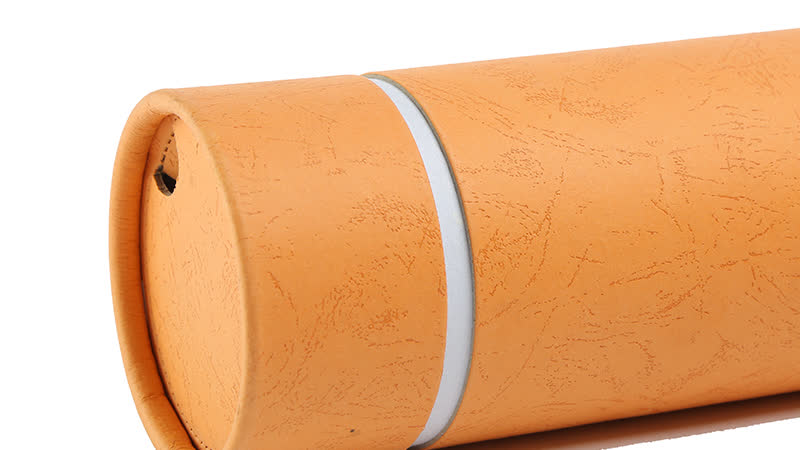
Three paper layers. One rush order. No room for a warped tube.
This double-sided printed paper tube turned thickness, paper weight and mounting control into critical production decisions.
🧱 Paper tube build
🛡️ Production controls
Small offsets can make laminated material bend and cause die-cutting errors.
Extra sampling catches defects that an urgent schedule can hide.
Four-colour black can shift green; single black was safer where acceptable.
Internal 2025 skincare project record. Material specifications and production controls are taken from the case file.

What Forests Project Records Add to the Decision
Forests Packaging Group does not treat paperboard as an isolated material choice. An internal 2025 US$30,000 skincare-series order used a double-sided printed paper tube built around a 2 mm white-board core, with 157 gsm coated art paper outside and 80 gsm white kraft inside. This is a paper-tube example, not a universal folding-carton specification; it shows why a board call-out has to be read together with the full laminated structure and print requirement.
Its production record is the useful part. Sheet alignment had to be checked before mounting because even a small offset could create warped laminated material and downstream die-cutting variation. For an urgent run, the mounting speed could be reduced to allow more sampling. Complex four-colour black also required live colour approval because it could shift green; a one-black alternative was safer when the artwork allowed it. The Shanghai Intelligent Factory connects planning, production, inspection, packing and delivery. Buyers can explore relevant formats in the custom packaging product range before sending a brief.
Supplier-Ready Checklist
Before requesting a quote, prepare product dimensions and weight, box style, quantity, target market, artwork status, desired print and finish, insert needs, shipping method and deadline. Ask the supplier to confirm the board grade, mill specification, GSM, caliper, grain direction, tolerance, coating, compliance scope and proposed test or sample plan.
For measurement language, TAPPI publishes methods including thickness testing for paper and paperboard; use the current agreed test method when comparing supplier data. For food-contact packaging in the United States, check the relevant FDA food-contact substance guidance for the specific material and use case.
FAQs
Is paperboard the same as cardboard?
Not always. Paperboard usually means solid board for folding cartons, while cardboard may refer broadly to paperboard or to corrugated board used for stronger shipping protection.
What paperboard grade is best for product packaging?
There is no universal best grade. SBS and FBB are common for high-quality retail print, CCNB can suit cost-sensitive dry cartons, and kraft grades support a natural visual direction. Product and supply-chain conditions decide.
Does higher GSM mean a stronger box?
No. GSM measures mass per area. Caliper, bulk, fiber composition, grain direction, score design and box structure all affect how a carton performs.
What thickness should a folding carton use?
Start with the product size, weight, box geometry and finish, then compare samples. Request both GSM and caliper; a supplier should confirm the mill specification and test the actual structure where risk is material.
When should I use corrugated board instead of paperboard?
Use corrugated board when the product needs cushioning, stacking strength or transit protection. A retail paperboard carton can still be paired with a corrugated shipper for ecommerce delivery.
Final Takeaway
Paperboard grade determines the fiber, surface and typical performance profile. Thickness supports the structure, but it does not replace a review of stiffness, geometry, print, product load and supply-chain conditions. The right decision is the lowest-risk combination that protects the product and delivers the intended shelf experience.
Request a Paperboard Review
Forests Packaging Group can help turn your product requirements into a board, carton and sampling brief rather than a guess based on GSM alone. Share the product dimensions, weight, quantity, artwork, target market, shipping destination and deadline.
Use the packaging inquiry form to request a material and structure review for your project.
Send Your Packaging Brief to Our Team
Share your product type, format, size, quantity, material, destination, and required date. Our team can support artwork review, sampling, production, inspection, and export coordination.
Contact us for a project-specific recommendation.


Ready to build packaging with a factory team?
Send your product size, material, artwork, quantity, destination, and deadline so our team can focus the first review on quotation and sampling.