Reverse Logistics Companies: How to Choose the Right Fit


Quick answer: choose a reverse logistics provider by the bottleneck you need to fix, not by the longest service list. Some companies provide returns software, some move and inspect physical goods, and others repair, resell, recycle, or manage drop-off networks. The partner should fit the complete return cycle, including the package customers use to send products back.
A return is more than an outbound shipment in reverse. It creates a new transport leg, a condition decision, a refund or exchange event, and often a second packaging problem. This guide compares provider types, costs, operating metrics, and return-ready packaging so an ecommerce or brand team can build a practical shortlist.
What does a reverse logistics company do?
Reverse logistics covers the movement and handling of products after the first sale. Depending on the provider, that may include return authorization, labels, transportation, drop-off, receiving, inspection, grading, restocking, repair, refurbishment, resale, recycling, or disposal. The definition used by UPS’s reverse logistics glossary also includes returns, exchanges, credits, warranties, and recalls.
That scope is why “reverse logistics companies” is a broad search term. A returns app that automates a label is not the same supplier as a warehouse that opens cartons and grades returned electronics. Before comparing names, write down which physical and digital stages you need outside help with.
Returns management is only one layer
Returns management usually focuses on the customer-facing workflow: request a return, approve it, generate a label, offer an exchange, and trigger a refund. Reverse logistics continues after the parcel arrives. The product still needs a condition check and a disposition decision. A fast refund can be good customer service while the warehouse quietly accumulates unsorted stock.
Recommerce is a recovery path
Recommerce means finding a second commercial life for a product through resale, trade-in, refurbishment, or a secondary marketplace. It may be part of a reverse logistics program, but it is not the whole program. The provider must still control intake, grading, data, packaging, and the handoff to the next buyer.
How the reverse logistics process works
A simple process map makes vendor gaps visible. The sequence changes by industry, but most ecommerce returns pass through these stages:
- Return request: the customer selects a reason, product, and preferred refund or exchange.
- Authorization: the system checks policy, order data, serial number, or return window.
- Transport or drop-off: the item moves through a carrier, store, parcel locker, or consolidation point.
- Receiving and inspection: the operator confirms the item, condition, accessories, damage, and contamination risk.
- Grading: the product is classified as sellable, open-box, repairable, refurbishable, recyclable, or unsalvageable.
- Disposition: inventory is restocked, repaired, refurbished, resold, recycled, or disposed of according to a written rule.
- Recovery and reporting: the status updates inventory, finance, customer service, and the recovery-value report.
The handoff between receiving and disposition deserves close attention. Ask how long an item can sit before grading, who approves exceptions, and how the result reaches your ecommerce, ERP, or warehouse system. IBM’s reverse logistics overview describes a cycle that includes exchanges, repair, refurbishment, recycling, and disposition.
Drop-off programs add another design choice. A service such as UPS customer return services can move label, pickup, and drop-off decisions closer to the customer, but the brand still needs a clear rule for what happens after the parcel arrives.
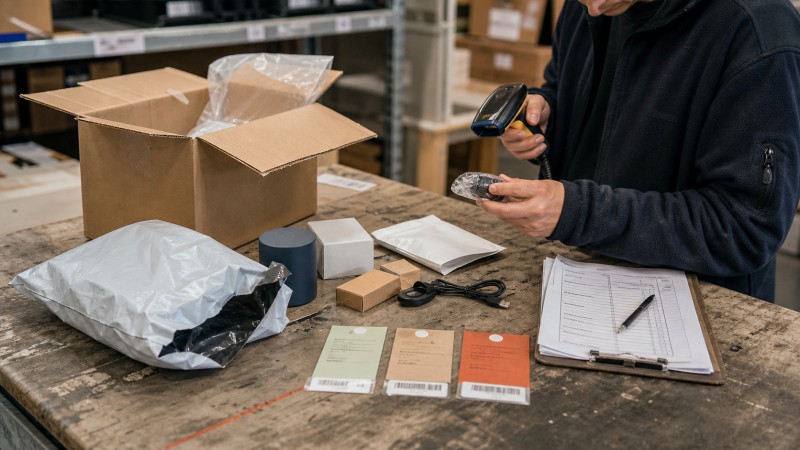
Types of reverse logistics companies
| Provider type | Main capability | Best fit | Common gap |
|---|---|---|---|
| Returns software | Portal, labels, refunds, exchanges, analytics | Brands with warehouse capacity | May not inspect or store goods |
| Drop-off network | Convenient intake and parcel consolidation | High-volume consumer returns | Less control at the first handoff |
| Reverse logistics 3PL | Receiving, grading, storage, disposition | Teams outsourcing physical work | May need separate resale expertise |
| Repair or refurbishment provider | Testing, repair, restoration, repacking | Electronics, equipment, durable goods | Not designed for every product category |
| Recommerce or recycling platform | Resale, trade-in, take-back, material recovery | Brands pursuing recovery value | May not manage the original return journey |
Do not compare these categories as if they were interchangeable. A platform may reduce customer-service work but leave the warehouse problem untouched. A 3PL may process the parcel well but lack a credible secondary-market route. Your shortlist should start with the missing capability.
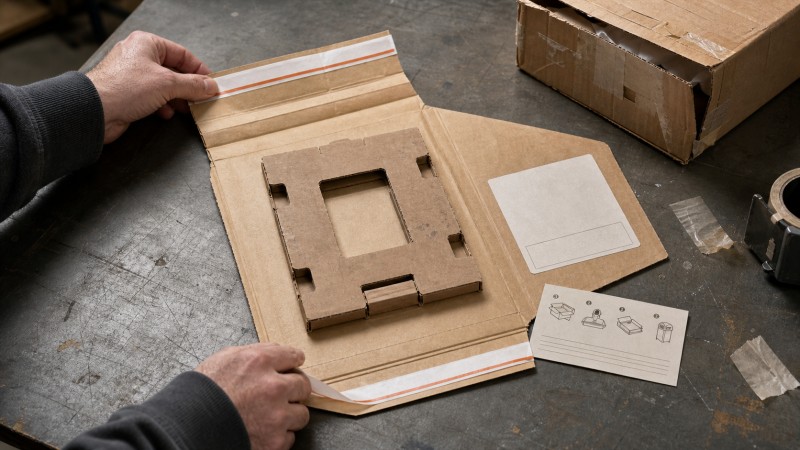
Reverse logistics companies: how to compare providers
1. Compare service scope, not slogans
Ask for a stage-by-stage answer: who owns the label, transport, receiving, inspection, grading, storage, repair, resale, recycling, and final reporting? “End-to-end” means little until the supplier defines where its responsibility begins and ends.
2. Check integrations and data ownership
Confirm ecommerce platform, ERP, WMS, order-management, carrier, and inventory integrations. Also ask what happens when the data is incomplete. A return reason without the condition grade, photos, serial number, or disposition code will not support a reliable recovery report.
3. Test physical capacity
Request the locations of return centers, peak-season capacity, receiving hours, storage rules, and exception handling. If the provider serves several countries, ask whether the workflow is genuinely local or simply routed through one distant hub.
4. Compare recovery capability
For high-value products, inspection speed is not enough. Ask whether the provider can test, repair, refurbish, repackage, resell, or send the item to a qualified recycling path. A supplier that only measures refund time may miss the larger margin opportunity.
5. Review the SLA and scorecard
Put measurable service levels into the comparison: return received to inspection, inspection to disposition, disposition to restock, damage-on-return rate, exception response, and reporting frequency. Also ask how peak volume changes the SLA and price.
How much do reverse logistics services cost?
Provider fees are only one line in the total. A realistic comparison includes return freight, labels, customer-service time, receiving labor, inspection, storage, repacking, repair, disposal, software, integration, and inventory value lost while the product waits. Packaging is often overlooked because it is purchased on the outbound side, even though a weak or single-use pack can create another cost on the way back.
Use two measures together:
- Cost per return = transport + service + receiving + inspection + storage + repacking + disposition cost.
- Net recovery = recovered product or material value − the cost of getting it back into a sellable or reusable state.
A cheaper provider can perform worse if its slower grading turns seasonal stock into clearance stock. Track cost per return beside time-to-disposition and recovery value, rather than choosing the lowest handling fee in isolation.
Why time-to-disposition matters
Refund speed matters to the customer, but time-to-disposition matters to the business. A returned jacket waiting for inspection may miss the selling season. A phone or camera waiting for testing may lose resale value as a new model arrives. A cosmetic item may become impossible to resell if condition, seal, or shelf-life records are unclear.
Measure at least four clocks: customer refund time, warehouse receiving time, time to disposition, and time back to available inventory. If a provider reports only the first, ask for the other three before approving the contract.
How packaging affects reverse logistics
Packaging is part of the reverse process, not a decoration added after the logistics decision. The first opening can destroy the closure, expose the product to damage, or leave the customer unsure how to repack it. Return-ready packaging should make the second shipment obvious.
- Easy opening: show where to open without cutting through the return structure.
- Second closure: add a second adhesive strip, resealable flap, or tab-locking structure where the return rate justifies it.
- Reusable protection: keep the insert, divider, cushioning, or sleeve usable after the first opening.
- Clear instructions: explain what to retain, where to place the new label, and how to close the pack.
- Label separation: make the new shipping face clear and prevent old barcodes from being scanned again.
For lightweight products, custom bubble mailers can combine cushioning, a controlled seal area, and a second closure. For boxed products, the same logic may call for a durable mailer box, a reusable insert, or a return instruction printed on an inside panel.

Match packaging to the return-rate profile
Low-return products may need only efficient outbound protection. Moderate-return products benefit from easy opening and a reliable reseal. High-return categories, rental programs, repair loops, and try-before-you-buy models should consider the return journey during the first packaging brief.
That does not mean every shipment needs an expensive reusable container. It means the extra material should be compared with return frequency, product value, damage-on-return rate, repacking labor, and the cost of replacement packaging. A small structural change can be more valuable than a broad sustainability claim.
Questions to ask a reverse logistics provider
- Which stages do you manage directly, and which are subcontracted?
- Can you inspect, grade, repair, refurbish, resell, or recycle this product type?
- Which ecommerce, ERP, WMS, and carrier systems do you integrate with?
- What are the receiving-to-disposition targets during peak periods?
- How do you report recovery value, damage, exceptions, and packaging reuse?
- Can your workflow use a second-seal mailer, reusable box, or customer-repackaging instruction?
Connect the return flow to the shipping flow
A reverse logistics plan should be checked against the original packaging and export plan. Forests Packaging Group’s affiliated Shanghai Chiquita International Logistics Co., Ltd. supports a packaging and export logistics workflow that can coordinate custom packaging production with export freight, shipping documentation, warehousing, and destination delivery planning. That is forward logistics support, not a promise to operate every return center. Its practical value is fewer handoffs around the packaging and shipment plan.
For ecommerce teams, the packaging brief should include product dimensions, weight, return rate, damage history, target market, opening behavior, closure preference, and the likely second journey. The site’s ecommerce packaging guidance is a practical starting point for connecting product protection, shipping handling, and repeat fulfillment.
FAQs
What do reverse logistics companies do?
They may manage return labels, transportation, receiving, inspection, grading, restocking, repair, refurbishment, resale, recycling, or disposal. Capabilities vary, so ask for a stage-by-stage service map.
How do I choose a reverse logistics provider?
Define the bottleneck first, then compare service scope, integrations, physical infrastructure, recovery capability, geographic coverage, peak capacity, reporting, SLAs, and total cost.
How does packaging affect reverse logistics?
Return-ready packaging can make repacking easier, protect the product on a second journey, reduce replacement packaging, and lower the chance of damage caused by improvised sealing.
What is time-to-disposition?
It is the time from receiving a returned item to deciding whether it will be restocked, repaired, refurbished, resold, recycled, or disposed of. It should be tracked separately from refund speed.
Do all brands need reusable return packaging?
No. The investment makes more sense when return frequency, product value, repacking labor, or damage-on-return costs are high. Test the complete return journey before standardizing a reusable structure.
Conclusion
Reverse logistics companies differ sharply in software, transportation, physical processing, refurbishment, recommerce, and recycling. Start with the operational problem, then compare service scope, integrations, physical capacity, recovery rules, KPIs, and total cost.
Packaging belongs in that decision. If the original mailer is hard to open, impossible to reseal, or too weak for a second journey, the provider is being asked to solve a problem that began at pack-out. A return-ready structure, clear instructions, and a measurable disposition process can make the reverse flow more predictable.
Plan a return-ready packaging brief
Forests Packaging Group can review the packaging side of a reverse logistics project around product size, weight, material, closure, protection, artwork, quantity, destination, and return frequency. The review can cover sampling, print and structure checks, production inspection, carton packing, and export coordination, with the boundaries of each logistics service confirmed for the project.
Send those details through the packaging project inquiry so the first recommendation can focus on the actual return risk instead of a generic mailer or box.
Send Your Packaging Brief to Our Team
Share your product type, format, size, quantity, material, destination, and required date. Our team can support artwork review, sampling, production, inspection, and export coordination.
Contact us for a project-specific recommendation.

Ready to build packaging with a factory team?
Send your product size, material, artwork, quantity, destination, and deadline so our team can focus the first review on quotation and sampling.