What Is a Hang Tag? Uses, Materials & Custom Design Guide

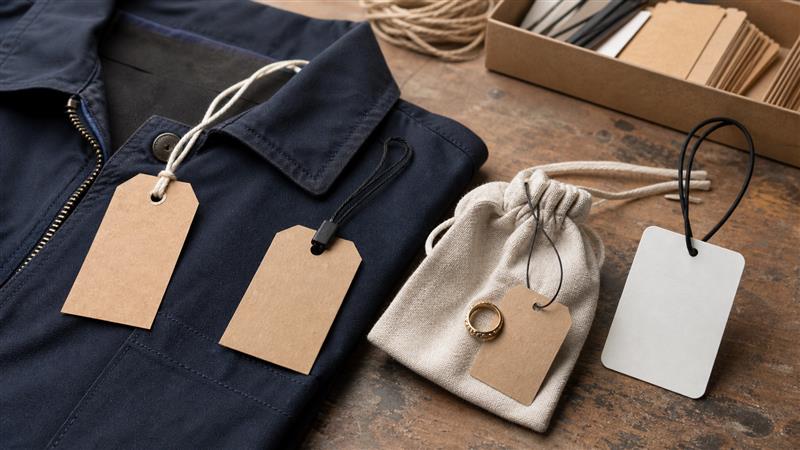
What is a hang tag? It is a printed card or label attached to a product with string, cord, elastic, a plastic fastener or another removable attachment. Brands use it for identity, price, size, product information, care details, barcodes, QR codes and short messages that do not fit neatly on the product itself.
You see hang tags on clothing, handbags, jewelry, shoes, gifts and home goods. They are small, but they often get the first clear view of a brand before the package is opened. A good tag answers one useful question quickly; a crowded tag makes the customer squint at a tiny logo and a barcode fighting for the same corner.
What Is a Hang Tag Used For?
Branding
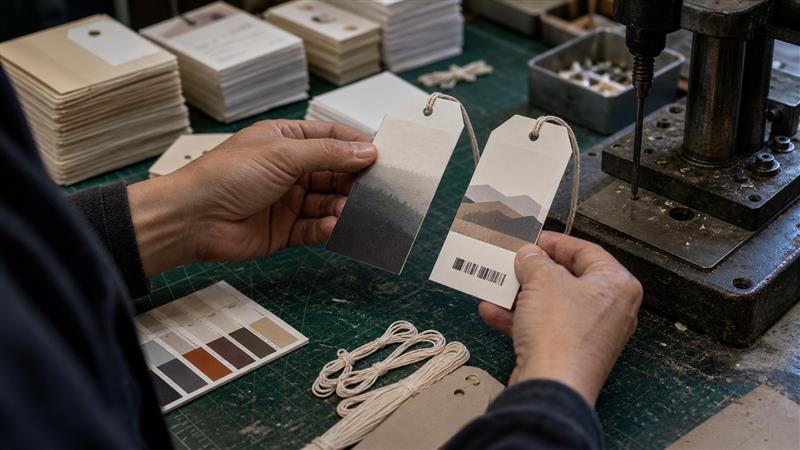
The front usually carries the logo, brand name, colors, product line or a short tagline. It can make a simple garment or accessory feel considered without permanently printing a large message on the product.
Product information
The reverse side can show the product name, size, material, SKU, price, care note or country information. Keep the hierarchy clear. The customer should not need to decode the entire tag to find the one detail they need.
Retail and digital information
Retail tags can carry a barcode for inventory or checkout and a QR code for a care guide, product story, registration, authentication or loyalty program. Scan both from a physical production sample before the full run.
For brands planning the rest of the pack, hang tags work best when they are treated as one part of a complete custom packaging system, rather than a separate decoration added at the end.
Hang Tag vs. Label: What Is the Difference?
| Format | Attachment | Best for |
|---|---|---|
| Hang tag | External and usually removable | Branding, retail information and product storytelling |
| Sewn label | Permanent or semi-permanent | Size, fiber content, care and product identification |
| Sticker | Adhesive-backed | Seals, pricing, SKU labels and direct surface messaging |
A hang tag gives you more visible space and is easy to remove at purchase or after gifting. A sewn label belongs to the product for its useful life. A sticker is quick and practical, but its surface, adhesive and removal behavior need to suit the item.
What Should You Print on a Hang Tag?
Front: recognition first
Use the front for the logo, brand name, product family, signature color or one strong visual. If the tag is viewed from a rack or display hook, this side has only a few seconds to do its job.
Back: useful details
Put the SKU, size, price, material, care instruction, barcode or QR code on the reverse. Folded tags add another panel when you need several languages or a longer product story.
Use an information hierarchy
Sort content into essential, useful and optional. Essential information must remain readable at the finished size. Optional copy can be shortened or removed; making every line smaller is not a design strategy.
Common Types of Hang Tags
Flat hang tags suit concise branding, prices and product details. They are economical to handle and easy to attach. Folded hang tags create more writing space without making the front much larger. They are useful for care instructions, multilingual information and a short brand story.
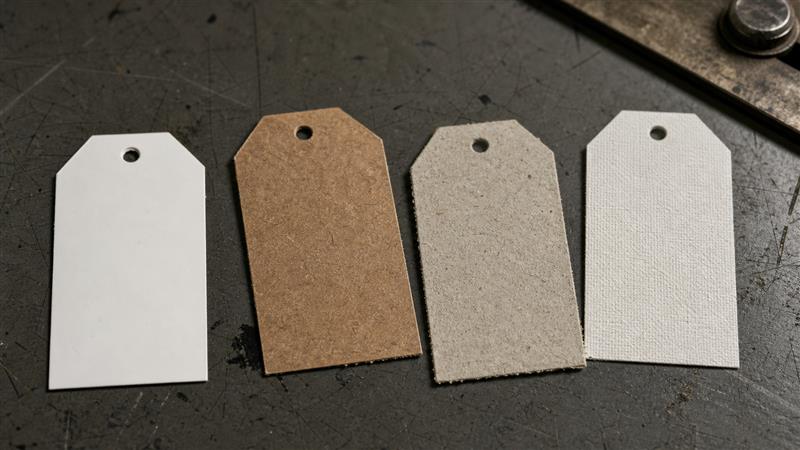
Die-cut tags use a custom outline to support a logo or product shape. Kraft tags give an uncoated, tactile look, while white coated paperboard gives cleaner color reproduction. Jewelry and small accessory tags usually need a smaller footprint and a carefully placed hole so the tag does not cover the product.
Apparel tags can be larger because they hang from a garment or retail loop. A tag for a ring, charm or small pouch should be scaled down. The right proportion is visible enough to work, but not so large that the tag becomes the product.
How Do You Choose Hang Tag Material?
White coated paperboard gives a bright base and predictable color. It is a good fit when a clean logo or detailed artwork matters. Kraft and uncoated board feel more natural, but colors may appear softer or warmer.
Recycled paperboard can support a recycled-content brief, but specify the target percentage and confirm it with supplier documentation. Textured and specialty stocks add touch and visual depth, though they may affect ink coverage, fine type, die cutting and cost.
Choose the stock with the product, print method, thickness, durability, budget and sustainability requirement in mind. A thick tag does not automatically look premium if it bends the cord, covers the product or makes the attachment awkward.
For paper sourcing and responsible-fiber claims, use recognized documentation and check the relevant FSC responsible forest management information rather than relying on a vague “eco” line.
What Size and Thickness Should a Hang Tag Be?
Small tags work for jewelry and compact accessories. Medium tags suit shirts, bags, shoes and general retail goods. Larger tags help outerwear, home goods and products that need more information. Start with the content and product scale, then set the finished dimensions.
Thicker stock feels rigid and substantial. Lighter stock is easier for small products and high-volume handling. Check the hole, cord and product loop together; a heavy tag on a thin attachment can rotate, pull or tear during handling.
A useful sample test is simple: attach the tag to the real product, hang it for a day, turn it several times and remove it as a customer would. You will notice proportion problems much faster than you will on a flat artwork screen.
Hang Tag Shapes, Holes and Attachments
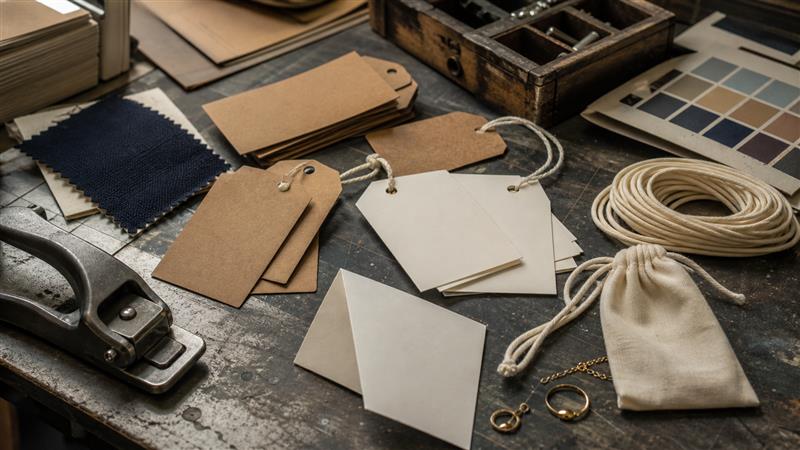
Rectangles are efficient and leave room for information. Squares feel compact and balanced. Beveled corners add distinction without requiring an elaborate outline. A fully custom die-cut shape can strengthen recognition, but it should not make the barcode, hole or key message hard to place.
Hole position may be centered, corner-punched or placed on the left or right. The choice depends on the product loop, tag balance and how the tag should face on display. Leave enough material around the hole; placing it too close to an edge is a small shortcut with an annoying failure mode.
Common attachments include cotton cord, string, elastic, plastic fasteners and safety pins. Match the attachment to the product surface, tag weight, retail presentation and removal requirement.
One-Sided or Two-Sided Hang Tag Printing?
One-sided printing keeps the tag simple when only recognition or a short message is needed. Two-sided printing gives the front to the brand and the reverse to the practical details. It is often the better use of space for apparel, accessories and gift products.
Color can shift between white coated, kraft, recycled and textured stocks. Ask for a physical proof when brand color matters. Small type, pale ink and low contrast should be judged at the finished size, not enlarged on a monitor.
Can You Put Barcodes and QR Codes on Hang Tags?
Yes. Barcodes can support SKU, inventory and retail checkout. QR codes can direct customers to care information, sizing, authentication, product registration or a loyalty page.
Leave clear space around the code, use strong contrast and avoid placing it across a fold, string hole or rough textured area. Scan a production sample with the devices customers actually use. The code is not finished just because the artwork file exports without an error.
For barcode terminology and identification guidance, the GS1 barcode reference provides a useful non-supplier starting point.
How to Make a Hang Tag Work With the Rest of the Packaging
Coordinate the tag with the bag, box, tissue, sticker and insert, but give each item a job. The hang tag may handle product information while the box handles protection and the insert handles care instructions. Repeating the same paragraph everywhere makes the package feel busy.
Check the tag beside the full pack-out. A warm kraft tag may complement a recycled mailer, while a bright coated tag may be a better match for a clean cosmetic carton. If you need application ideas, review the company’s packaging applications before finalizing the role of the tag.
Sustainable Hang Tags: What Should You Verify?
Ask for the paper composition, recycled-content percentage, fiber documentation, ink information and any certification that is relevant to the claim. For general recycling guidance, the U.S. EPA recycling reference is a useful reminder that the local collection system matters. Avoid writing “eco-friendly” as if it were a technical specification.
Material reduction matters too. A smaller tag that still carries the required information may reduce material and shipping weight. The most credible claim is specific: name the paper attribute, the scope of the claim and the market where it applies.
Stock or Custom Hang Tags?
Stock tags make sense when volume is low, speed matters and a standard size is acceptable. Custom hang tags are worthwhile when brand identity, variable product information, special shape, folded panels or repeat production justify the setup.
Compare MOQ, lead time, paper stock, thickness, printing, die cutting, hole drilling, cord options, proofing and repeat-order consistency. Ask for a finished sample with the actual product attached before approving the full quantity.
Hang Tag Design Checklist
- Confirm finished size, shape and thickness.
- Set the front/back information hierarchy.
- Check logo readability and color contrast on the final stock.
- Confirm hole diameter and position.
- Test the string, cord or fastener on the actual product.
- Scan every barcode and QR code from a production sample.
- Review both sides, folds, corners and die-cut edges.
- Confirm any recycled-content or certification claim with documentation.
Send the finished dimensions, paper stock, GSM or thickness, print sides, artwork, colors, hole position, attachment, finish, quantity, sustainability requirements and delivery date to your packaging planning resource or supplier. A complete brief produces a more useful quote.
How to Choose a Custom Hang Tag Supplier
Look for a supplier that can discuss paper and board options, flat and folded formats, custom die cutting, color proofing, hole drilling, attachment methods, barcode quality, samples, MOQ and repeat-order control. The right supplier should ask how the tag will be attached and handled, not only what color the logo is.
When you are ready to compare materials, sizes, shapes and production details, use the packaging inquiry page and include your product, artwork, quantity, target market and deadline.
FAQs
What is a hang tag?
A hang tag is a printed card or label attached to a product with string, cord, elastic, a fastener or another removable method. It can carry branding, price, size, product details, barcodes, QR codes or care information.
What is the difference between a hang tag and a label?
A hang tag is normally external and removable. A sewn or permanent label stays attached to the product and usually carries size, care, fiber or identification information.
What should I put on a clothing hang tag?
Use the front for the logo or brand name and the back for essential product information such as size, SKU, price, barcode or care details. Add a QR code or story only if it remains readable.
What material is best for custom hang tags?
White coated board suits bright, detailed printing. Kraft or uncoated board gives a natural texture. Recycled and specialty stocks can support a specific brand or sustainability brief, but should be checked with a physical proof.
How do I prevent a hang tag from tearing?
Match the tag thickness and hole position to the attachment. Leave enough board around the hole, test the cord or fastener on the actual product and avoid attaching a heavy tag to a weak loop.
Conclusion
A hang tag is a removable printed card that gives a product space for branding and useful information. Its success depends on more than the artwork: material, size, thickness, shape, hole position, attachment, code readability and product proportion all affect the result.
Define the tag’s job first, then choose the stock and format around the actual product. Sample it attached, scan the codes and check it beside the rest of the packaging before approving production.
Send Your Packaging Brief to Our Team
Share your product type, format, size, quantity, material, destination, and required date. Our team can support artwork review, sampling, production, inspection, and export coordination.
Contact us for a project-specific recommendation.


Ready to build packaging with a factory team?
Send your product size, material, artwork, quantity, destination, and deadline so our team can focus the first review on quotation and sampling.