Shipping Artwork: How to Pack and Ship Art Safely

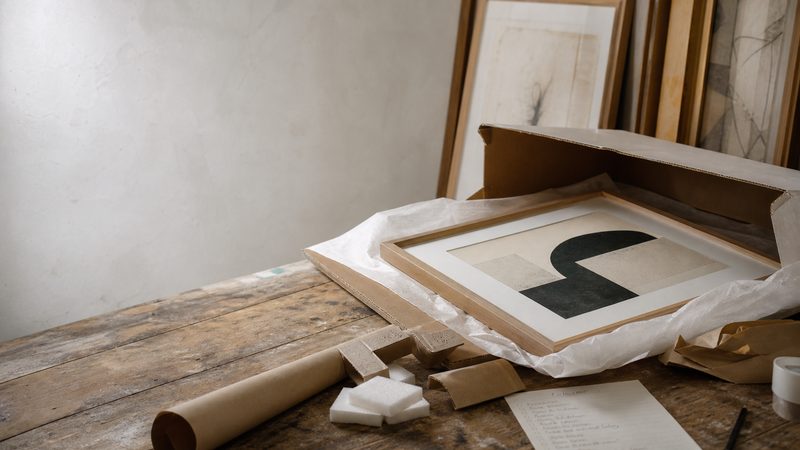
Quick answer: safe shipping artwork starts with the artwork itself. A small print, an unstretched canvas, a framed painting and a glazed original do not share the same damage risks, so they should not leave the studio in the same package. Protect the surface first, add rigidity or cushioning second, then choose an outer box that controls movement.
A useful custom packaging supplier should help you make that decision from the medium, size, value and shipping route, not from a generic “extra bubble wrap” recipe.
Choose the package by artwork type
The simplest way to avoid overpacking one item and underpacking another is to match the format to the main failure mode.
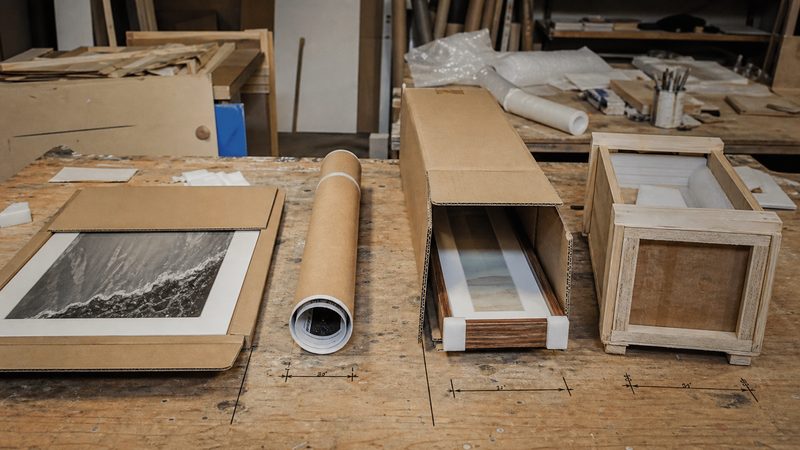
- Small prints and photographs: ship flat in a rigid mailer when bending or corner damage is the main concern.
- Rollable posters: use a mailing tube only when the paper, ink and finish can tolerate rolling.
- Unframed canvas: use surface protection, corner guards and a reinforced flat carton. Do not let cushioning press hard against a wet or delicate painted face.
- Framed artwork: protect the face, all four corners and the frame finish before placing it in a picture box or telescoping carton.
- Framed artwork with glass: treat the glazing as a separate risk. It may justify a glass mask, rigid separation and a double-box system.
- Large or high-value work: consider engineered packaging, a crate or a specialist carrier instead of a parcel carton chosen by size alone.
What materials do you need for shipping artwork?
Use the fewest materials that solve the actual risk. More layers can make a parcel heavier, larger and harder to inspect, while still leaving the artwork free to slide inside.
Surface-safe barrier
Paper, pastel, photographs and some painted surfaces need a smooth barrier before they meet foam, bubble wrap or corrugated board. Glassine or another suitable acid-free interleaving material can prevent texture transfer and reduce direct contact. The Smithsonian’s storage guidance for works on paper lists glassine, acid-free paper and board among materials used for safe storage; the exact choice still depends on the medium and finish.
Rigidity and corner protection
Foam board, corrugated pads or a fitted insert keep a flat print from folding and stop a frame from taking a direct hit. Corners deserve their own protection because a box can look intact while one frame corner has taken the whole impact.
Cushioning and void control
Cushioning should absorb shock and reduce movement, not act as loose decoration. A close-fitting insert, pads at the right contact points and a small amount of controlled void fill usually perform better than filling every empty area with soft material.

The protection-layer method
Pack from the artwork outward. That order matters because an outer carton cannot repair a surface that was already scratched or a frame that was allowed to move.
- Inspect and photograph. Record the front, back, corners, frame joints and glazing before packing. For repeat shipments, keep the photos with the order record.
- Protect the face. Add the appropriate glassine, interleaving paper or a clean protective sheet. Do not tape anything directly to the artwork.
- Protect edges and corners. Use corner guards or a shaped insert, especially on framed pieces and stretched canvas.
- Add a rigid backer. The backer should be large enough to support the work without creating new pressure points.
- Select the outer package. A rigid mailer suits a small flat item; a tube suits a rollable poster; a picture box or telescoping carton suits larger flat work.
- Immobilize the artwork. Close the space around the piece so it cannot gain speed inside the carton.
- Seal the outside. Tape the package seams and outer carton, never the protected surface.
- Perform a gentle movement check. A small controlled movement may be acceptable; a noticeable sliding sound means the pack-out needs revision.
How to ship prints and works on paper
Most small prints fail through bending, corner crush or surface scuffing. For a flat shipment, place the print between suitable protective sheets, add a rigid board on both sides and use a close-fitting flat mailer. Mark the packed dimensions before buying postage; a mailer that is only slightly larger can be cheaper and safer than a large box with a lot of empty room.
Rolling is not automatically the economical answer. A flexible poster may travel well in a rigid tube, but an original, thickly printed, brittle, mounted or highly valued work may remember the roll long after delivery. If the recipient expects a flat presentation, the packaging decision should start there.
How to ship canvas artwork
Canvas needs a balance between surface clearance and edge support. A clean barrier protects the painted face, while a rigid panel behind the canvas reduces flexing. Corner guards protect the stretcher bars, and pads around the perimeter stop the frame from rubbing against the outer carton.
Do not seal a piece before its surface is ready for contact. If the finish is tacky, soft or easily marked, increase the clearance and confirm the protective material with the artist or conservator. A box that looks sturdy can still cause damage if the inner layers touch the paint.
How to ship framed artwork with or without glass

A frame adds weight, corners and a finish that can be scratched. Start with a clean face barrier, then protect all four corners and the frame edges. The inner pack should hold the frame away from the carton walls so a side impact does not transfer straight to the artwork.
Glass raises the stakes. A cracked pane can cut the artwork, damage the frame and spread shards through the box. Use a suitable glass mask or separation layer, rigid corner protection and enough cushioning to prevent the frame from shifting. For valuable glazed work, double boxing or specialist handling may be sensible. FedEx’s artwork shipping guidance also separates flat artwork, posters and higher-value pieces into different packaging approaches.
Rigid mailer, tube, box or crate?
There is no universal best package. The right format is the one that gives the piece enough support without creating unnecessary size, weight or movement.
| Format | Best for | Watch out for |
|---|---|---|
| Rigid mailer | Small flat prints and photos | Too little edge protection on large pieces |
| Mailing tube | Posters and prints that can be rolled | Creasing, curl memory and unsuitable media |
| Picture or telescoping box | Framed or larger flat artwork | Loose fit and weak corners |
| Double box | Fragile, heavy or higher-risk parcels | Extra size and cost if not properly fitted |
| Custom crate | Oversized, valuable or highly fragile work | Weight, freight handling and storage |
Why movement inside the box causes damage
Damage is often caused by the second or third impact, not the first. If the artwork slides from one wall to another, the cushioning is being asked to stop a moving object rather than soften a small shock. A correctly sized carton, fitted pads and a firm insert reduce that travel distance.
Oversizing also affects freight cost. The packed length, width and height can matter as much as the scale reading, particularly for large flat pieces. FedEx’s freight packing guidance specifically treats artwork as a shipment that needs a sturdy container and suitable testing before transit.
How a Dutch Art E-commerce Brand Cut Breakage Below 1.5%
Netherlands · April 2022 · Framed limited-edition art prints
The customer shipped 60 × 80 cm framed art prints with tempered glass across Europe. Their old pack-out used a standard corrugated box and bubble bags. On 300–1,200 km cross-border routes, the artwork moved inside the carton, corners were crushed and glass breakage pushed the damage rate to 8–12%.
The packaging change
B flute + E flute combined corrugated board for a stronger outer shell.
Paper corner guards reduced direct impact on the framed edges.
The insert followed the frame outline and stopped the artwork from sliding.
The solution was not simply adding more bubble wrap. The decisive improvement was controlling the empty space around the frame. Once the artwork was held firmly in place, the outer carton, corner guards and cushioning could work together instead of shifting independently during long-distance transport.
The customer accepted the design after two sampling rounds, placed an order worth approximately $9,500–$12,000, and later returned for repeat orders.
How much does it cost to ship artwork?
Start with the complete shipment cost, not the postage label alone. The main variables are packed dimensions, weight, distance, delivery speed, declared value, insurance terms and the packaging format. A cheap carton that allows damage or triggers an oversized surcharge is not cheap by the time the job is finished.
For occasional shipments, a standard picture box may be enough. For a gallery, artist, ecommerce seller or fulfillment team sending the same formats every week, the bigger opportunity is consistency: fewer box sizes, repeatable inserts, recorded packed dimensions and a short packing checklist.
When custom artwork shipping packaging makes sense
Custom packaging becomes useful when the same artwork sizes move repeatedly, when the product is too large for a convenient stock carton, or when packing time and damage claims are becoming visible operating costs. A right-sized rigid mailer, corrugated art box, telescoping carton or protective insert can make the pack-out easier to repeat.
The best custom design is not necessarily the most decorated one. It is the one that gives the artwork a stable home, limits void fill, protects the vulnerable points and records the packed size accurately. The packaging applications on a supplier’s site can help you compare formats, but the final design should be tested with the actual artwork and route.
A practical artwork shipping checklist
- Artwork condition photographed before packing
- Surface-safe barrier selected for the medium
- Edges and corners protected
- Rigid backer or insert added where needed
- Cushioning matched to fragility and weight
- Correct mailer, tube, box or crate selected
- Artwork immobilized inside the package
- No tape touching the artwork
- Packed dimensions and weight recorded
- Tracking, signature and declared-value requirements checked
Common mistakes in shipping artwork
Putting bubble wrap directly against a delicate surface can leave texture marks or create pressure points. Rolling work that should stay flat trades a small carton for a crease risk. Protecting only the front leaves the edges and corners exposed. Using a large box with loose fill gives the artwork room to build momentum.
Another common mistake is changing the packaging for every shipment. Group the artwork by format, record the damage risks and test a small number of repeatable pack-outs. Keep an eye on packing time, damage claims and actual shipping dimensions. Those records are more useful than a one-off opinion about which material “feels safest.”
How to choose an artwork packaging supplier
Ask whether the supplier can provide custom sizes, corrugated strength options, rigid or telescoping formats, protective inserts, samples and repeatable quality. You should also ask how they handle artwork measurements, corner clearance, packing instructions, MOQ, lead time and dimensional efficiency.
A supplier should be able to discuss the full protection system, not only sell a box. Review its packaging blog or technical resources to see whether it explains materials, sampling and shipping risks in plain language.
FAQs
What is the safest way to ship artwork?
Match the package to the artwork type, protect the surface first, add rigidity and cushioning, protect corners and immobilize the piece inside a strong outer package.
Can I use bubble wrap directly on artwork?
Not for every surface. Delicate painted or paper artwork may need a suitable glassine or acid-free barrier before cushioning is added.
Should artwork be shipped flat or rolled?
Ship it flat when the medium is rigid, brittle, mounted or sensitive to creasing. Use a tube only when the artwork can safely tolerate rolling.
When is a double box useful?
A double box can add separation and impact protection for fragile, heavy, glazed or higher-value work, provided the inner package is immobilized.
What should I send a packaging supplier for a quote?
Provide the artwork format, finished size, weight, photos, quantity, surface risks, shipping destination, packing speed target and deadline.
Conclusion
Shipping artwork safely is a matching problem. Prints, posters, canvas, frames, glass and high-value originals need different combinations of surface protection, rigidity, cushioning and movement control. The strongest pack-out is usually the one that solves the actual weak point without adding a pile of unnecessary material.
Request a custom artwork packaging quote
Send the artwork type, finished dimensions, weight, quantity, surface sensitivity, destination and target delivery date. With those details, a packaging team can compare a rigid mailer, flat carton, telescoping box, insert or crate against the real shipping route.
For repeat shipments, include photos of the current pack-out and any damage points. You can request an artwork packaging quote for a right-sized protective packaging system.
Send Your Packaging Brief to Our Team
Share your product type, format, size, quantity, material, destination, and required date. Our team can support artwork review, sampling, production, inspection, and export coordination.
Contact us for a project-specific recommendation.
Ready to build packaging with a factory team?
Send your product size, material, artwork, quantity, destination, and deadline so our team can focus the first review on quotation and sampling.