Aqueous Coating in Packaging: How It Works and When to Use It

What Is Aqueous Coating?
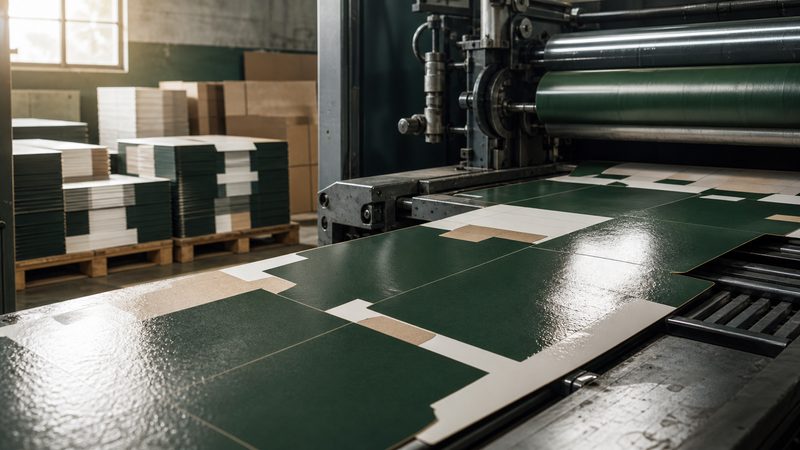
If you have ever handled a printed carton that feels smoother, dries quickly, and does not pick up fingerprints immediately, it may have an aqueous coating. Also called AQ coating, it is a water-based finish applied over printed paper or paperboard to improve the surface feel, appearance, and resistance to everyday handling.
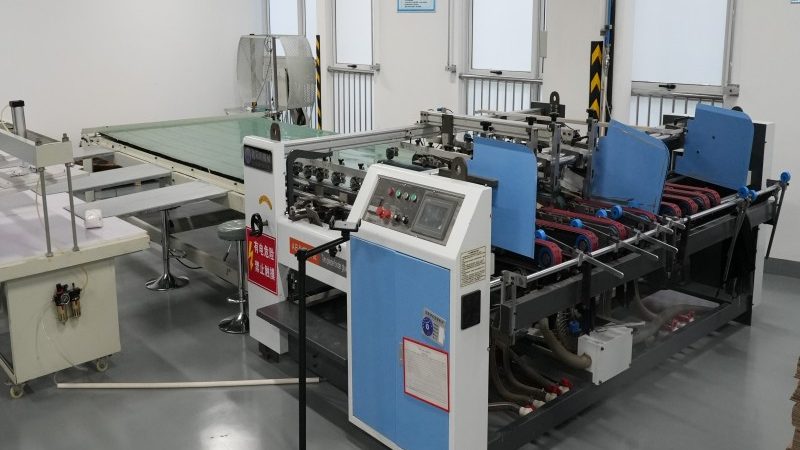
The short answer is simple: aqueous coating is a practical protective finish for printed packaging, not a replacement for every barrier or laminate. It is often chosen for folding cartons, retail boxes, inserts, and other paper-based formats because it can be applied as part of the printing process and is available in gloss, satin, matte, and soft-touch effects.
How Does Aqueous Coating Printing Work?
In a typical aqueous coating printing process, the coating is applied to the printed sheet through a press or finishing unit. Heated air helps remove water and allows the remaining binder to form a continuous surface film. The exact result depends on the paperboard, ink coverage, coating formulation, coating weight, drying conditions, and the next converting step.
For a carton buyer, the important point is that coating is part of a chain rather than an isolated decoration. The board must still score and fold cleanly. Glue flaps must remain suitable for the selected adhesive. Dense dark ink coverage may need different drying attention from a light design. A finish that looks excellent on a flat proof can behave differently after creasing, die-cutting, packing, and distribution.
That is why a useful sample should show the final board, artwork, folds, glue areas, and intended finish—not just a color swatch. If the package will be mailed or handled frequently, include a rub or scuff check before approval.
Aqueous Coating vs Varnish vs UV Coating
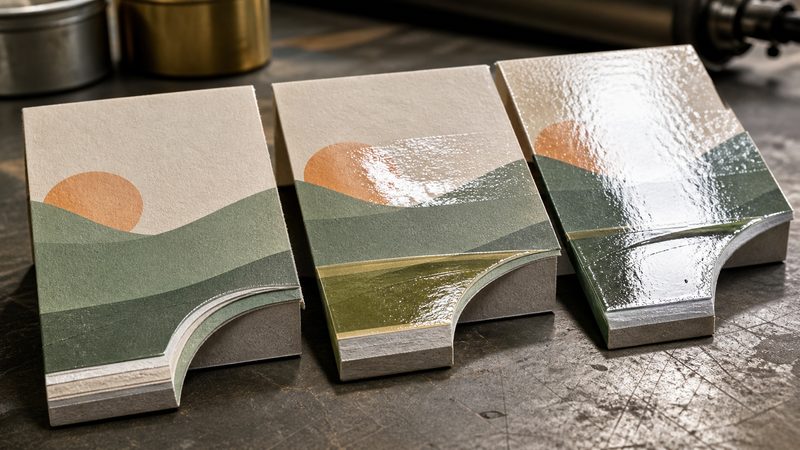
These finishes are often discussed together, but they solve slightly different problems. The table below is a practical starting point, not a substitute for a project sample or technical specification.
| Finish | Typical strength | Common limitation | Good fit |
|---|---|---|---|
| Aqueous coating | Fast-drying, smooth, practical protection against scuffs and handling marks | Usually a full-surface finish; limited moisture and solvent resistance | Folding cartons, paperboard sleeves, inserts, retail packaging |
| Varnish | Flexible visual effects and flood or spot application, depending on the system | Drying, yellowing, rub, or consistency can vary by formulation and process | Decorative accents, economical surface protection, selected spot effects |
| UV coating | Very high gloss, fast curing, and stronger surface resistance | Can be less forgiving at folds and may complicate recycling or converting decisions | Premium graphics, spot highlights, projects needing a harder surface |
The phrase aqueous coating vs varnish can be misleading because varnish is a broad category. Some varnishes are water-based, while others use different chemistry or curing methods. Ask the supplier to name the actual system instead of treating “varnish” as one universal material.
If you want a uniform protective finish across a printed carton, AQ is often the straightforward option. If you want a dramatic highlight on a logo or image, a spot-capable finish may be more appropriate. If you need serious moisture, grease, chemical, or aroma resistance, the decision may move beyond a normal print coating into a tested barrier structure.
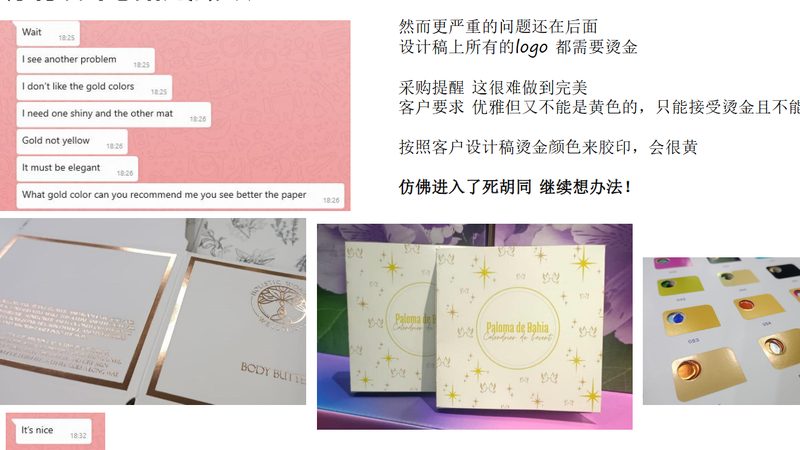
A Gold-Printed Calendar Box That Had to Look Premium—and Still Make Financial Sense
A French customer did not choose a finish in isolation. She chose a complete packaging result.
The challenge: beautiful gold print, sturdy structure, controlled cost
The project was a printed calendar box with gold decoration and internal compartments. The customer wanted an elegant surface, but also questioned the board quality, box size, quantity, and shipping cost.
Gold details, clean white areas, a premium calendar-box feel.
Board weight, folding, compartments, surface appearance, and delivered cost.
The turning point: keep following up, then make the trade-off visible
① January: the calendar-box project entered quotation and design discussions.
② March: the customer stopped replying. The project looked quiet.
③ May–June: a new follow-up angle reopened the conversation; the customer confirmed she was still interested.
④ July: size, material, sample quality, production time, and shipping were discussed together.
sample quote / unit
comparison quote / unit
production days
sea-shipping days
What packaging buyers can learn from it
Gold print and coating should be judged on the actual board, not only on a screen proof.
Surface, folding, rigidity, compartments, and product protection must work together.
A clear sample turns a price discussion into a practical packaging decision.
What Are the Benefits of Aqueous Coating Packaging?
1. It protects the printed surface during normal handling
Aqueous coatings can reduce the visual damage caused by light rubbing, fingerprints, and repeated handling. This is useful for cartons that move through fulfillment, retail shelves, store displays, or customer unboxing. The finish is not indestructible, but it can help the printed surface arrive looking closer to the approved sample.
2. It supports a range of appearances
Gloss adds reflection and color presence. Satin gives a quieter middle ground. Matte reduces glare and can make a package feel more restrained, while soft-touch formulations add a velvety tactile effect. The final appearance still depends heavily on the board surface and ink coverage, so the coating name alone does not predict the exact result.
3. It can fit an efficient printing workflow
Because aqueous coating is commonly applied in line or close to the printing operation, it can be a practical choice for standard carton production. Fewer separate finishing steps may simplify scheduling, but the real benefit depends on the printer’s equipment, order quantity, artwork, and required drying time.
4. It can fit a paper-based packaging system
A water-based coating may be a better starting point than a plastic film laminate for a fibre-based package. But “AQ coating makes the package recyclable” is too broad: the finished item still depends on board, ink, coating, adhesives, other components, local collection, and mill capability.
Is Aqueous Coating Waterproof?
No. This is one of the most common misunderstandings in water based coating packaging.
Aqueous coating can improve surface resistance, but it is not automatically a waterproof barrier. Prolonged moisture, condensation, wet storage, oil, alcohol, perfume, cleaning chemicals, or product leakage may require a different coating or a more complete barrier structure. The coating may also perform differently on the outside and inside of a carton.
For dry products, ordinary retail handling, and short exposure to incidental moisture, AQ may be entirely reasonable. For chilled food, oily products, cosmetics, fragrances, detergents, or packages used in humid logistics routes, define the exposure before choosing the finish. Request a representative sample and test the actual product contact, rub, fold, and storage conditions.
Is Aqueous Coating Recyclable?
Do not answer this with a blanket yes or no. A printed paperboard package with a coating can still enter a paper recycling stream, but the finished structure has to be assessed against the requirements of the relevant collection and recycling system.
The Cepi paper-based packaging recyclability guidelines explain that coatings, laminates, and other treatments can be needed for packaging performance while also making recycling more challenging. The Cepi laboratory test method provides a useful reminder that recyclability is a testable performance question, not just a marketing description.
For a buyer, the practical checklist is straightforward: identify the board grade, list any coating or laminate, confirm whether the package is predominantly paper-based, and ask which recycling pathway the claim refers to. If the claim is important for a retailer or market, request evidence for the final construction rather than relying on the coating name.
Is Aqueous Coating Suitable for Food Packaging?
Sometimes, but “aqueous” by itself is not a food-contact approval. Food packaging needs a material and coating system that is suitable for the food type, contact condition, temperature, time, and target market. The complete package may also include inks, adhesives, board treatments, and inner structures.
For example, the FDA inventory of effective food-contact substance notifications shows that permitted uses are tied to specific substances, manufacturers, intended uses, and limitations. In other words, ask for the relevant declaration or test evidence for the actual formulation and application. Do not treat “water-based coating” as a universal food-safe label.
For food cartons where the coating is outside the primary contact surface, the specification may be simpler, but it still needs to match the actual pack design. A supplier should know whether the coating is inside, outside, or separated from the product by a liner or inner bag.
When Should You Choose Aqueous Coating?
Aqueous coating is a sensible candidate when the package needs a smooth printed surface, normal scuff protection, and a matte, satin, gloss, or soft-touch finish without immediately moving to film lamination. It is commonly considered for folding cartons, sleeves, paperboard inserts, retail boxes, and selected mailer-box graphics.
It may be less suitable when the package faces long exposure to water, grease, solvents, perfume, aggressive cleaning agents, or high abrasion. It may also be the wrong answer when the design depends on a sharply contrasting spot effect, a very hard high-gloss surface, or a high-barrier structure.
For custom folding cartons, compare the finish together with board thickness, scoring, folding, gluing, product weight, and shipping route. The paperboard grades and thickness guide is a useful companion when the board specification is still open. A coating decision made before those factors are clear is often just a shiny guess.
A Procurement Checklist for Aqueous Coating Printing
Before approving a quotation or proof, ask for these details:
- Is the finish aqueous, UV, varnish, or a combination? Name the actual system.
- Is it flood-coated or spot-applied? Which panels and glue areas are included?
- Is the desired effect matte, satin, gloss, soft-touch, or another finish?
- What board will be used, and how will the finish behave at scores and folds?
- Has the final artwork been checked for rub, scuff, drying, and color appearance?
- Does the package face moisture, grease, alcohol, perfume, heat, or refrigeration?
- If food contact is involved, what declaration or test evidence applies to the finished construction?
- What recyclability statement is being made, and which market or recycling pathway supports it?
- Can the supplier provide a representative sample before the production run?
If the carton is part of an ecommerce shipment, include the outer pack, handling route, and likely contact points in the review. For a mailer format, compare the finish with the structure described on the custom mailer boxes page. A finish chosen for a shelf display may need a different protection strategy once the package starts travelling through parcel networks.
The Practical Decision
Choose aqueous coating when you want a versatile, water-based print finish for a predominantly paper-based package and the main risks are ordinary handling, fingerprints, and surface appearance. Do not choose it by the word “eco” alone. Confirm moisture exposure, product chemistry, folding performance, food-contact requirements, and the recycling claim for the completed package.
The best specification is usually short: board, artwork, coating system, finish, coated area, performance test, and intended use. That gives the printer something measurable to produce and gives the buyer something real to approve.
FAQs
What is aqueous coating in packaging?
Aqueous coating is a water-based finish applied over printed paper or paperboard. It helps improve surface appearance and resistance to everyday handling, with options such as matte, satin, gloss, and soft-touch.
Is aqueous coating better than varnish?
Neither is automatically better. Aqueous coating is often a practical choice for uniform protection and efficient printing, while varnish may suit specific flood or spot effects. Compare the actual formulation, finish, folding behavior, and exposure requirements.
Is aqueous coating waterproof?
No. It can improve surface resistance but does not automatically create a waterproof barrier. Packages exposed to moisture, grease, solvents, perfume, or condensation need application-specific testing.
Can aqueous-coated paperboard be recycled?
It may be recyclable in a paper-based system, but the answer depends on the complete package and local mill requirements. Board, coating, ink, adhesive, laminate, and other components should be assessed together.
Is aqueous coating safe for food packaging?
Only when the specific coating system and finished construction meet the applicable food-contact requirements for the target market and use conditions. “Water-based” alone is not sufficient evidence.
Conclusion
Aqueous coating is popular because it sits in a useful middle ground: more protective than uncoated print, simpler than many premium finishing systems, and available in several visual effects. Its limits are just as important as its advantages. It is not waterproof, not automatically food-safe, and not a complete recyclability claim by itself.
Start with the product and distribution conditions, then compare the coating against the board, structure, artwork, and required evidence. For a broader material comparison, see the related guide on PCR vs. PIR recycled content. A good sample should answer the question before a production run does.
Need Help Specifying the Finish?
CustomPackMart can review the carton format, paperboard, artwork, coating area, folding points, product exposure, and target market together before sampling. That makes the finish decision part of the packaging specification rather than a last-minute decoration choice.
Send the product type, finished dimensions, quantity, artwork status, shipping destination, and required finish through the packaging inquiry page. If moisture, food contact, or a recycling claim matters, include that too so the sample can be reviewed against the real use case.
Send Your Packaging Brief to Our Team
Share your product type, format, size, quantity, material, destination, and required date. Our team can support artwork review, sampling, production, inspection, and export coordination.
Contact us for a project-specific recommendation.

Ready to build packaging with a factory team?
Send your product size, material, artwork, quantity, destination, and deadline so our team can focus the first review on quotation and sampling.