Compostable vs. Recyclable Packaging: Which Is More Sustainable?

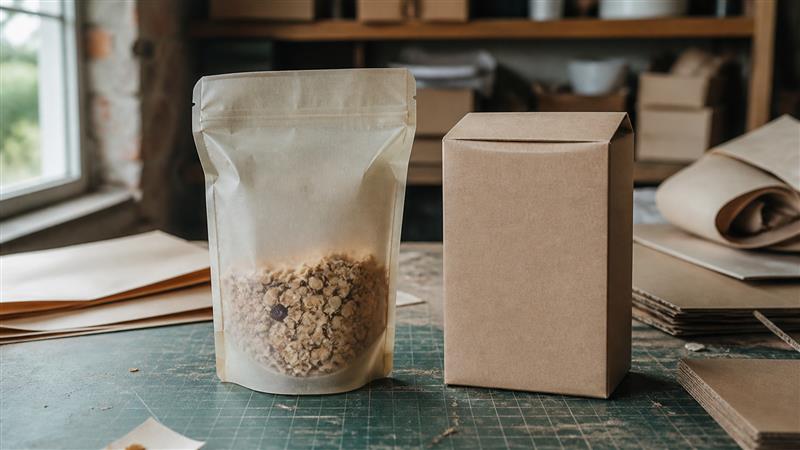
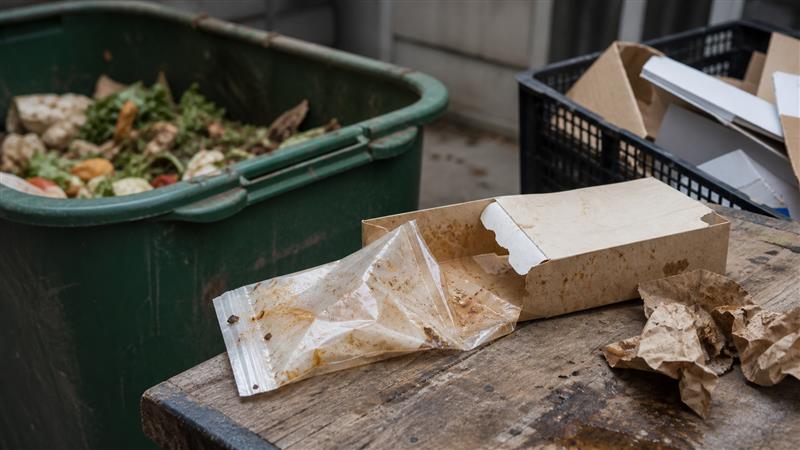
Compostable packaging sounds like an easy sustainability win. Recyclable packaging sounds more familiar, but “recyclable” does not guarantee recovery. For a useful compostable vs recyclable packaging decision, compare the material, product protection, collection system, contamination risk, and what customers can realistically do after use.
What Does Compostable Packaging Actually Mean?
Compostable packaging is designed to break down into usable compost under defined conditions. That is more specific than “biodegradable,” which can describe a material that breaks down eventually without explaining where, how fast, or into what.
The first distinction is between industrial compostable and home compostable. Industrial systems use controlled heat, moisture, aeration, and processing time. Home compost piles vary widely in temperature, moisture, oxygen, and management. A package accepted by a commercial facility is not automatically suitable for a backyard pile.
Common compostable packaging materials include PLA and other bioplastics, starch-based films, cellulose films, molded fiber, and paper-based structures. Compostable trash bags can be useful when they collect food scraps and enter an organics program that accepts both the waste and the bag. The same bag adds little environmental value when it is used for general landfill-bound waste.
What Is Recyclable Packaging?
Recycling sends a material through collection, sorting, processing, and manufacturing so part of it can become a new material. Paperboard, corrugated board, selected plastics, glass, and metal may all be recyclable, but acceptance depends on the format and local system.
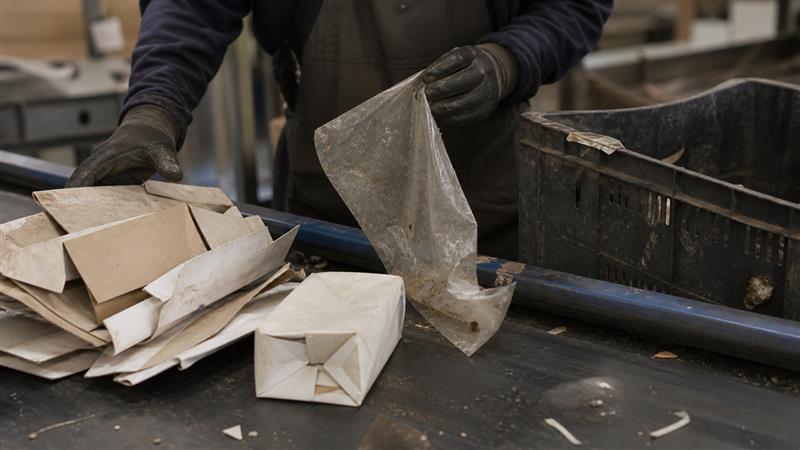
“Recyclable” does not mean “will be recycled.” A package may be technically recyclable but rejected because the local program does not collect it, a sorting line cannot identify it, food residue contaminates it, or the package combines materials that are difficult to separate. The EPA’s recycling guidance is a useful reminder that consumer sorting and local collection are part of the outcome.
The Comparison Most Articles Miss
The real question is not which label sounds greener. It is which packaging system performs reliably from production through disposal.
| Decision factor | Compostable packaging | Recyclable packaging |
|---|---|---|
| End of life | Biological processing in a suitable composting system | Material recovery and reprocessing |
| Infrastructure | Often requires a specific industrial or home pathway | Depends on local collection and sorting |
| Food contamination | Can suit food scraps when the facility accepts the package | Residue may reduce paper or plastic recovery |
| Performance | Depends heavily on formulation and barrier design | Often more established for shipping and storage |
| Disposal clarity | Easy to misunderstand without precise instructions | Familiar, but still varies by material and area |
| Cost | May carry a material and certification premium | Often more commercially available |
| Main risk | It goes to landfill or contaminates other streams | It is technically recyclable but not collected |
Compostable vs. Recyclable Packaging: When Does Each Make Sense?
Choose compostable packaging when all of the following are true:
- The package is likely to be contaminated with food or organic waste.
- The intended composting facility accepts that finished package, not just food scraps.
- Customers or staff can access the correct organics collection route.
- The package provides the required strength, moisture resistance, and shelf life.
Choose recyclable packaging when recovery infrastructure is easier to access, the material can remain clean enough to process, and the package format is already understood by the target market. Paperboard and corrugated structures can be strong candidates for dry goods, retail cartons, inserts, and shipping applications, but coatings, windows, laminations, and adhesives still need to be checked.
Neither option is automatically best when the larger opportunity is source reduction, reuse, or a concentrated refill format. Removing unnecessary layers or reducing empty space can matter more than changing a disposal label while keeping an oversized, failure-prone package.
Is Compostable Packaging Always More Sustainable?
No. A material label describes an attribute; sustainability describes the complete result.
Infrastructure comes first
Many customers do not have convenient access to industrial composting, and many facilities accept food scraps but not every compostable package. If a package is rejected and sent to landfill, the intended pathway never happens. If it is placed in a recycling bin, it may contaminate a stream designed for other materials.
Product protection still counts
Moisture, oxygen, grease, puncture, compression, heat, and shelf-life requirements should be tested with the real product. A package that tears in transit can create product waste, a replacement shipment, extra protective packaging, and a return. The environmental cost of failure can easily exceed the small material saving that motivated the change.
For packaging buyers, this is why a sample should be tested in the actual size, packed condition, artwork coverage, and handling route. Forests’ public paperboard packaging guide makes the same practical point: board choice, caliper, structure, print, and use conditions have to be evaluated together.
Claims must be specific
The FTC Green Guides say compostable claims need competent and reliable evidence, and that claims should be qualified when home or institutional facilities are not broadly available. The guide also warns against broad, unqualified “green” or “eco-friendly” claims. Use the exact pathway: for example, “accepted in participating commercial composting programs,” only when that statement is documented for the finished package.
Common Compostable Packaging Materials Compared
PLA can provide clarity and useful packaging properties, but it commonly depends on industrial composting rather than ordinary backyard conditions. Do not assume a PLA package belongs in a recycling bin.
Starch-based materials may suit selected films, loose-fill, and food-service applications. Their strength, moisture response, and shelf life depend on the formulation and structure.
Cellulose films can offer transparency and selected barrier performance. The finished result still depends on coatings, inks, adhesives, and the product’s moisture and oxygen requirements.
Molded fiber and paper can work well for trays, inserts, cartons, and food-service formats. However, coatings or laminated layers may change the disposal route. “Paper-based” is not a complete end-of-life specification.
For a sustainable packaging comparison, ask the supplier to document material composition, coatings, adhesives, inks, certification scope, test conditions, and disposal instructions for the complete package.

Compostable Trash Bags: When Do They Make Sense?
Compostable trash bags are strongest in a managed food-waste system: a restaurant, campus, event venue, or municipal organics program where staff and customers are given one clear stream. They can help keep food scraps contained and reduce leakage during collection when the local facility accepts the bags.
They may add little value for ordinary mixed waste. A bag marked compostable does not turn landfill disposal into composting. Before buying, verify the accepted certification, facility requirements, bag thickness, seam strength, storage conditions, shelf life, and whether the claim applies to the finished bag rather than only one resin or film component.
How to Choose the More Sustainable Option
Use this seven-step review before approving a new package:
- Define the product, dimensions, weight, food-contact status, and sales channel.
- Map where the package will be sold, shipped, opened, and discarded.
- Check local recycling and composting collection, including facility acceptance of packaging.
- Compare barrier, strength, shelf life, stacking, and shipping performance.
- Reduce material and empty space before optimizing the end-of-life label.
- Test disposal instructions with real users or staff; ambiguity is a contamination risk.
- Ask for documentation covering the complete finished package and the target market.
Score each option for product protection, material efficiency, recycled or renewable content, local recovery access, disposal simplicity, contamination risk, supplier documentation, and cost. The decision rule is simple: choose the lowest-impact system that reliably protects the product and has a realistic end-of-life route.
What I Check Before Choosing Compostable Packaging
I would first identify where customers will actually dispose of the package, then contact or review the relevant composting facility requirements. Next, I would test the package with the real product, compare it with a recyclable alternative, and check whether the disposal message is understandable without a long explanation.
For distributed ecommerce, I would map the destination markets rather than using one national assumption. For a closed-loop food-service program, I would review staff training, bin placement, contamination monitoring, and collection contracts. The same material can produce different outcomes in those two systems.
Common Sustainable Packaging Mistakes
The most common mistakes are treating “biodegradable” and “compostable” as synonyms, assuming industrial compostable means home compostable, ignoring local facility rules, and assuming every recyclable item will be recycled. Another mistake is choosing an end-of-life claim before testing barrier and shipping performance.
Avoid vague “eco-friendly” language when a specific statement is available. Ask whether the claim applies to the whole package, including label stock, coating, adhesive, ink, window, zipper, or tie. Certification is useful, but it does not replace checking the destination system.
A Supplier-Ready Packaging Review
A practical supplier brief should include product dimensions and weight, package format, quantity, artwork status, target market, shipping route, shelf-life requirement, material preference, and deadline. Ask the supplier to confirm the proposed structure, material specification, test plan, sample process, and quality checkpoints.
Forests’ public household and office packaging page describes a project workflow based on structure review, sampling, production, inspection, packing, and export coordination. For a sustainability-led project, add the disposal pathway and claim documentation to that brief rather than treating them as a marketing step after production.
FAQs
Is compostable packaging better than recyclable packaging?
Not always. The better option depends on product requirements, material use, local recycling or composting infrastructure, contamination, and what customers can realistically do after use.
Can compostable packaging go in a recycling bin?
Generally, no. Compostable packaging should not enter conventional recycling unless the local program specifically accepts it, because it can contaminate a stream designed for other materials.
Are compostable trash bags actually sustainable?
They can be useful for collecting organic waste where certified compostable bags are accepted by a composting program. Their benefit is much less clear when they are sent to landfill or used where suitable composting infrastructure does not exist.
Is home compostable the same as industrial compostable?
No. Home and industrial systems have different temperature, moisture, aeration, and processing conditions. Verify the certification and disposal instructions for the exact finished package.
What should a buyer ask a packaging supplier about sustainability claims?
Ask for the complete material composition, certification or test documentation, claim scope, coatings, adhesives, inks, facility acceptance, disposal instructions, and a sample test using the real product and target market.
Conclusion
Compostable vs recyclable packaging is not a contest between a green label and a grey bin. Compostables are most defensible where organic waste collection is established, the facility accepts the finished package, and the package performs for the actual use. Recyclable packaging can be preferable where recovery systems are accessible and the material remains clean and economically recoverable.
The better sustainable packaging comparison begins with product protection, material reduction, realistic disposal, and evidence. Choose the pathway customers can actually use, then verify the finished package before making a claim.
Request a Sustainable Packaging Review
Forests Packaging Group can review your product size, material preference, artwork, quantity, destination, packing method, and deadline before sampling. The review can compare compostable, recyclable, recycled-content, paper-based, and alternative structures according to the product and distribution system—not a label alone.
Send your product details and current package specification for a focused comparison of structure, material, sampling, production, inspection, and delivery requirements.
Send Your Packaging Brief to Our Team
Share your product type, format, size, quantity, material, destination, and required date. Our team can support artwork review, sampling, production, inspection, and export coordination.
Contact us for a project-specific recommendation.


Ready to build packaging with a factory team?
Send your product size, material, artwork, quantity, destination, and deadline so our team can focus the first review on quotation and sampling.