Paperboard vs Molded Pulp Inserts: Which Fits Your Product?

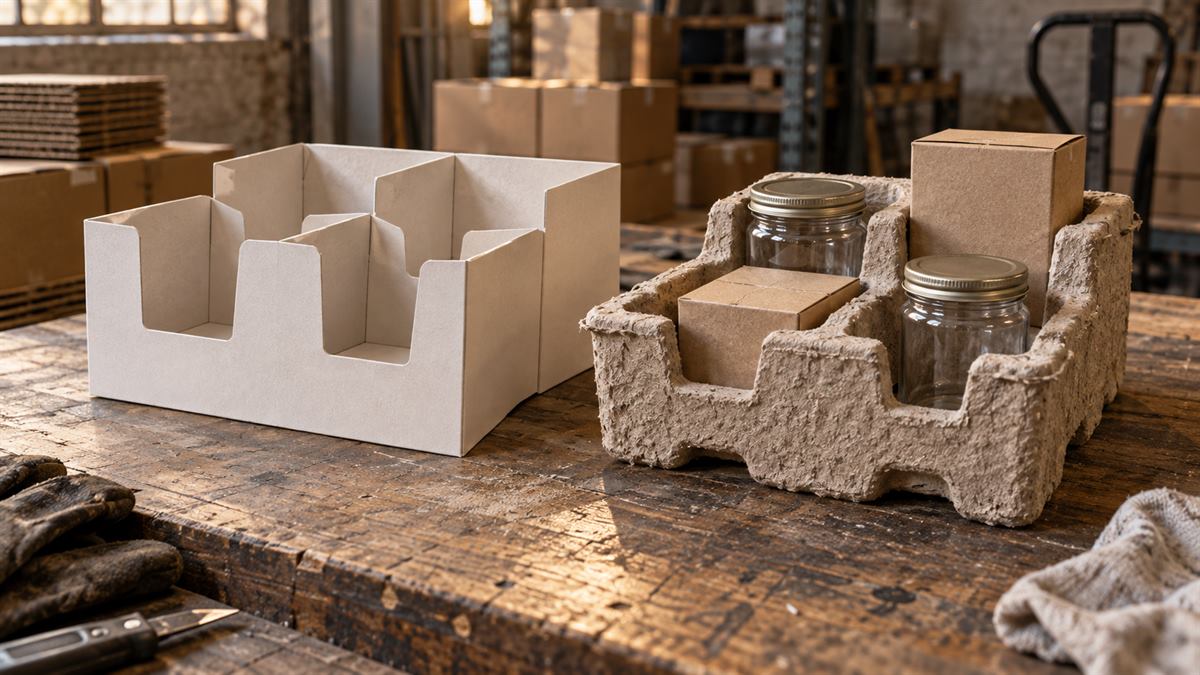
Quick answer: Paperboard inserts suit lightweight products, multi-item kits, flat shipping, printed instructions, and projects with frequent SKU changes. Molded pulp inserts make more sense when a fixed product shape needs three-dimensional support and the project volume can justify a product-specific mold.
Neither material wins every project. The decision depends on product weight, fragile areas, box structure, moisture exposure, production volume, warehouse space, and how the packer and customer handle the insert. For a wider view of custom formats, start with the CustomPackMart homepage.
Paperboard vs molded pulp: the working comparison
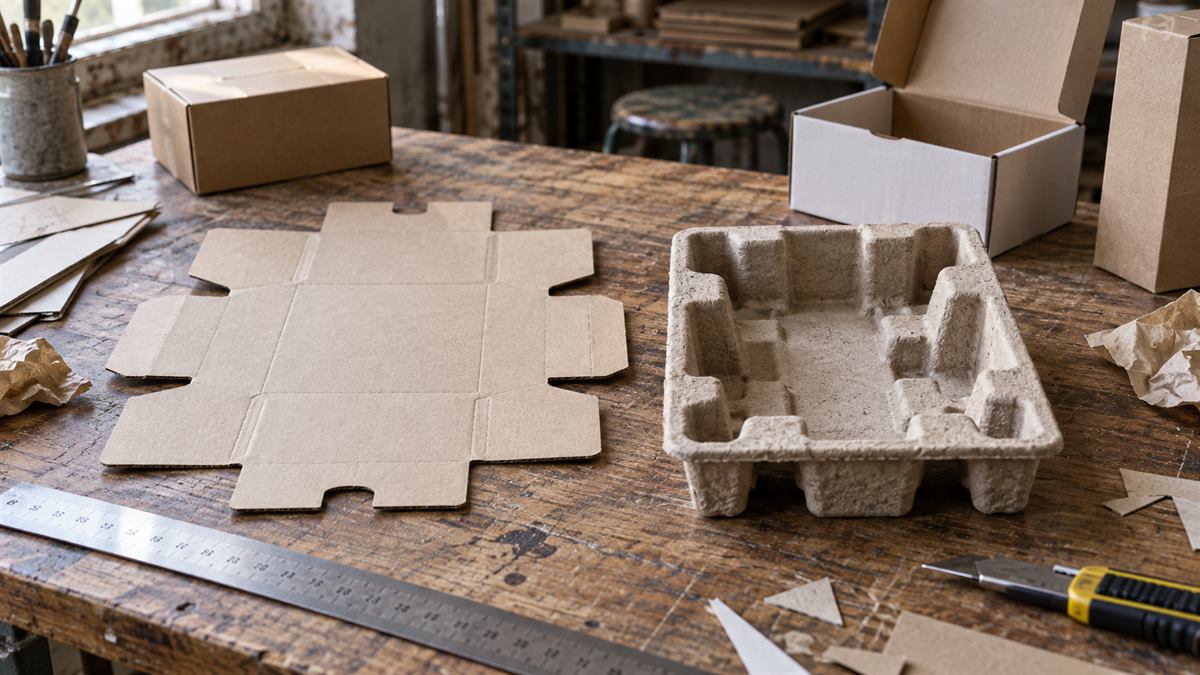
Paperboard is cut, creased, and folded from a flat sheet. Molded pulp is formed into a three-dimensional tray, cradle, or end cap. That difference affects tooling, storage, fit, appearance, assembly, and shipping volume.
| Factor | Paperboard insert | Molded pulp insert |
|---|---|---|
| Starting thickness | 0.6–1.5 mm for folded or die-cut structures | About 1.5–3.5 mm wall thickness, depending on shape and process |
| Example material brief | 400–600 gsm for a small gift or accessory set | Fiber blend and wall design specified with the mold |
| Production format | Flat-packed, then folded or locked | Formed 3D part, often nested for shipment |
| Tooling route | Die-cut tooling; flat-design revisions are usually simpler | Product-specific mold with draft angles and wall geometry |
| Best protection role | Separation, positioning, light cushioning, surface protection | Shaped support, movement control, corner support, cushioning |
| Good fit for | Accessories, bottles with dividers, gift sets, cards, small kits | Electronics, appliances, jars, bottles, fixed-shape products |
| Branding | Easy to print with instructions and graphics | Fiber texture is visible; branding may need molded detail, print, or a sleeve |
| Storage before packing | Efficient because parts are flat | More 3D volume, although parts can often be nested |
| Main risk | Bending, shifting, or too much empty space | Tight cavities, poor draft, rough contact, or moisture exposure |
These are RFQ starting points, not universal specifications. The insert still has to control movement, allow removal, and work inside the complete box.
When paperboard inserts are the sensible choice
Paperboard works well when the insert has to organize more than it has to absorb impact. A die-cut insert can separate a candle, instruction card, sample sachet, and accessory. It can hold a bottle upright or keep small components from sliding into one another.
Because the structure starts as a flat sheet, it can be shipped flat and folded at the packing station. This helps brands with several product combinations, limited warehouse space, regular artwork changes, or medium-volume launches. It also suits inserts that need printed instructions or a visible brand message. Related box and insert options can be reviewed through the Packaging Insights blog.
As a starting example, a 250 × 180 × 70 mm gift pack containing three products under 500 g in total might be tested with 400–600 gsm paperboard, folded partitions, and two locking tabs. The first sample should check whether the products stay in their compartments, whether the packer can load the set without forcing the board, whether the insert lifts when opened, and whether any edge touches a label, cap, or printed surface.
- Separation is often enough for light, multi-piece products.
- Flat supply reduces pre-assembly storage volume.
- Dielines are easier to revise when SKUs change.
- Glass, ceramics, and heavy products may need folded cushioning or a stronger outer carton.
When molded pulp earns its extra complexity
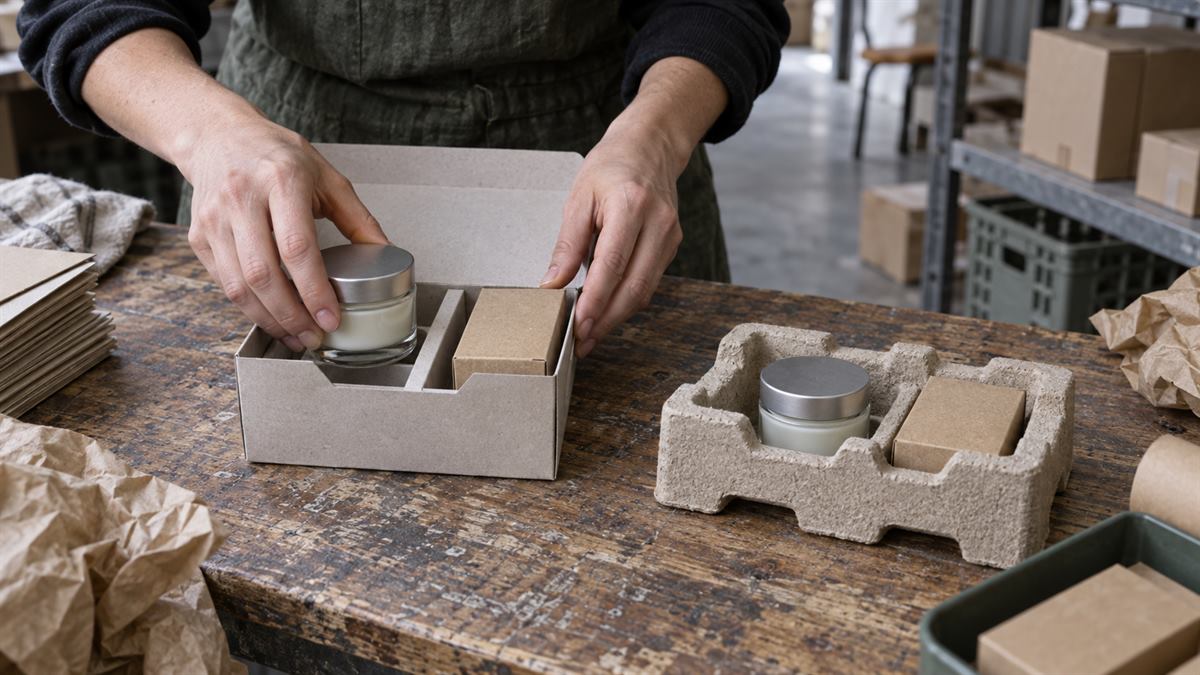
Molded pulp becomes more attractive when a product needs a shaped cradle rather than a flat divider. The material can be formed around bottles, jars, small appliances, electronics, and products with stable geometry. Ribs, pockets, raised contact points, and end supports can keep the product away from the outer carton wall.
For example, a 1.2 kg product in a 320 × 240 × 110 mm shipping carton might use two formed end supports that hold the product at several points. The purpose is not to fill the box with fiber. It is to stop rotation and keep impact away from weak areas.
There are trade-offs. The mold needs realistic draft angles so the part can release. Thin ribs may break during handling. Deep cavities can make removal awkward. A rough fiber surface may mark a glossy product unless contact points are raised, softened, or lined.
Moisture should be discussed before tooling. Pulp remains a fiber material, so ocean freight, humid warehouses, and wet distribution routes can change stiffness and surface condition. If a coating or wet-strength treatment is proposed, ask how it affects the local recycling route. The EPA recycling guidance is a useful reminder that actual recycling depends on the finished material and local collection system.
Protection starts with movement control
Buyers often ask which material is stronger before defining how the product moves inside the box. That reverses the order. A paperboard insert that holds a product firmly may perform better than a loose molded tray. A molded pulp cavity with too much clearance may allow the product to rotate even though the material feels rigid.
- Finished product length, width, height, and weight.
- Fragile areas such as glass, pumps, screens, lids, and decorated surfaces.
- Loading direction, removal direction, and required clearance.
- Internal box dimensions and the expected parcel, ocean, or courier route.
- Whether the pack is assembled by hand or by machine.
The first sample should be loaded and removed several times. Close the box, turn it on each side, reopen it, and check whether the insert has shifted. For transport protection, specify testing for the complete pack: product, insert, box, closure, and outer carton. ISTA’s test procedure resources explain why the test method should match the distribution environment.
Tooling, cost, and warehouse space
Paperboard normally has a lower entry barrier because it uses flat sheets, die-cutting, and folding. It is easier to revise for a new SKU and takes less space before assembly. Molded pulp involves a product-specific mold. That upfront cost can make sense when the quantity is high and the geometry will not change.
Some supplier comparison guides publish molded-pulp tooling ranges around $1,000–$3,000 per mold. Treat that as an illustrative planning band, not a quote. Size, cavity count, fiber, tool type, and revision scope can change the figure.
- Insert material, thickness, and surface treatment.
- Die or mold cost, including prototype and production tools.
- Cavity count, nesting quantity, and packed quantity per export carton.
- Sample stages, revision limits, assembly method, and packing labor.
- Outer-box requirements, destination, quantity, and delivery plan.
For premium presentation packaging, the insert should be developed with the outer box. Forests’ rigid box packaging range shows why box structure, wrap paper, insert position, and opening sequence need to be reviewed together.
What should an insert RFQ include?
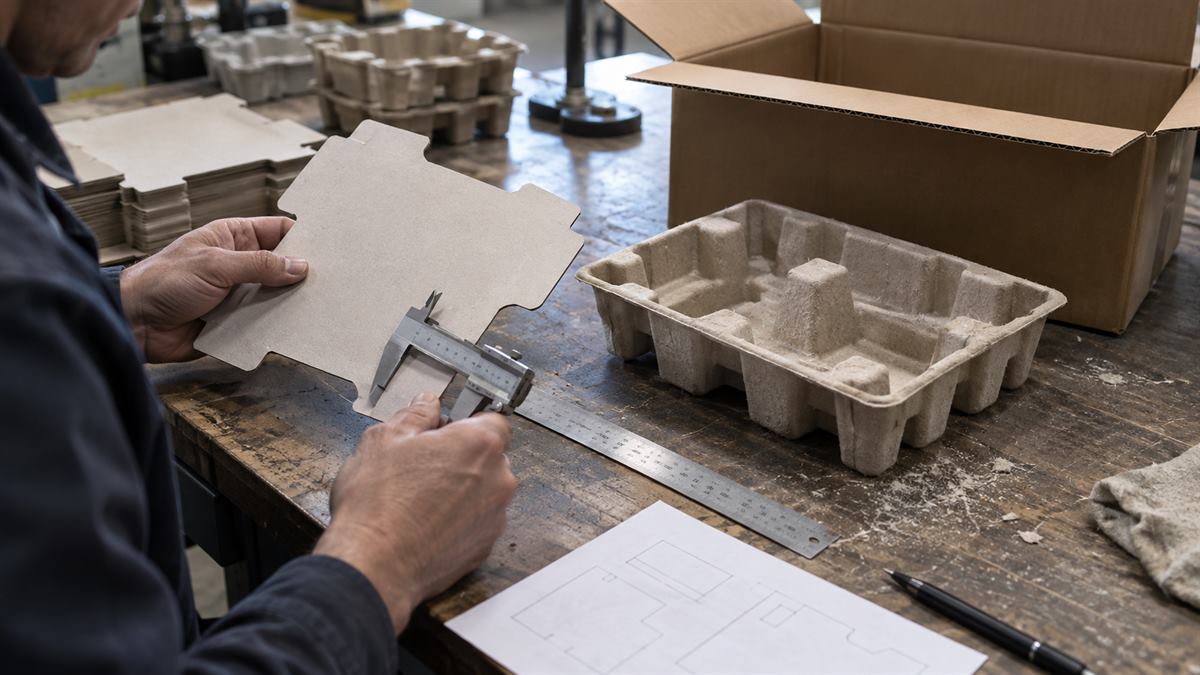
Include product dimensions, weight, photos or a physical sample, fragile areas, accessories, box structure, internal dimensions, required orientation, material preference, quantity, destination, packing method, and sample checks. If the choice is open, ask the supplier to quote paperboard and molded pulp as separate constructions.
For a 1 kg ceramic diffuser in a 300 × 220 × 90 mm carton, a paperboard concept might use a folded cradle, corner locks, and a top pad. A molded-pulp concept might use two formed end supports with a central cavity. Both should be tested with the real diffuser, not an idealized drawing.
FAQ
Are molded pulp inserts stronger than paperboard inserts?
Not in every application. Molded pulp can provide three-dimensional support, while paperboard can work well for separation and positioning. Product weight, cavity fit, box structure, and distribution handling decide the result.
Are paperboard inserts cheaper than molded pulp?
They often have a lower starting cost for simple structures because they can be die-cut and shipped flat. Molded pulp adds tooling and formed-part logistics. Compare tooling, storage, assembly, freight, and order quantity, not only unit price.
Can molded pulp replace EVA foam in every package?
No. Molded pulp has different surface texture, cavity geometry, moisture behavior, and cushioning response. A full-pack sample is needed before making that change.
Can paperboard inserts protect glass products?
They can, but a simple divider may not be enough. Glass products may need a fitted cradle, folded cushioning, corner protection, and a suitable outer carton. Test the actual distribution pack.
What should be included in an insert RFQ?
Include product size, weight, photos or sample, fragile areas, accessories, box structure, internal dimensions, orientation, quantity, destination, packing method, and approval checks. Ask for the proposed material and construction in writing.
Which one should you choose?
Choose paperboard when you need a flat, printable, flexible insert for light products, kits, dividers, or changing SKUs. Choose molded pulp when a stable product shape needs a formed cradle, the volume supports tooling, and the packing route can handle three-dimensional parts.
If both options remain possible, request one paperboard sample and one molded-pulp sample using the same product, outer box, and test checklist. Review movement, surface contact, removal, storage, and pack-out before comparing prices.
For a project that combines the insert with a folding carton, rigid box, or shipping carton, send a packaging brief through the inquiry page with product size, quantity, destination, and photos of fragile or decorated surfaces.
Send Your Packaging Brief to Our Team
Share your product type, format, size, quantity, material, destination, and required date. Our team can support artwork review, sampling, production, inspection, and export coordination.
Contact us for a project-specific recommendation.
Ready to build packaging with a factory team?
Send your product size, material, artwork, quantity, destination, and deadline so our team can focus the first review on quotation and sampling.