Post Consumer vs Post Industrial Recycled Content: What’s the Difference for Packaging?

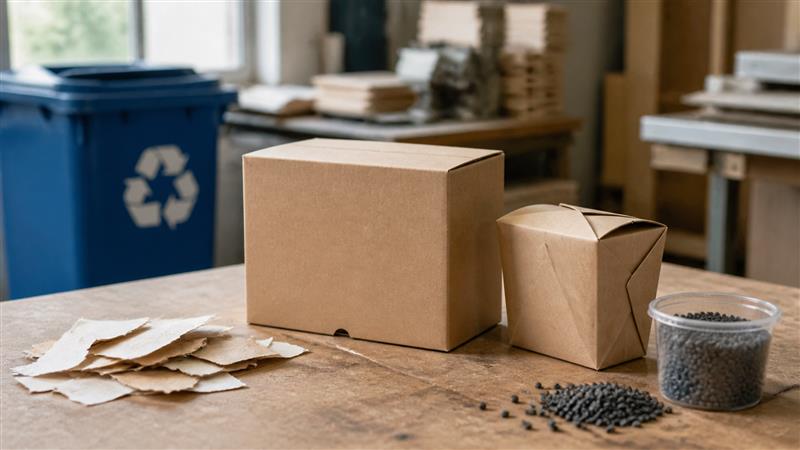
“Made with recycled content” is not a complete material specification. For packaging buyers, the more useful question is where that recycled material came from, how consistent it is, and whether the finished pack still protects the product.
The post consumer vs post industrial distinction separates two different waste streams. PCR supports recovery after consumer use; PIR recycled content comes from manufacturing waste. Both can reduce virgin-material demand, but they create different sourcing, performance, and verification questions.
Quick Answer: PCR or PIR?
- PCR comes from products or packaging recovered after consumer use. It generally carries stronger circularity value because it creates demand for material that has already passed through the consumer waste stream.
- PIR comes from manufacturing waste diverted before the finished product reaches consumers. It is often cleaner and more consistent, which can make processing easier.
- A higher total recycled percentage does not automatically mean a better package. Separate PCR, PIR, and virgin content before comparing supplier claims.
- The best specification is the highest credible recycled-content level that still meets the package’s strength, barrier, appearance, sealing, and delivery requirements.
What Are PCR and PIR Recycled Content?
What is PCR?
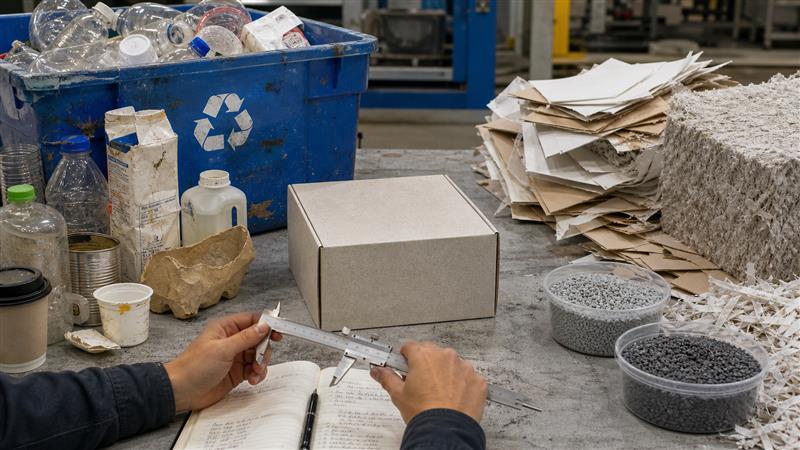
Post-consumer recycled content is material recovered after a product has been used by a household, business, institution, or other end user. Examples include used plastic bottles, shipping cartons, aluminum cans, and printed paper recovered through collection and recycling systems.
PCR packaging depends on collection, sorting, cleaning, reprocessing, and conversion into a new package. The material may carry traces of labels, inks, adhesives, residue, or mixed colors, so the specification should include the target application and required performance.
What is PIR recycled content?
Post-industrial recycled content is material diverted from a manufacturing waste stream before the finished product reaches consumers. It may include trim, edge waste, start-up scrap, off-spec material, or process waste that is collected, reprocessed, and used in another product or packaging structure.
Because the source is closer to the factory, PIR is often more controlled, with lower contamination risk and more predictable color or processing behavior. That can matter when a package needs stable sealing, tight dimensions, or a consistent print surface.
Is PIR the same as pre-consumer recycled content?
The terms are often used together, but buyers should confirm the definition used in the supplier’s claim or certification. In many standards and market documents, pre-consumer material includes manufacturing waste diverted from the waste stream, and post-industrial is commonly used as a practical synonym.
One important limitation is easy to miss: material simply returned to the same process that generated it should not automatically be marketed as external recycled content. The Global Recycled Standard glossary excludes rework, regrind, or scrap that can be reclaimed within the same process from its pre-consumer definition.
Post Consumer vs Post Industrial: Key Differences
| Decision factor | PCR packaging | PIR recycled content |
|---|---|---|
| Source | Used products or packaging recovered after consumer use | Manufacturing waste diverted before consumer use |
| Circularity role | Builds demand for post-consumer collection and recycling | Keeps controlled production waste in material use |
| Typical cleanliness | More variable; may include inks, labels, adhesives, or residue | Often cleaner and more predictable |
| Consistency | Can vary by feedstock, collection area, and processing | Often more consistent within a defined production stream |
| Processing | May need more sorting, washing, filtration, or blending | Can be easier to reprocess, depending on material |
| Appearance | Greater variation in color or surface may occur | More uniform appearance is often possible |
| Main buyer value | Supports consumer-recycling markets and reduces virgin input | Supports efficient manufacturing and controlled recycled supply |
| Main question | Can the recycled feedstock meet the required performance? | Is the material genuinely diverted waste rather than same-process regrind? |
The FTC’s recycled-content guidance says recycled-content claims should apply to material recovered or diverted from the waste stream during manufacturing or after consumer use. That is why “recycled” by itself is too vague for a serious packaging specification.
Why PCR often has greater circularity value
PCR gives manufacturers and brands a reason to purchase material recovered after use. That demand can help create value for collected bottles, cartons, films, or other feedstock that may otherwise be difficult to sell. It also makes the consumer waste stream part of the procurement conversation.
This does not mean every PCR option has a lower total impact in every application. Reprocessing requirements, transport, washing, yield loss, and package performance still matter. PCR is a stronger circularity choice when the material is verified and the finished package performs without creating additional product waste.
Why PIR can be easier to manufacture with
PIR usually begins with a more defined source. A converter may know the polymer, paper grade, coating, or production condition that created the scrap. That can reduce surprises during extrusion, forming, printing, folding, or sealing.
For a high-appearance retail carton, a tight-tolerance insert, or a film that must seal consistently, a PIR blend may be technically practical even when a higher PCR percentage would create unacceptable variation. The right decision is not a moral ranking. It is a documented trade-off.
Does More Recycled Content Always Mean Better Packaging?
No. A claim such as “50% recycled content” tells you only the total percentage unless the specification separates the sources. A package might contain 40% PIR, 10% PCR, and 50% virgin material. Another might contain 30% PCR, 20% PIR, and 50% virgin material. The totals match, but the sustainability objective is different.
Ask four questions:
1. What percentage is PCR? 2. What percentage is PIR or pre-consumer material? 3. What percentage remains virgin material? 4. Is the percentage calculated by weight for the finished package or only for one layer, board component, liner, or film?
Repeated processing can affect fiber length, polymer properties, color, odor, or contamination. A 100% PCR target may be unsuitable when the package needs high puncture resistance, moisture protection, precise sealing, or consistent food-contact performance. A lower verified percentage may deliver a more reliable result.
How PCR and PIR Affect Packaging Performance

Strength and durability
Shipping bags, mailers and mailer boxes, cartons, and protective structures must survive the actual handling route. Compare tensile, tear, puncture, compression, burst, or edge-crush performance where those tests apply. A recycled-content package that fails in e-commerce shipping conditions can create product loss, replacement shipping, and extra protective material.
Appearance and print consistency
PCR may introduce more variation in color, opacity, speckling, or surface texture. That can be acceptable—or even useful—for kraft-style packaging, but it may matter more for a retail carton with a large solid color area or strict brand-color requirements. Test printed samples instead of approving the recycled percentage from a datasheet alone.
Barrier and product compatibility
Moisture, oxygen, grease, aroma, heat, and product contact can change the material decision. For flexible packaging, check film structure, seal strength, leakage, and barrier performance. For paperboard and corrugated packaging, check coating, liner composition, compression, and the effect of recycled fiber on the intended use.
Processing and converting
The material must work on the supplier’s equipment. Ask how PCR or PIR affects extrusion, sheet forming, die cutting, folding, gluing, printing, or sealing. A formulation that looks attractive in a sustainability statement may not be practical at the required speed, size, or quantity.
Case Example · Cape Town · March 2021
A 70% Recycled Mailer Box for Cape Town E-commerce
A natural personal-care brand wanted recycled paperboard, no plastic filler, and reliable long-distance delivery.
Virgin Board
- Brighter base tone
- Higher stiffness
- Familiar print color
Recycled Board
- Warmer, slightly yellow tone
- 10%+ softer at the same thickness
- Needed one thickness upgrade
We added one thickness level, adjusted the ink mix, and used a paper insert with a self-locking bottom. The recycled box stayed plastic-free while recovering most of the stiffness gap.
Customer and platform names are anonymized. Figures are approximate.
PCR vs. PIR by Packaging Application
Poly mailers and flexible packaging: Prioritize verified PCR when supporting post-consumer recycling markets is central. Confirm puncture resistance, film thickness, sealing, color, and whether the percentage applies to the complete mailer.
Shipping bags and films: Compare PCR, PIR, and virgin blends against the real handling route. A controlled PIR component may stabilize processing, while PCR can strengthen the circularity story. Neither replaces a sample test.
Corrugated and paper packaging: Recycled fiber uses different terminology from recycled plastic. Ask for fiber composition, liner and medium structure, recycled-fiber percentage, and coatings or laminations. The paperboard packaging grades guide connects material selection to thickness and use conditions.
Folding cartons and retail packaging: Balance recycled content with print surface, fold quality, scoring, glue performance, and shelf appearance. The board grade still has to match the product.
Protective packaging: Performance comes first. If a recycled insert, mailer, or outer carton does not hold the product securely, the sustainability calculation is incomplete.
How to Choose Between PCR and PIR Packaging
Prioritize PCR when your main objective is to support post-consumer recycling markets, a verified feedstock is available, and testing shows that strength, appearance, barrier, and processing requirements can be met.
Consider PIR when material consistency is especially important, a technical process limits PCR use, or a controlled manufacturing waste stream can replace virgin material without weakening the package. A PCR/PIR blend can be sensible when you want more recycled content but need to manage variation.
Use this buyer scorecard before approving a specification:
- Sustainability objective: reduce virgin content, support consumer recycling, or both.
- PCR percentage and source: confirmed and traceable.
- PIR percentage and source: separated from same-process regrind.
- Performance: tested for the actual product and handling route.
- Appearance: sample approved for color, texture, opacity, and print.
- Availability: stable enough for repeat orders.
- Documentation: claim scope, calculation method, and certification or test evidence.
- Cost and timing: compared with the required quantity and delivery plan.
How to Read a Recycled Packaging Specification
Imagine two quotes: Package A contains 60% recycled content, mostly PIR; Package B contains 45%, including 30% PCR. Package A may suit a virgin-material reduction goal, while Package B may better support post-consumer recovery. Compare the finished package, weight basis, additives, labels, and chain-of-custody method. The SCS Recycled Content Standard explains why the source and calculation model should be stated clearly.
How to Verify PCR and PIR Claims
Before approving recycled content packaging, request:
1. Material composition showing PCR, PIR/pre-consumer, and virgin percentages. 2. A description of the source waste stream and where it was processed. 3. Confirmation that the claim applies to the finished package, not only one layer or component. 4. The calculation method, including percentage by weight and any mass-balance approach. 5. Relevant certification, chain-of-custody, test reports, or supplier declarations. 6. A sample made with the proposed specification and a written reason for the final PCR/PIR ratio.
Do not treat an internal loop as external recycled content automatically. If a factory returns its own trim directly into the same process, ask how that material is classified. The distinction matters for honest claims and for comparing two suppliers on equal terms.
A Practical Recycled-Content Review Checklist
For each sample, record the format, material structure, PCR/PIR/virgin percentages, performance requirements, print result, supplier evidence, and end-of-life considerations. Also review recyclability separately: recycled content describes what is inside the package, while recyclability concerns what can happen after use. Compare samples made with the same format whenever possible.
This keeps the discussion practical. Instead of asking which supplier uses the biggest recycled-content number, the buyer can ask which specification meets the project’s sustainability objective without creating a new failure point in packing, shipping, retail presentation, or disposal.
FAQs
What is the difference between PCR and PIR recycled content?
PCR comes from products or packaging recovered after consumer use. PIR comes from manufacturing waste diverted before the finished product reaches consumers.
Is PCR more sustainable than PIR?
PCR often provides stronger support for post-consumer recycling markets, while PIR can reduce virgin-material demand with more consistent processing. The better choice depends on the application and sustainability objective.
Can packaging contain both PCR and PIR material?
Yes. A package can combine PCR, PIR, and virgin material to balance recycled-content goals with strength, appearance, barrier performance, processing, and availability.
Does 50% recycled content mean 50% PCR?
No. The total may include PCR, PIR, or pre-consumer material. Ask the supplier to separate each percentage and explain whether the calculation applies to the finished package by weight.
Is recycled content the same as recyclable packaging?
No. Recycled content describes what is already in the package. Recyclability describes whether the finished package can be collected, sorted, and reprocessed after use in a specific market.
Conclusion
PCR comes from material recovered after consumer use, while PIR recycled content comes from manufacturing waste diverted before consumer use. PCR can provide stronger support for post-consumer recycling markets; PIR can offer cleaner, more consistent processing. In a post consumer vs post industrial comparison, neither is automatically the universal winner.
For PCR packaging or any other recycled content packaging, compare the source, percentage, performance, availability, and proof. Choose the highest credible recycled-content level that still protects the product and can be repeated reliably.
Request a Recycled-Content Packaging Review
Forests Packaging Group can review your product format, dimensions, material preference, quantity, artwork, destination, and deadline before sampling. The discussion can separate PCR, PIR, virgin content, performance requirements, and documentation needs so the recycled-content decision supports the actual packaging system.
Send the current specification or sample details to compare a practical PCR/PIR structure for your product and market.
Send Your Packaging Brief to Our Team
Share your product type, format, size, quantity, material, destination, and required date. Our team can support artwork review, sampling, production, inspection, and export coordination.
Contact us for a project-specific recommendation.


Ready to build packaging with a factory team?
Send your product size, material, artwork, quantity, destination, and deadline so our team can focus the first review on quotation and sampling.