How to Remove Tape Residue Without Damaging the Surface

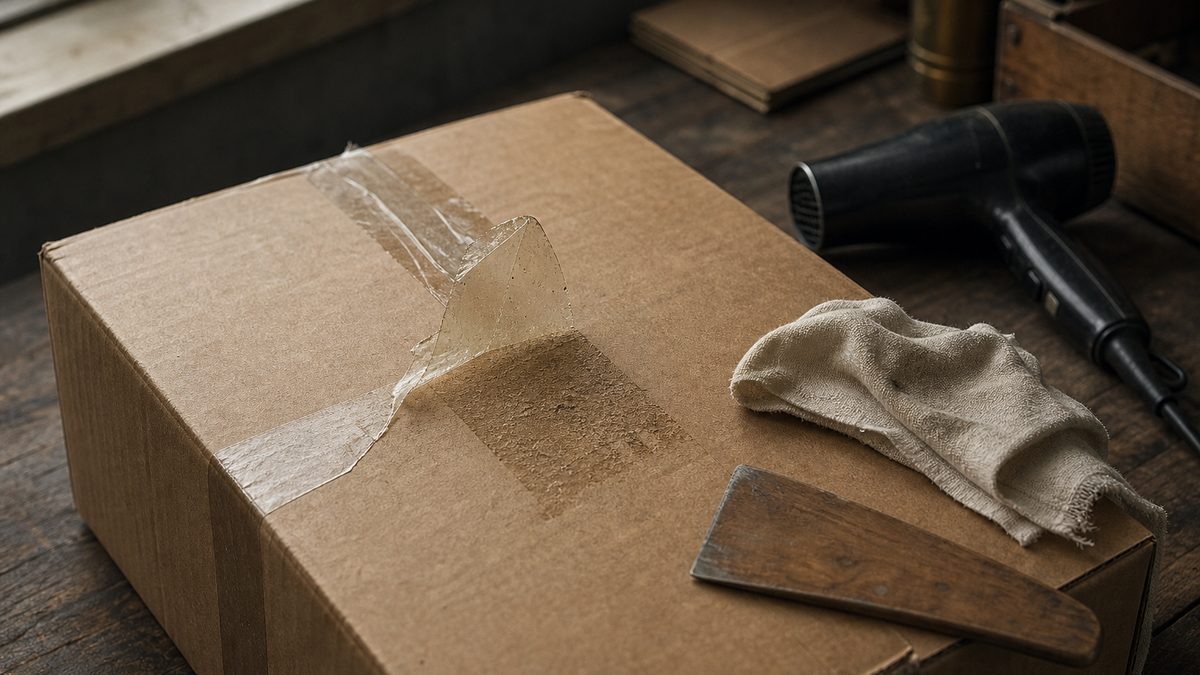
The safest way to learn how to remove tape residue is to start with the mildest method that suits the surface: dry rubbing or a plastic scraper, then warm soapy water, gentle heat, oil or alcohol only when compatible. Glass, plastic, painted finishes, wood and cardboard do not tolerate the same treatment.
That matters when residue comes from packaging tape. Heat, storage time and the surface coating can change how firmly it bonds. The goal is to remove it without lifting print, dulling a finish or tearing the material underneath.
Before You Remove Tape Residue, Identify the Surface
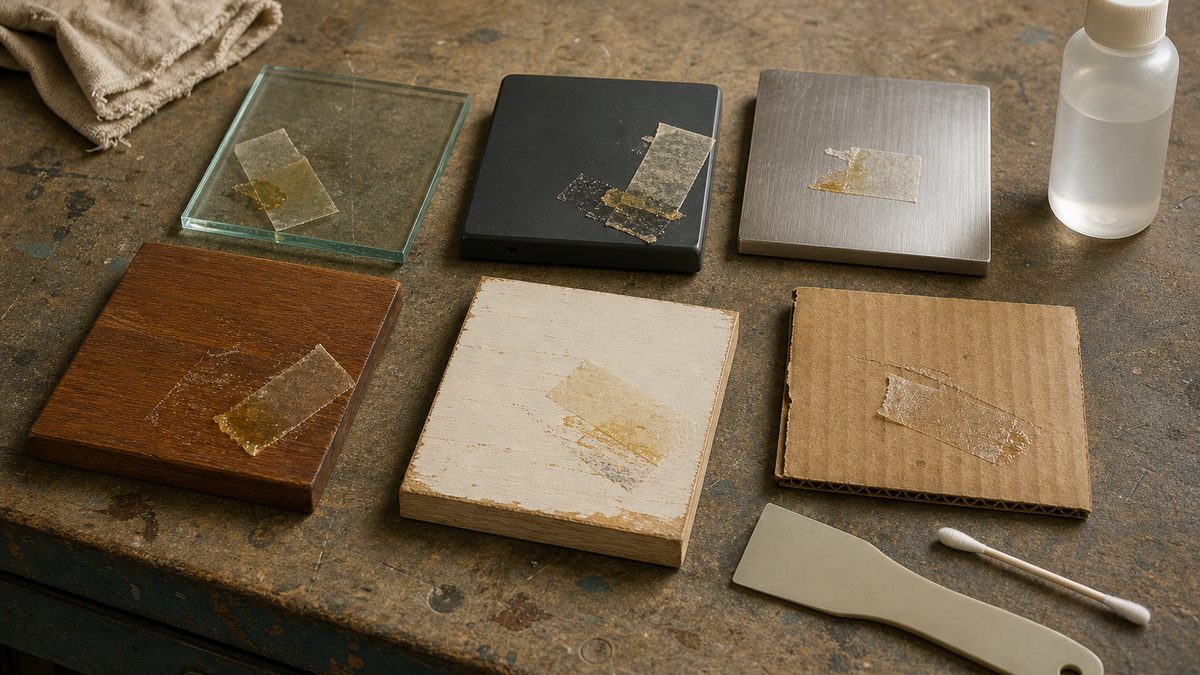
The same packaging tape residue can behave very differently on glass and on a printed carton. Glass is hard and non-porous; plastic may soften or cloud; painted metal can lose its coating; cardboard can absorb a cleaner and lose its top fibers. Identify the surface before choosing a remedy.
| Surface | Safest starting point | What needs caution |
|---|---|---|
| Glass | Warm soapy water, then a soft scraper | Decorative coatings and scratching |
| Plastic | Mild soap, gentle rubbing or compatible oil | Clouding, softening and solvent damage |
| Bare metal | Soap, cloth or a compatible adhesive remover | Scratches and oxidation |
| Painted metal | Soft cloth and mild soap | Paint lift, color change and gloss loss |
| Finished wood | Dry rubbing and a barely damp cloth | Staining, swelling and finish damage |
| Cardboard | Dry peeling, eraser or plastic edge | Water, oil and solvent soaking into fibers |
If the item is valuable, painted, coated or part of a finished package, test the method on an unseen edge. It is usually cheaper than repairing a visible panel.
The Safest Order for Removing Packaging Tape Residue
There is no prize for using the strongest cleaner first. A controlled escalation gives you more information and less damage. Stop as soon as the residue is gone.
- Lift or roll the residue mechanically. Use a fingernail, soft cloth, pencil eraser or plastic scraper. Keep the edge low and do not gouge the surface.
- Soften it with warm soapy water. This is a useful first liquid method on washable, non-porous surfaces.
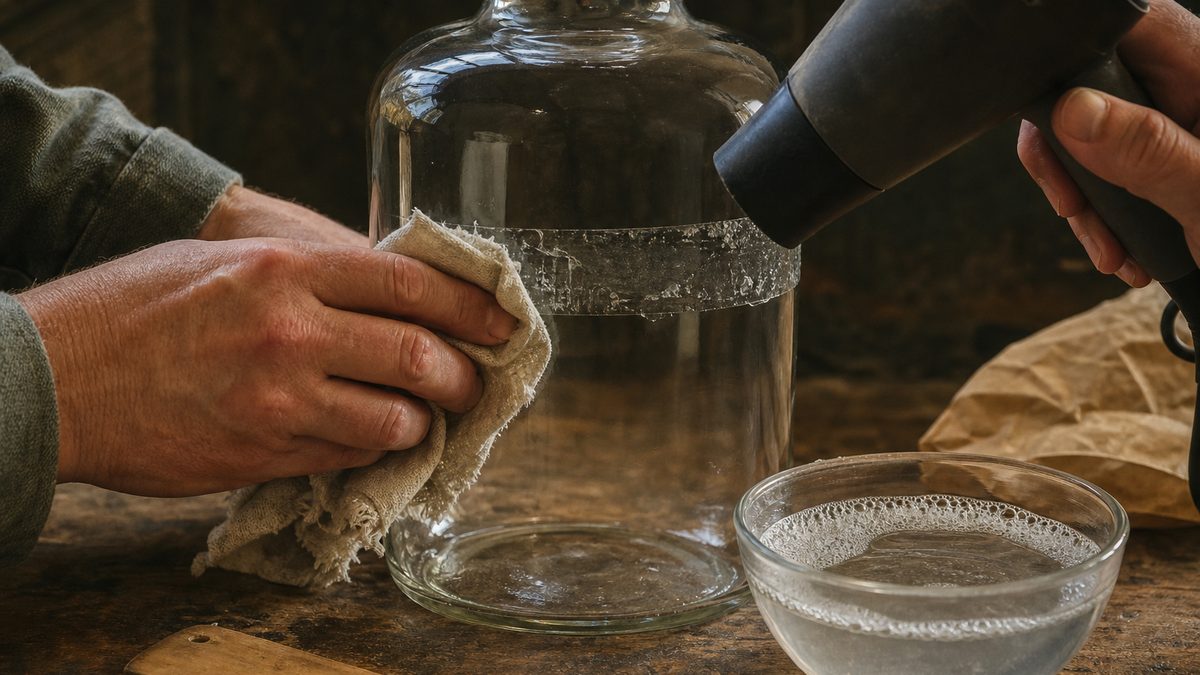
- Apply gentle heat. A hair dryer can soften old adhesive, but keep it moving and avoid overheating plastic or paint.
- Try oil or diluted vinegar where appropriate. These may loosen some adhesives, but the oily film or acidity must not harm the surface.
- Use rubbing alcohol only after a spot test. It can work on compatible glass or metal, but not every coating or plastic.
- Move to a commercial adhesive remover if needed. Read the product restrictions and safety information first.
- Use stronger solvents only with confirmed compatibility. Acetone can damage plastics, paint and many finishes. Do not treat it as a universal answer.
How to Remove Tape Residue From Common Surfaces
Glass
Start by wetting a cloth with warm water and a small amount of dish soap. Hold it against the residue for a minute or two, then rub gently. If a softened patch remains, use a plastic scraper held almost flat against the glass. A small amount of rubbing alcohol or white vinegar may help on plain, uncoated glass after testing.
Do not use a rough abrasive pad on decorative glass, mirrors with vulnerable backing or coated glass. Scratches may be harder to see when the surface is wet, so inspect it under normal light after cleaning.
Plastic
Plastic needs the most restraint because the surface may react before the adhesive does. Begin with a soft cloth, mild soap and warm water. If the residue is gummy, a small amount of compatible cooking oil can loosen it; wash the oily film away afterward.
Gentle heat can help, but use a low setting and keep the dryer moving. Avoid acetone unless the exact plastic and finish are known to tolerate it. Some plastics become cloudy, brittle or slightly swollen after solvent exposure, and the damage may not be reversible.
Metal
On bare stainless steel or aluminum, peel away loose adhesive and wipe with warm soapy water. Follow the grain on brushed metal rather than rubbing across it. Alcohol or a commercial remover may be suitable after a spot test.
Painted or powder-coated metal is a different job. Treat the coating as the surface, not the metal underneath. Use a soft cloth and mild soap first, and avoid metal blades that can leave a permanent line.
Wood
First decide whether the wood is unfinished, painted, stained or sealed. On finished wood, try dry rubbing or a barely damp cloth. Work in a small area and dry it immediately. Oil may darken unfinished wood and can leave a patch that looks worse than the original adhesive.
For old tape on a valuable piece of furniture, follow the finish manufacturer’s care advice instead of experimenting with strong cleaners. Heat, alcohol and acetone can soften or mark a coating even when the wood itself appears unaffected.
Painted Surfaces
Painted walls, panels and cartons should be approached as delicate surfaces. Roll away loose adhesive with your fingertip or a clean microfiber cloth. If needed, use a little warm soapy water and very light pressure. Test near an edge before working in the center.
Do not scrape hard or soak the paint. The tape may be removed successfully while the paint becomes shiny, discolored or lifted at the edges.
Cardboard and Printed Packaging
Cardboard is where “just use a little cleaner” causes trouble. Paper fibers absorb water, oil and solvent. Start with dry peeling, then use a soft pencil eraser or a plastic edge to roll off small residue patches. Pull tape back slowly at a low angle rather than yanking it upward.
If the tape has removed printed fibers or the adhesive has soaked into the board, a perfect repair may not be possible. On a finished carton, preserving the print and surface is more important than chasing every last sticky mark.
Fresh, Old and Gummy Tape Residue Need Different Handling
Fresh adhesive is usually easier to remove because dust and heat have not had time to change it. Lift it promptly with a cloth or plastic edge. If it rolls into a sticky thread, remove the loosened material before applying more cleaner.
Old residue often needs repeated softening rather than harder scraping. Apply gentle heat where the substrate allows it, work in a small section, and wipe away the softened adhesive before moving on. Several short passes are safer than one aggressive attempt.
Methods That Usually Help
Warm Water and Dish Soap
Use this first on washable glass, metal and some hard plastics. The warmth softens the adhesive while the soap helps lift the oily residue. Do not soak paperboard, wood or unsealed surfaces.
Gentle Heat
A hair dryer can make old tape less brittle and easier to roll away. Keep the airflow moving, use a modest temperature and stop if the surface becomes hot, soft or discolored.
Rubbing Alcohol
Alcohol may loosen residue on compatible non-porous surfaces. Apply a small amount to a cloth rather than flooding the surface. Spot-test first, especially on printed, painted or plastic parts.
Oil or White Vinegar
Oil can loosen some gummy adhesives; vinegar may help on suitable washable surfaces. Both leave follow-up work: remove the oily film or rinse the acidic residue. Neither is a safe default for cardboard or unfinished wood.
Commercial Adhesive Remover
Commercial removers are useful when mild methods stall, but the label matters. Check the listed surfaces, ventilation requirements and cleanup instructions. OSHA’s Safety Data Sheet requirements explain the information workers should have available.
What Not to Do
- Do not start with acetone, paint thinner or the strongest solvent available. Acetone is highly flammable and can affect many plastics and coatings; the NIOSH Pocket Guide entry for acetone provides basic hazard information.
- Do not use a metal scraper on glass coatings, paint, plastic or printed packaging.
- Do not overheat plastic, laminated paper or painted surfaces.
- Do not soak cardboard in water, oil or solvent.
- Do not mix cleaning chemicals. The U.S. Environmental Protection Agency warns that combining household chemicals can create toxic vapors; see its guidance on cleaning products and indoor air quality.
- Do not assume that a product safe for glass is safe for plastic.
- Do not skip the spot test because the residue looks small.
How to Prevent Packaging Tape Residue
Removal is often a tape-selection problem in disguise. Residue becomes more likely when the adhesive is left on a surface for too long, exposed to heat or sunlight, pressed onto a dusty substrate, or matched poorly to the coating. Storage conditions and dwell time matter as much as the tape name.
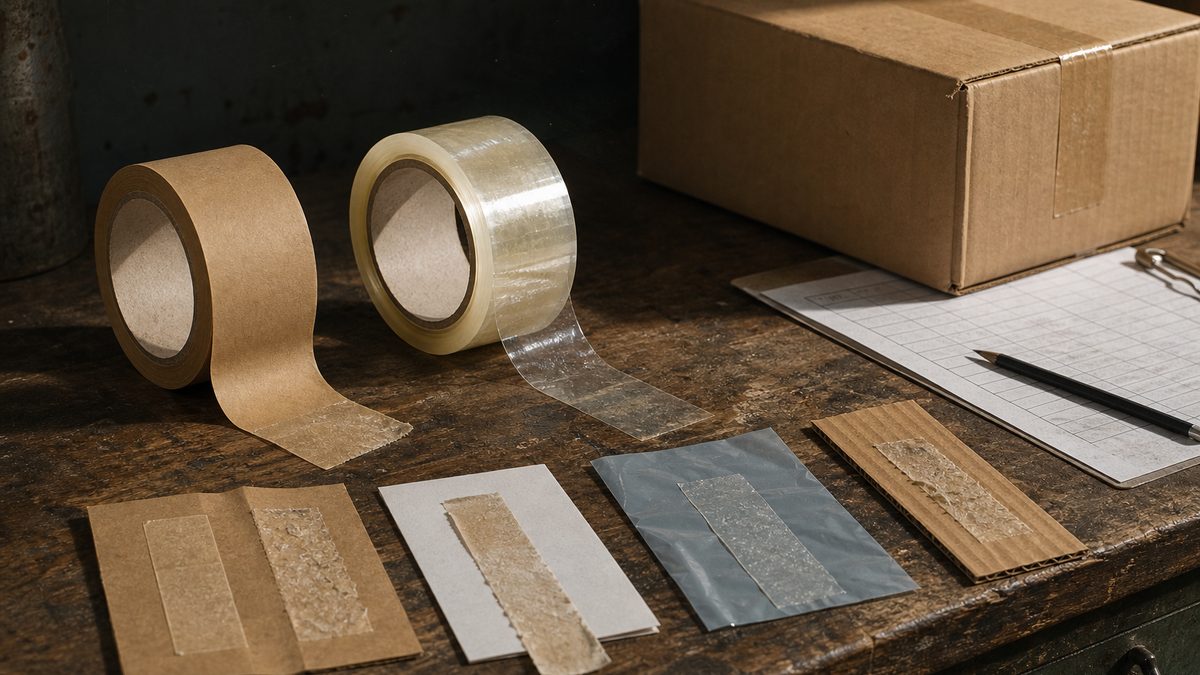
Before using a tape across a large run of cartons, mailers or reusable containers, test it on the actual surface. Leave it in place for the expected storage period, then check the surface after removal. A tape that removes cleanly after ten minutes may behave differently after several weeks in a warm warehouse.
🔬 Packaging Experience: A small paper change can create a very different surface
In a camera-accessory gift-box project, the paper stock, insert, box dimensions and shipping plan changed at different points. The first integrated sample exposed fit and finish problems that a PDF could not show, so the team locked the specification, approved a physical sample and only then released the order for production.
Practical takeaway: test the actual tape on the actual board, coating and storage condition. A clean result on one paper does not approve the same tape for another.
On printed cartons, confirm that the tape will not cross a fold, seam, barcode or coated panel that needs to stay clean. A current packaging dieline checklist helps the team identify those areas before the tape is applied.
For paper-based packaging, also consider whether the tape will be applied to a coated or uncoated area, printed artwork, a fold, or a seam. The paperboard grade and surface finish affect how the adhesive bonds. Our guide to paperboard grades, thickness and uses is useful when the carton surface itself is part of the decision.
🎨 Packaging Experience: Samples beat screen confidence
For a skincare packaging program, the buyer was worried about color matching. The supplier used the customer’s physical product sample to choose the color combination, then confirmed the result with real samples before the order moved forward.
Practical takeaway: residue testing needs the same discipline. Use the real printed or coated surface, leave the tape on for the expected dwell time, and remove it the way the packer or customer will.
Record the tape type, substrate, dwell time, storage condition and removal result. For repeat packaging programs, keep the approved tape and surface combination with the specification rather than relying on memory.
Choosing Tape for Reusable or Customer-Facing Packaging
Ask four practical questions before approving a packaging tape:
- What surface will it touch: kraft paper, coated board, plastic film, painted metal or glass?
- How long will it remain attached, and will it face heat, sunlight or humidity?
- Does clean removal matter, or is permanent sealing the priority?
- Will the tape be applied by hand or by a packing machine?
If the tape is part of a broader packaging system, confirm the carton, bag or mailer specification at the same time. For example, the surface used on a kraft paper bag may not behave like the surface on a coated shipping carton. Test the real format, not a convenient substitute.
FAQs
What is the easiest way to remove tape residue?
Start with gentle rubbing, a plastic edge or warm soapy water on a compatible surface. If residue remains, move gradually to controlled heat, oil, alcohol or a commercial adhesive remover.
Does rubbing alcohol remove packaging tape residue?
It can loosen some residue on compatible glass or metal. Test first because alcohol may affect paint, coatings, plastics and printed surfaces.
How do you remove tape residue from plastic without damaging it?
Use mild soap, gentle rubbing or a small amount of compatible oil first. Use heat cautiously and avoid acetone unless the exact plastic is known to tolerate it.
How do you remove tape residue from cardboard?
Prefer dry removal. Peel slowly, then try a soft eraser or plastic edge on a small patch. Avoid soaking the board because water, oil and solvent can stain or lift paper fibers.
Why does packaging tape leave residue?
Heat, sunlight, long dwell time, aging adhesive, surface coatings, dust and storage conditions can all increase transfer. The tape and the substrate should be tested together when clean removal matters.
Need Help Reviewing a Packaging Surface?
Share the packaging format, substrate, tape type, storage time and destination market when requesting a review. This gives a supplier enough context to discuss surface finish, sealing method and sample testing.
Include product dimensions, packaging material, tape application, quantity and delivery plan so the system can be checked before a larger run.
The Practical Answer
The best way to remove tape residue is not one universal cleaner. It is a surface-first process: identify the material, test a hidden spot, start with dry or mild treatment, and increase strength only when the surface can handle it. Old packaging tape residue may need patience, while cardboard may need a decision to stop before the fibers are damaged.
If residue keeps appearing across your packaging operation, review the tape, substrate, storage conditions and expected dwell time together. A short compatibility test before production or fulfilment is usually easier than repairing a whole batch of marked cartons.
Send Your Packaging Brief to Our Team
Share your product type, format, size, quantity, material, destination, and required date. Our team can support artwork review, sampling, production, inspection, and export coordination.
Contact us for a project-specific recommendation.

Ready to build packaging with a factory team?
Send your product size, material, artwork, quantity, destination, and deadline so our team can focus the first review on quotation and sampling.