Plastic Packaging: What It Is and How to Choose It

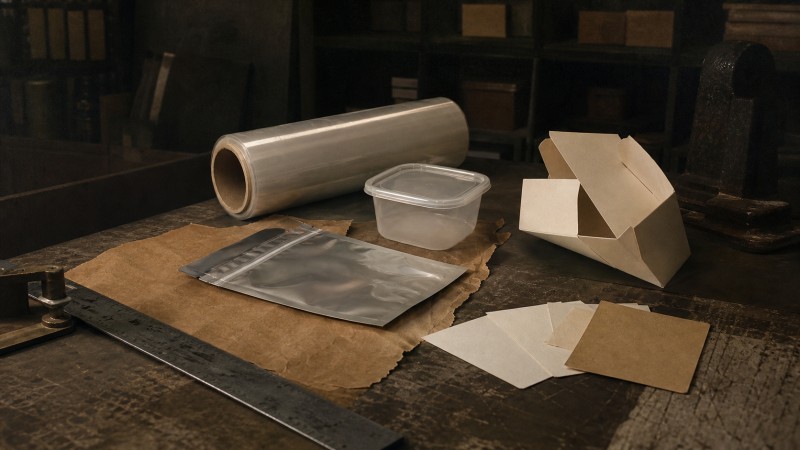
Plastic packaging is often discussed as if it were one material with one environmental outcome. It is not. A thin polyethylene film, a clear PET bottle, a polypropylene lid and a multilayer pouch may all be called plastic, but they do different jobs and follow different recovery routes.
That is why searches such as “what is plastic?” or “plastic and plastic packaging” usually lead to a bigger business question: which material will protect the product, run through the packing process, ship efficiently and leave a realistic option after use? The useful answer is not a blanket “plastic is good” or “plastic is bad.” It is a clear look at the whole package.

What Is Plastic, Anyway?
Plastic is a family of materials made from polymers—long chains of repeating molecules that can be formed, stretched, sealed or molded into useful shapes. The feedstock may be fossil-based or partly bio-based, but that starting point does not tell you everything about the finished package.
For packaging buyers, three questions should stay separate:
- What is the package made from?
- What does the package need to do?
- What can realistically happen to it after use?
A bio-based polymer is not automatically biodegradable. A recyclable resin is not automatically accepted by every local program. A paper-based package may still contain a film, coating or adhesive that changes its recovery route. These distinctions sound technical, but they prevent expensive claims and poor material choices later.
Common Plastics Used in Packaging
There is no single “best” plastic. The right resin depends on the product, the barrier requirement, the filling method, the seal, the shipment and the market where the package will be discarded.
PE: LDPE, LLDPE and HDPE
Polyethylene is common in films, flexible bags, liners and mailers. LDPE is soft and flexible. LLDPE can add toughness and puncture resistance. HDPE is stiffer and is often used for containers, closures and stronger bags. In flexible packaging, PE can be useful when a package needs a reliable seal and moisture resistance, but the exact film structure still matters.
PET
Polyethylene terephthalate is known for clarity, stiffness and dimensional stability. It appears in bottles, trays and some film structures. PET can be a practical choice when a clear, strong surface is needed. A PET layer inside a composite pouch, however, does not make the complete pouch equivalent to a simple PET bottle.
PP
Polypropylene is light, fairly heat-resistant and useful for containers, closures, films and some woven formats. It can support a crisp seal and a clean printed surface. Again, the resin name is only the starting point: thickness, color, labels, coatings and attached components influence what happens after use.
PS and specialty polymers
Polystyrene is used in selected rigid and foamed applications, while specialty polymers serve particular barrier, temperature or strength needs. PLA is different in origin—it is commonly made from plant-derived feedstocks—but it is still a polymer. “Plant-based” describes where the carbon came from; it does not automatically describe how the package will break down.
Plastic Packaging Is More Than the Resin Name
Two packages made from the same resin can have very different results. The first may be a light, right-sized bag that uses little material. The second may be a heavy, oversized format with extra layers and a difficult-to-separate closure. “Plastic” does not explain that difference.
Start with the product’s actual risk. Does it need moisture protection, grease resistance, oxygen control, light protection, puncture resistance or a dependable heat seal? A package that fails can waste the product inside it, which changes the sustainability calculation quickly. A lighter package is not an improvement if it causes leakage, spoilage or repeated replacements.
Format matters as well. A mono-material flexible pack may be easier to assess than a multilayer laminate, but the laminate may be the structure that gives a sensitive product the shelf life it needs. The responsible decision is to use the simplest construction that meets the brief—not to remove a necessary barrier without testing.
Virgin Plastic, Recycled Plastic and PCR Content
Virgin plastic is made from newly produced resin. Recycled plastic contains recovered material, but the source should be defined. Post-industrial material commonly comes from manufacturing scrap. Post-consumer recycled (PCR) material comes from products or packaging that have already been used and discarded, then collected and processed into a new input.
PCR can reduce reliance on virgin resin and support demand for recovered material. It can also bring changes in color, odor, surface consistency, strength, sealing or food-contact suitability. Ask for the total recycled percentage, the PCR percentage, the material specification and the documentation that applies to the exact package—not just a general statement about the supplier’s product range.
For a useful explanation of material origin, compare post-consumer and post-industrial recycled content before writing the claim on the package.

Recyclable, Biodegradable, Compostable and Bio-Based Are Not Synonyms
Recyclable means a package may enter a collection, sorting, processing and end-market route. It is not a promise that every customer can recycle it locally.
Recycled means the package contains recovered material. It describes material origin, not what will happen after disposal.
Biodegradable describes breakdown under particular conditions and over a particular time. Without those conditions, the word is too vague to guide a buyer.
Compostable means the material is designed to break down into usable compost under defined conditions. Industrial composting and home composting are not the same system.
Bio-based refers to feedstock. It does not tell you whether the finished polymer is recyclable, biodegradable or compostable.
For a practical comparison of these end-of-life terms, see the guide to compostable versus recyclable packaging. The key is to ask where the package will actually go, not which word sounds most attractive on a product page.
Is Plastic-Free Packaging Always More Sustainable?
Not necessarily. Paper, molded fiber, glass and compostable materials can be strong choices in the right use case, but each has its own weight, barrier, manufacturing and disposal questions. A paper package that needs a heavy coating may not have the same recovery route as an uncoated paper package. A heavier alternative may use more transport capacity. A weaker alternative may increase product damage.
The better comparison includes at least five points: material quantity, product protection, shipping efficiency, verified recovered content and realistic recovery access. Reuse can also matter, but only when the package is actually reused enough to justify the extra material, cleaning and return transport.
This is why a “plastic packaging supplier” should be able to discuss the complete construction, not just offer a resin code. Buyers need to know what is inside the structure, what the seal requires, whether an attached component changes the disposal route and which claims can be documented.
A Simple Lifecycle Framework for Choosing Packaging
- Define the protection job. Write down moisture, grease, oxygen, light, temperature, puncture and seal requirements.
- Right-size the format. Reduce empty space and unnecessary layers without creating a fit or filling problem.
- Compare complete structures. Review films, coatings, adhesives, inks, closures, labels and inserts together.
- Check recovered content. Ask whether the percentage is total recycled content, PCR content or pre-consumer content.
- Test the real pack. Fill it with the product, run the intended seal or packing process, and check storage and shipping conditions.
- Confirm the recovery route. Check collection, sorting, processing and end-market access in the target country or region.
- Write a precise claim. Say what is verified, what component it applies to and what the customer should do after use.
The U.S. EPA’s plastics resources are a useful starting point for understanding plastics management, but local rules still control what customers can place in a recycling stream.
The agency’s guide to recycling common materials makes the practical point clear: films and wraps often need a different route from rigid containers. Check the destination market instead of assuming curbside acceptance.
What to Ask a Custom Plastic Packaging Supplier
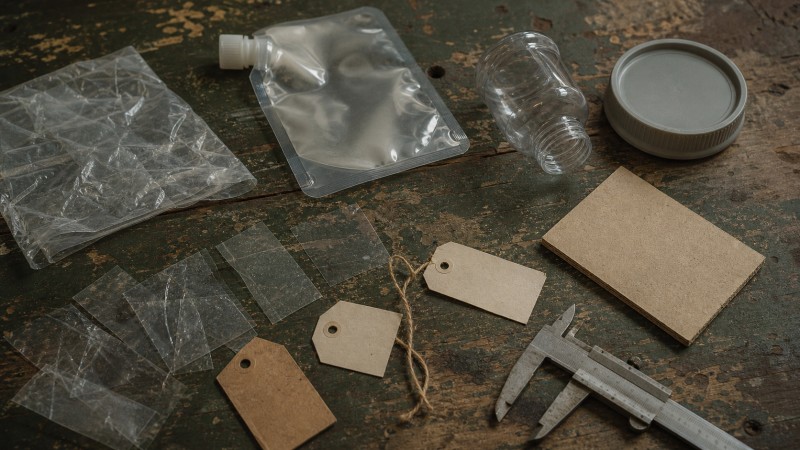
A good RFQ is more useful than a broad request for “eco-friendly plastic.” Send the product type, dimensions, filled weight, quantity, artwork status, packing method, target market, shipment route and deadline. Then ask the supplier to state the proposed structure in plain language.
- Which resin or resin combination is being proposed?
- Is the package mono-material or multilayer?
- What are the thickness, seal area and barrier assumptions?
- Does recycled content change appearance, sealing or compliance?
- What sample will be produced, and will it be tested with the actual product?
- Which environmental claims can be supported with current documentation?
- What disposal guidance applies in the destination market?
For flexible formats, printed mailer bags are one example of how size, print, material and shipment requirements need to be considered together. The right supplier conversation should end with a testable specification, not a vague promise.
How to Avoid Weak Sustainability Claims
“Eco-friendly” is easy to print and difficult to prove. Use a specific statement instead: for example, a verified recycled-content percentage, a defined mono-material construction or a clear instruction to use a named collection route. If a claim applies only to one layer, say so.
The FTC Green Guides summary explains why broad environmental claims need competent evidence and why recyclable claims may need qualification where appropriate facilities are not widely available. The same discipline is useful even when a package is sold outside the United States: describe the benefit, define the limit and keep the documentation with the approved specification.
FAQ: Plastic Packaging and Material Choice
What is plastic packaging?
Plastic packaging is packaging made partly or entirely from polymer materials that can be formed into films, bags, pouches, bottles, containers, closures or protective parts. Its performance depends on the full structure, not only the resin name.
Which plastics are commonly used in packaging?
PE, PET and PP are among the most common. PS, PLA and other specialty polymers are used for selected applications. Each has different strength, barrier, sealing and recovery considerations.
Is recycled plastic packaging always better?
No. Recycled content can reduce virgin-material demand, but it must still meet the product’s protection, sealing, appearance and compliance requirements. Verify the actual PCR percentage and test the finished package.
Is bio-based plastic biodegradable?
No. Bio-based describes the feedstock. Biodegradable and compostable describe behavior under defined conditions. A bio-based plastic may still behave like a conventional recyclable polymer.
How should I choose a plastic packaging supplier?
Choose a supplier that can explain the complete structure, provide samples, review the real product and support material or environmental documentation for your target market. Price matters, but a clear specification protects the project from larger costs later.
Final Takeaway
Plastic packaging is not one material and sustainability is not one label. Resin type, package weight, barrier structure, recycled content, product protection, shipping efficiency and local recovery all belong in the same decision.
The practical choice is usually the package that meets the real performance brief with the least unnecessary material and the clearest defensible end-of-life route. If you are comparing plastic, paper, recycled plastic, compostable or reusable options, begin with the product, the market and the physical test—not with a slogan.
Share your product dimensions, format, material preference, quantity, destination and artwork status to start a custom packaging review around a specification that can be sampled and produced.
Send Your Packaging Brief to Our Team
Share your product type, format, size, quantity, material, destination, and required date. Our team can support artwork review, sampling, production, inspection, and export coordination.
Contact us for a project-specific recommendation.
Ready to build packaging with a factory team?
Send your product size, material, artwork, quantity, destination, and deadline so our team can focus the first review on quotation and sampling.